

GTNS | New Delhi | September 7, 2026
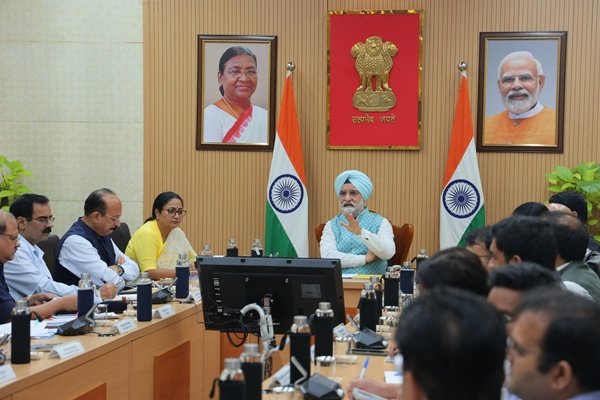
Delhi is considering a wider public-institutional approach to the shortage of student accommodation, with Lieutenant Governor Vinai Kumar Saxena asking universities and city agencies to examine whether their land and existing assets can be used to create additional housing options for students.
The move brings the issue of student housing into the broader urban-planning conversation. Delhi’s education network attracts students from across India, but finding a secure and reasonably priced place to live remains a challenge for many newcomers.
Instead of leaving students largely dependent on private rental markets, authorities are now looking at whether educational institutions and public agencies can contribute to expanding the available accommodation base.
Universities could become part of the solution
Universities have been encouraged to assess their own requirements and available resources and explore possibilities for additional residential facilities.
The approach could give institutions greater scope to accommodate students closer to academic campuses while reducing the pressure created by limited hostel capacity.
For students travelling to Delhi from other states, proximity to campus can also mean lower daily transport expenses and more time available for academic work.
Public land under fresh consideration
The MCD and DDA are also part of the discussion, opening the possibility of examining public land and suitable properties for student-oriented development.
A coordinated effort could help authorities identify locations that are suitable from the perspectives of connectivity, infrastructure, safety and access to educational centres.
The idea is not simply to build more structures, but to connect housing planning with Delhi’s existing education and transport network.
Affordability remains the biggest concern
The cost of accommodation has become an important consideration for students and their families when choosing where to study.
Private rooms and paying-guest facilities near major educational areas can place considerable pressure on household budgets. Limited hostel availability can make the situation more difficult.
Expanding institutional or publicly supported accommodation could provide another option, particularly for students who need predictable and affordable housing during their academic years.
A chance to use underutilised assets
One possible advantage of involving public agencies is the opportunity to examine properties that may not currently be serving their full potential.
Authorities could assess whether suitable land or buildings can be adapted for student residences, subject to planning rules, structural safety and other statutory requirements.
Such an approach could potentially complement new construction rather than making land acquisition the only route to increasing capacity.
Housing and education need to move together
Delhi’s student population is closely connected to its universities, colleges, research institutions and professional education centres.
As the capital continues to attract students, accommodation cannot be treated as a completely separate issue from educational infrastructure.
Long-term planning that considers classrooms, transport, hostels and other essential facilities together could make the city’s education hubs more sustainable.
Safety and quality will matter
Increasing the number of rooms alone will not solve the problem. Any expansion of student housing would also need adequate security, sanitation, fire-safety arrangements, basic amenities and appropriate management systems.
For parents sending their children to Delhi, the quality and safety of accommodation are nearly as important as its price.
A broader urban-policy test
The LG’s direction places universities, the MCD and DDA at the centre of a possible new model for addressing student accommodation.
If suitable land and resources can be identified, the initiative could provide Delhi with additional housing capacity while supporting students who currently face limited and expensive choices.
The larger question is whether the capital can develop an accommodation system that grows alongside its educational institutions.
For thousands of students arriving in Delhi each year, a seat in a classroom is only part of the journey. Finding a safe, affordable place to live can be just as important.