
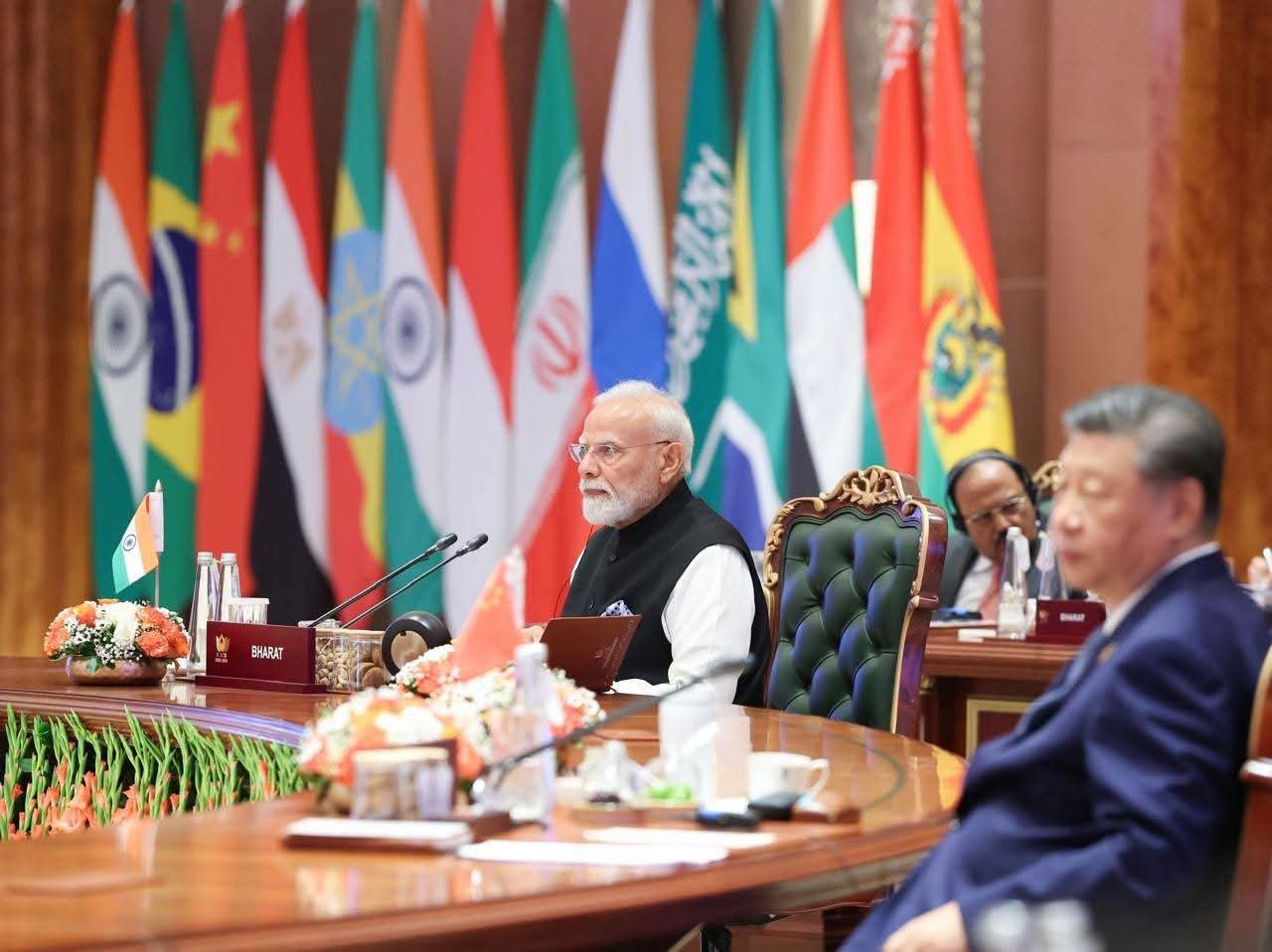
After seven years, Chinese President Xi Jinping returns to India for the BRICS Summit as his meeting with Prime Minister Narendra Modi puts long-term India-China relations, border stability, economic cooperation and the future of BRICS at the centre of diplomatic attention.
NEW DELHI: Modi-Xi Meeting Opens Fresh Space for India-China Dialogue at BRICS Summit.The meeting between Prime Minister Narendra Modi and Chinese President Xi Jinping in New Delhi has emerged as one of the most closely watched diplomatic developments of the 18th BRICS Summit.
The meeting has brought India-China relations back into the international spotlight at a time when both countries are seeking to manage differences while keeping high-level communication open.
A central message from Xi was that China views its relationship with India from a strategic and long-term perspective. The Chinese side has also emphasised the need to manage differences appropriately, strengthen communication and expand areas of cooperation.
A Significant Meeting After Seven Years
Xi’s visit marks his first trip to India in seven years, giving the meeting with Modi additional diplomatic importance.
The two leaders have an opportunity to examine the broader direction of bilateral relations, including border stability, economic engagement and cooperation in multilateral forums.
The engagement comes against the backdrop of serious tensions between the two countries following the 2020 border crisis.
Differences Remain, But Dialogue Continues
The meeting does not mean that all outstanding India-China differences have been resolved.
Border security remains a major concern for New Delhi, while both sides have an interest in preventing disagreements from escalating into confrontation.
The latest leadership-level engagement therefore creates an opportunity for continued diplomatic and military communication and greater predictability in bilateral relations.
Why Xi’s Message Matters
India and China are two major Asian powers whose relationship has implications far beyond their bilateral ties.
Their interaction affects regional security, trade, investment, technology, supply chains and the wider balance of power in Asia.
For India, engagement with China remains linked to national security, border peace and strategic autonomy.
For China, maintaining a stable relationship with India is important as Beijing seeks greater cooperation with emerging economies and a stronger role for BRICS.
BRICS Becomes a Larger Diplomatic Platform
The Modi-Xi meeting also highlights the importance of BRICS as a forum where major emerging economies can continue dialogue despite differences.
India’s BRICS chairmanship has focused attention on development, innovation, sustainability, economic cooperation and the interests of the Global South.
Greater coordination between India and China on selected international issues could influence the effectiveness and future direction of the grouping.
Economic Relationship Still Matters
Economic ties remain another important part of the India-China relationship.
While China is a major economic partner for India, New Delhi continues to seek a more balanced trading relationship, stronger domestic manufacturing and greater resilience in critical supply chains.
Any improvement in political relations could create opportunities for expanded economic engagement, but India is expected to continue protecting its strategic and economic interests.
Border Stability Remains the Real Test
The long-term significance of the Modi-Xi meeting will ultimately depend on developments along the India-China border.
Continued peace, diplomatic engagement and adherence to existing understandings will remain important indicators of whether the relationship is genuinely moving toward greater stability.
The challenge for both governments is now to convert high-level political engagement into concrete and sustained progress.
Not a Complete Reset — But an Important Opening
The Modi-Xi meeting should be seen as a cautious diplomatic opening rather than an immediate reset.
Years of strategic mistrust cannot disappear through a single meeting. However, direct communication between the two leaders can create political space for officials on both sides to address difficult issues.
That makes the meeting significant even without an immediate breakthrough.
GLOBAL TIMES NEWS ANALYSIS
The central message from the Modi-Xi engagement is not that India and China have suddenly resolved their differences.
The larger development is that dialogue between the two Asian powers remains active despite continuing disagreements.
For India, border peace, national security, balanced economic relations and strategic autonomy remain key priorities.
For China, the emphasis is on maintaining a long-term relationship and expanding cooperation.
For BRICS, improved communication between India and China could strengthen the grouping’s ability to address major global economic and political challenges.
The next stage will depend on whether the diplomatic signals exchanged in New Delhi lead to concrete progress.
For now, the Modi-Xi meeting sends a measured message: differences remain, competition remains, but the channel for dialogue remains open.
Global Times News | INDIA ; GTNS
SEPTEMBER 12, 2026