
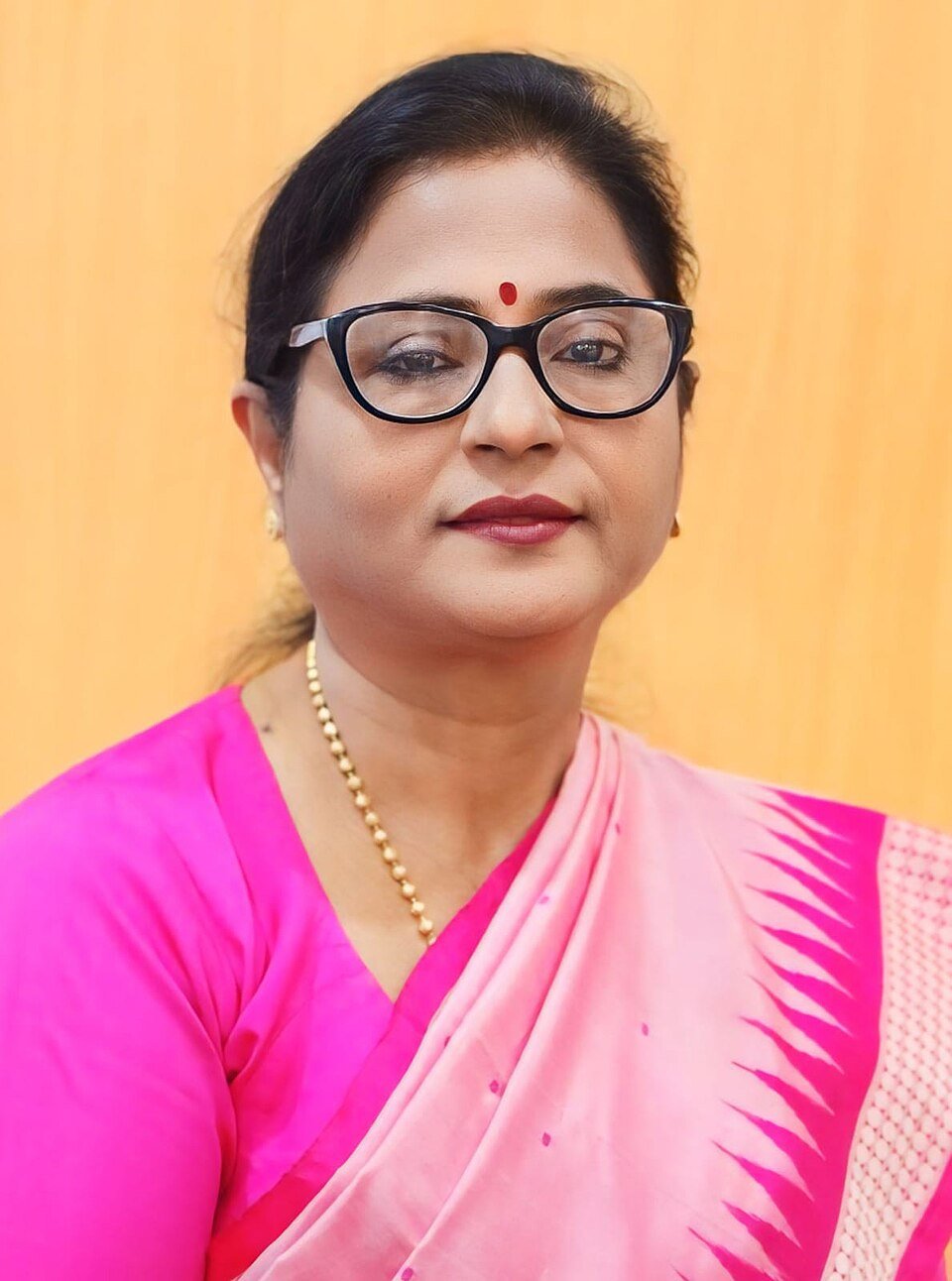
Odisha Assembly Speaker Surama Padhy joins India’s parliamentary participation at the 69th Commonwealth Parliamentary Conference in South Africa, alongside presiding officers from several Indian legislatures
GTNS, SEPTEMBER 14, 2026, Bhubaneswar, Odisha Legislative Assembly Speaker Surama Padhy is participating in the 69th Commonwealth Parliamentary Conference (CPC) in Cape Town, South Africa, as part of India’s parliamentary delegation at the international gathering being held from September 13 to 19, 2026. The conference brings together parliamentarians and parliamentary officials from across the Commonwealth.
The Cape Town conference is being held under the theme “Strengthening International Law and Parliamentary Democracy in a Changing World Order: Commonwealth Leadership.” The central focus is on how parliamentary institutions can respond to changes in the international system while protecting democratic principles, legislative accountability and the rule of law.
SURAMA PADHY’S ODISHA REPRESENTATION
Padhy’s participation gives Odisha a place in the international parliamentary discussions taking place in South Africa. As the Speaker of the Odisha Legislative Assembly, she is the presiding authority of the state legislature and plays a central role in the conduct of Assembly proceedings.
The Odisha delegation also includes Bhabani Shankar Bhoi, Deputy Speaker of the Odisha Legislative Assembly, who was among the presiding officers identified for India’s participation in the conference.
Their participation connects the Odisha Assembly with representatives of legislatures from across India and other Commonwealth jurisdictions.
A LARGE INDIAN PARLIAMENTARY DELEGATION
India’s participation in Cape Town includes a broad group of presiding officers from Parliament, Legislative Assemblies and Legislative Councils.
The delegation includes Lok Sabha Speaker Om Birla, along with presiding officers from Andhra Pradesh, Assam, Bihar, Delhi, Jharkhand, Karnataka, Kerala, Maharashtra, Meghalaya, Mizoram, Odisha, Punjab, Sikkim, Telangana, Tripura, Uttarakhand, Uttar Pradesh and West Bengal.
Among those identified for the Indian delegation are:
- Koyye Moshenu Raju — Chairman, Andhra Pradesh Legislative Council
- Ranjeet Kumar Dass — Speaker, Assam Legislative Assembly
- Prem Kumar — Speaker, Bihar Legislative Assembly
- Vijender Gupta — Speaker, Delhi Legislative Assembly
- Mohan Singh Bisht — Deputy Speaker, Delhi Legislative Assembly
- Rabindra Nath Mahato — Speaker, Jharkhand Legislative Assembly
- G. S. Patil — Speaker, Karnataka Legislative Assembly
- Saleem Ahmed — Chairman, Karnataka Legislative Council
- Thiruvanchoor Radhakrishnan — Speaker, Kerala Legislative Assembly
- Prof. Ram Shinde — Chairman, Maharashtra Legislative Council
- Rahul Narwekar — Speaker, Maharashtra Legislative Assembly
- Thomas A. Sangma — Speaker, Meghalaya Legislative Assembly
- Limison D. Sangma — Deputy Speaker, Meghalaya Legislative Assembly
- Lalbiakzama — Speaker, Mizoram Legislative Assembly
- Surama Padhy — Speaker, Odisha Legislative Assembly
- Bhabani Shankar Bhoi — Deputy Speaker, Odisha Legislative Assembly
- S. Kultar Singh — Speaker, Punjab Legislative Assembly
- S. Jai Krishan Singh — Deputy Speaker, Punjab Legislative Assembly
- Mingma Norbu Sherpa — Speaker, Sikkim Legislative Assembly
- Gaddam Prasad Kumar — Speaker, Telangana Legislative Assembly
- Gutha Sukender Reddy — Chairman, Telangana Legislative Council
- Dr. Banda Prakash — Deputy Chairman, Telangana Legislative Council
- Ram Prasad Paul — Deputy Speaker, Tripura Legislative Assembly
- Ritu Khanduri Bhushan — Speaker, Uttarakhand Legislative Assembly
- Satish Mahana — Speaker, Uttar Pradesh Legislative Assembly
- Kunwar Manvendra Singh — Chairman, Uttar Pradesh Legislative Council
- Rathindra Bose — Speaker, West Bengal Legislative Assembly.
This list comes from the briefing information released ahead of the conference; it identifies the officials participating in India’s parliamentary engagement and should not be interpreted as independent confirmation that every listed person has travelled to Cape Town.
SIX MAJOR WORKSHOP AREAS
The Indian delegation is expected to engage in six key workshop areas covering some of the most important challenges facing modern legislatures.
The subjects include inclusive and fair trade, particularly through stronger dialogue between parliaments; accessibility and inclusion of persons with disabilities; and the role of parliamentary leadership in climate adaptation and resilience.
Another major subject is artificial intelligence in parliaments. Discussions are looking at existing applications, future possibilities and strategies for introducing AI into parliamentary work.
The programme also covers human rights and peace, as well as post-legislative scrutiny—the process through which legislatures examine how laws function after they have been enacted.
YOUTH AND WOMEN AT THE CENTRE OF DISCUSSIONS
The conference is not limited to traditional parliamentary procedure.
A Youth Roundtable is focusing on the challenge of rebuilding young people’s trust in democratic institutions and encouraging their participation in democratic processes.
Women’s parliamentary participation is another major component. The 10th Commonwealth Women Parliamentarians Conference is being held around the theme “Making Gender Sensitivity an Institutional Mandate: Ethics, accountability, and structural change.” Four special workshops are planned under this programme.
These discussions bring questions of representation, institutional culture, accountability and equal participation into the wider parliamentary agenda.
OM BIRLA’S BRIEFING BEFORE THE CONFERENCE
Ahead of the Cape Town conference, Lok Sabha Speaker Om Birla chaired a high-level briefing meeting for the Indian parliamentary delegation.
Birla called upon members to participate actively in the conference sessions and workshops and to put forward India’s views effectively. He also emphasised punctuality, discipline and effective representation during the international proceedings.
Lok Sabha Secretary-General Utpal Kumar Singh and senior officials also briefed the delegation on the administrative arrangements, framework and strategic themes associated with the conference.
WHY THE CAPE TOWN VISIT IS IMPORTANT FOR ODISHA
Padhy’s participation has significance beyond a formal international visit.
State legislatures are increasingly dealing with questions that extend beyond conventional law-making: digital technology, artificial intelligence, climate change, accessibility, human rights, youth engagement and public confidence in democratic institutions.
For Odisha, the Cape Town engagement provides an opportunity for its Legislative Assembly to be part of that international exchange.
It also allows the state’s parliamentary leadership to interact with presiding officers and legislators from other jurisdictions and gain exposure to different approaches to legislative procedure and democratic governance.
FROM ODISHA ASSEMBLY TO INTERNATIONAL PARLIAMENTARY FORUM
The presence of Surama Padhy and Bhabani Shankar Bhoi places Odisha among the Indian state legislatures represented in the Commonwealth parliamentary discussions.
The larger Indian delegation reflects the scale of India’s engagement with Commonwealth parliamentary institutions, while Padhy’s participation gives Odisha a distinct presence within that national representation.
The conference will continue through September 19, with discussions expected to examine how parliamentary institutions can remain democratic, inclusive, accountable and effective amid rapid global changes.
For Odisha, Surama Padhy’s participation in Cape Town represents an international parliamentary engagement that connects the state’s legislative institution with a wider Commonwealth dialogue on democracy, international law, technology, inclusion, climate resilience, human rights and the future of representative governance.