

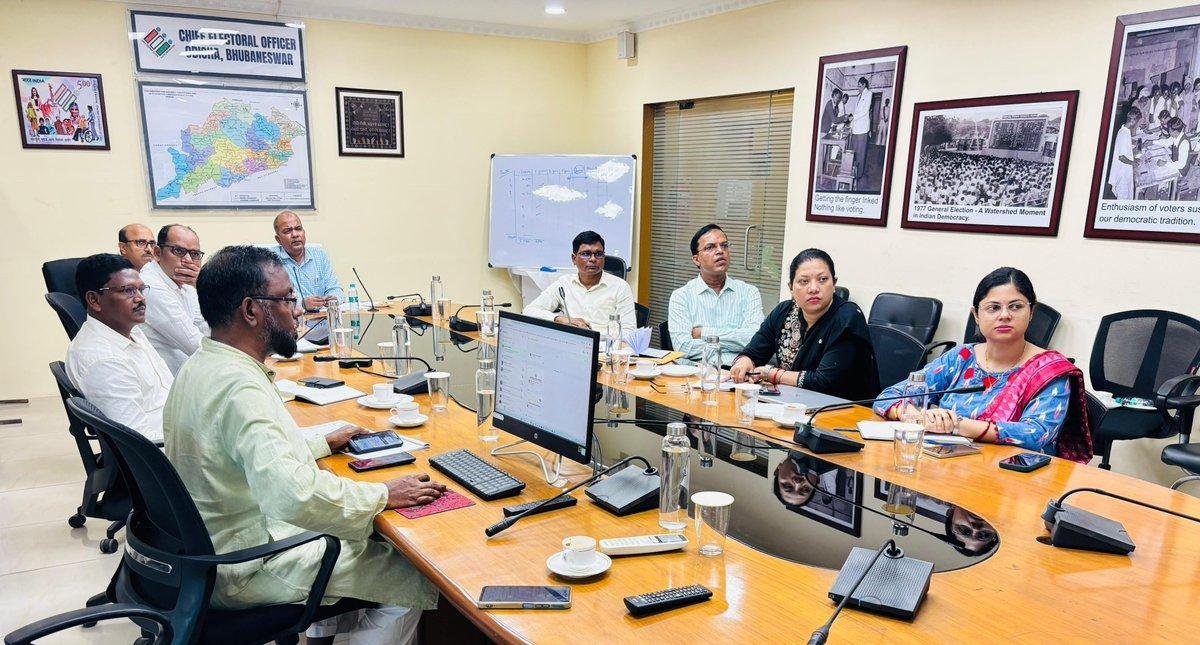
Nine-day Assembly session begins amid Opposition scrutiny of the revised electoral roll, with SIR, MMDR Act, textbook errors and other public issues expected to dominate the political debate.
GTNS
SEPTEMBER 21, 2026 , Bhubaneswar: Odisha’s political temperature is set to rise as the State Assembly begins its seventh session of the 17th Assembly on Tuesday, with the newly published electoral roll from the Special Intensive Revision (SIR) emerging as another issue that the Opposition has said it wants to question.
The Assembly session will run from September 22 to October 3, with nine working days. The all-party meeting held on Monday under Speaker Surama Padhy focused on orderly functioning of the House, but the Opposition has already signalled that several contentious matters will be taken up.
The SIR issue has acquired fresh importance because the final electoral roll published on Monday records 3,16,32,754 electors in Odisha. The Chief Electoral Officer’s office said the revision resulted in a net reduction of about 17.66 lakh names compared with the pre-SIR electorate, after additions during the claims and objections process.
SIR numbers put under political scrutiny
The revision was conducted through a statewide enumeration exercise beginning May 30.
According to CEO R S Gopalan, 3,13,87,034 enumeration forms, representing about 93.97% of the electorate, were received during the exercise. A total of 20,12,557 electors whose forms were not received were consequently absent from the July 5 draft roll.
The draft, however, was not the final list.
During the claims and objections stage, authorities received applications for inclusion and carried out further verification. The CEO’s office said 2,90,497 electors were added, while 44,777 were found ineligible and removed after verification.
The final roll now contains around 3.16 crore electors, including approximately 1.61 crore male voters and 2,774 voters belonging to the third-gender category, according to figures reported by the CEO’s office. The rationalisation exercise has also resulted in 45,250 polling stations across the state.
Why the Opposition is raising the issue
BJD president and Leader of Opposition Naveen Patnaik has criticised the SIR exercise and said the deletion of a large number of names is a serious matter.
The BJD has also raised concerns about whether genuine voters, particularly people who may have faced difficulties during verification, have been affected. These are political allegations from the Opposition and are not an independent finding that all deleted names were eligible voters.
The issue may therefore move from the election-administration arena into the political arena when the Assembly meets, particularly if Opposition members seek explanations about the verification process and safeguards for eligible electors.
Nearly 58 lakh records faced scrutiny
The scale of the verification exercise is one of the central features of the SIR process.
The CEO’s office said notices were issued to 12,98,779 unmapped electors for verification. Another 45,37,613 electors with logical discrepancies in their entries were issued notices.
Together, the two categories accounted for 58,36,392 notices. The CEO’s office said booth-level officers conducted hearings and verification during the claims and objections period and that genuine voters were reinstated where appropriate.
What the authorities say about deleted entries
The Election Commission side has maintained that the deletions were supported by verification.
The categories reported by the CEO’s office include approximately:
- 8.8 lakh electors who had permanently shifted;
- 8.32 lakh deceased electors;
- 1.58 lakh duplicate entries;
- around 2 lakh absent electors; and
- approximately 14,000 cases involving age-related discrepancies.
The CEO’s office also reported that deleted entries included foreign nationals who were not eligible for inclusion in India’s electoral rolls, including around 200 Tibetans without Indian citizenship, more than 100 Nepalese nationals, more than 100 other foreign citizens, three Filipinos and one Sri Lankan.
A separate report has highlighted the deletion of names of around 300 Tibetans living in Chandragiri in Gajapati district, making citizenship and electoral eligibility another potentially sensitive aspect of the debate.
SIR joins a much longer Assembly agenda
The voter-roll issue will not stand alone.
The MMDR Amendment Act, 2026 is already one of the principal political flashpoints. BJD has demanded discussion on the legislation and Naveen Patnaik has urged Chief Minister Mohan Charan Majhi to seek a unanimous Assembly resolution on its repeal. That is the BJD’s position; the government has indicated it is open to discussion on the MMDR issue.
Other issues expected to feature include alleged textbook errors, farmers’ concerns, law and order, flood management, prices, the Mahanadi water dispute and other matters of public interest.
The government has said it wants cooperation for the smooth functioning of the House. Parliamentary Affairs Minister Mukesh Mahaling has indicated that around six Bills are likely to be introduced and that the government is prepared to discuss matters concerning Odisha’s interests, subject to the Speaker’s decision.
The key question for the Assembly
The political debate over SIR is likely to centre on a straightforward question: how can the electoral roll remain accurate while ensuring that no eligible voter is left out?
The final numbers show both sides of that challenge — large-scale deletion of entries identified as ineligible or no longer valid, alongside nearly three lakh additions following claims and verification.
For the Majhi government, the Assembly will provide an opportunity to place the administrative and verification details on record. For the Opposition, the session provides a platform to question the process and seek assurances regarding eligible voters.
With only nine working days, the extent of the debate will depend on the Speaker’s scheduling and the decisions of the parties inside the House.
The SIR issue, therefore, is now moving into a new phase: from door-to-door electoral verification to political scrutiny on the floor of the Odisha Assembly.
Global Times News |GTNS
SEPTEMBER 21, 2026