

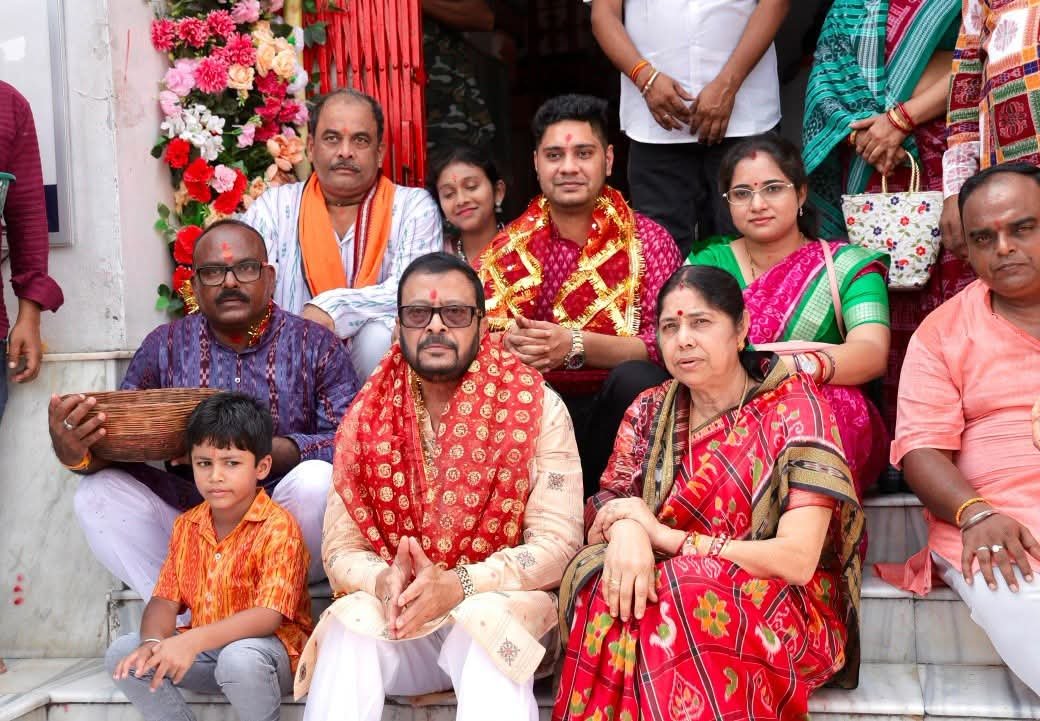
Revenue Minister Suresh Pujari offers prayers at Sambalpur’s presiding deity shrine, receives blessings and joins the traditional Nabanna observance on the occasion of Nuakhai
GTNS, SEPTEMBER 15, 2026, SAMBALPUR: The spiritual and cultural character of Nuakhai came alive in Sambalpur as Revenue Minister Suresh Pujari paid homage to the region’s presiding deity, Maa Samaleswari, on the occasion of the agrarian festival.
Pujari visited the historic shrine of Maa Samaleswari, sought the deity’s blessings and participated in the traditional Nabanna observance at the temple premises. The occasion brought together the festival’s central themes of faith, agriculture, gratitude and community.
For Sambalpur, the worship of Maa Samaleswari is deeply woven into the cultural fabric of Nuakhai. The deity holds a special place in the religious life of the region, while the festival itself marks the ceremonial welcoming of the new harvest.
A festival rooted in the harvest
Nuakhai is not simply a celebration of newly harvested grain. It represents the relationship between the farmer, the soil and the divine. The first produce of the agricultural season is traditionally offered with reverence before it becomes part of the household meal.
The Nabanna ritual gives this agricultural cycle a spiritual dimension. The new rice symbolises the fruit of months of labour and carries the hopes of farming families for a prosperous season ahead.
Maa Samaleswari at the heart of Sambalpur’s identity
Maa Samaleswari’s shrine occupies a central position in Sambalpur’s religious and cultural landscape. During Nuakhai, devotion to the deity becomes closely connected with the region’s collective celebration.
The temple therefore becomes more than a place of worship during the festival. It serves as a cultural meeting point where tradition, faith and community identity come together.
Prayers for farmers and the people
During his observance, Pujari prayed for the well-being of the people of Odisha, with particular emphasis on the farming community. He expressed the hope that the blessings of Maa Samaleswari would bring happiness, prosperity and welfare to farmers and families across the state.
The message carries particular significance during Nuakhai, when the agricultural community stands at the centre of the celebration.
Nuakhai as a living cultural tradition
Across generations, Nuakhai has remained an important expression of Sambalpuri identity. Families come together, elders are respected, traditional food is prepared and communities renew social bonds.
The festival also reflects the cultural philosophy of gratitude—gratitude for the harvest, for nature and for the labour that sustains society.
The observance by Suresh Pujari at the Maa Samaleswari shrine therefore reflected more than a religious ritual. It highlighted the continuing connection between Sambalpur’s faith, farming traditions and cultural identity.
As Odisha celebrates Nuakhai, the festival once again places the region’s rich heritage in the spotlight, reminding the wider world that its traditions remain a living part of everyday social and cultural life.