
Strained ties with New Delhi put Bangladesh’s new government under diplomatic and domestic political pressure
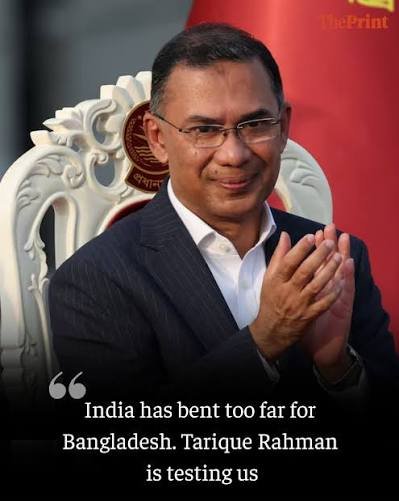
DHAKA / INDIA : GTNS, SEPTEMBER 10, 2026; Bangladesh’s relationship with India is emerging as one of the most closely watched foreign-policy challenges for Prime Minister Tarique Rahman, with uncertainty over his proposed India visit adding another layer to already complicated bilateral ties.
New Delhi has invited Rahman to attend a BRICS-related session in his capacity as the current chair of BIMSTEC, but Dhaka has not yet confirmed whether the Bangladeshi Prime Minister will travel to India. Bangladesh’s Foreign Minister Khalilur Rahman recently declined to comment on the issue.
India Becomes a Major Political Issue
Relations between the two neighbours have been particularly sensitive since the political upheaval that removed former Prime Minister Sheikh Hasina from power and her subsequent stay in India.
The issue has continued to influence political discussions in Dhaka, while questions surrounding Hasina have become an important part of the diplomatic conversation between the two governments.
Rahman’s administration has sought to emphasise Bangladesh’s sovereignty and national interests in dealing with New Delhi. At the same time, Indian officials and diplomats have indicated an interest in rebuilding the relationship.
Domestic Pressure Adds Complexity
The debate over India comes while Bangladesh is dealing with a number of domestic challenges, including public-health pressures, economic concerns and law-and-order issues.
A severe dengue outbreak has put additional pressure on the country’s healthcare system, with Reuters reporting more than 42,000 hospitalisations and 117 deaths this year as of early September. Bangladesh is also dealing with a major measles outbreak.
Against that background, India-related political messaging carries considerable weight inside Bangladesh.
However, there is currently no independently verified evidence proving that Rahman has deliberately intensified anti-India sentiment as a strategy to divert attention from domestic problems. That interpretation should therefore remain within the realm of political analysis rather than be reported as fact.
Dhaka Sends Mixed Signals
The Rahman government’s public messaging has not been uniformly confrontational towards India.
The Prime Minister has recently stressed religious harmony and equal rights for Bangladesh’s communities, including assurances regarding the safety of Hindus during upcoming Durga Puja celebrations.
At the diplomatic level, Indian High Commissioner Dinesh Trivedi has also engaged with Bangladeshi leadership as both sides explore possibilities for improving relations.
BRICS Visit Could Become a Test
Rahman’s possible appearance in New Delhi could become an important test of where the relationship is heading.
His decision on the BRICS invitation would carry a message beyond the summit itself. Participation could provide an opportunity for direct engagement with Indian leadership, while non-participation could reinforce perceptions that the bilateral relationship remains politically difficult.
A Relationship Too Important to Ignore
India and Bangladesh share a long border, extensive trade links, cultural connections and important security interests.
For Dhaka, maintaining an independent foreign policy while preserving practical cooperation with New Delhi will be a difficult balancing exercise.
For India, the challenge will be to rebuild confidence without ignoring concerns relating to security, political developments and the treatment of minorities.
The coming weeks could therefore determine whether the current friction develops into a prolonged diplomatic standoff — or becomes the starting point for a more pragmatic reset.
Global Times News | INDIA ; GTNS
SEPTEMBER 10, 2026