


13,221 people evacuated, 49 relief camps functioning and 43 ODRAF-NDRF teams deployed across affected districts
GTNS | BHUBANESWAR | SEPTEMBER 29, 2026 , Odisha’s weather situation showed signs of improvement on September 29 as rainfall activity declined across most parts of the State, but the administration continued its emergency response in areas affected by flooding, waterlogging and inundation.
The latest situation assessment indicates that the State is moving from the most intensive phase of evacuation towards sustained monitoring and relief support. Authorities are continuing to watch vulnerable roads, low-lying areas, underpasses, embankments, houses and agricultural land for fresh localised problems.
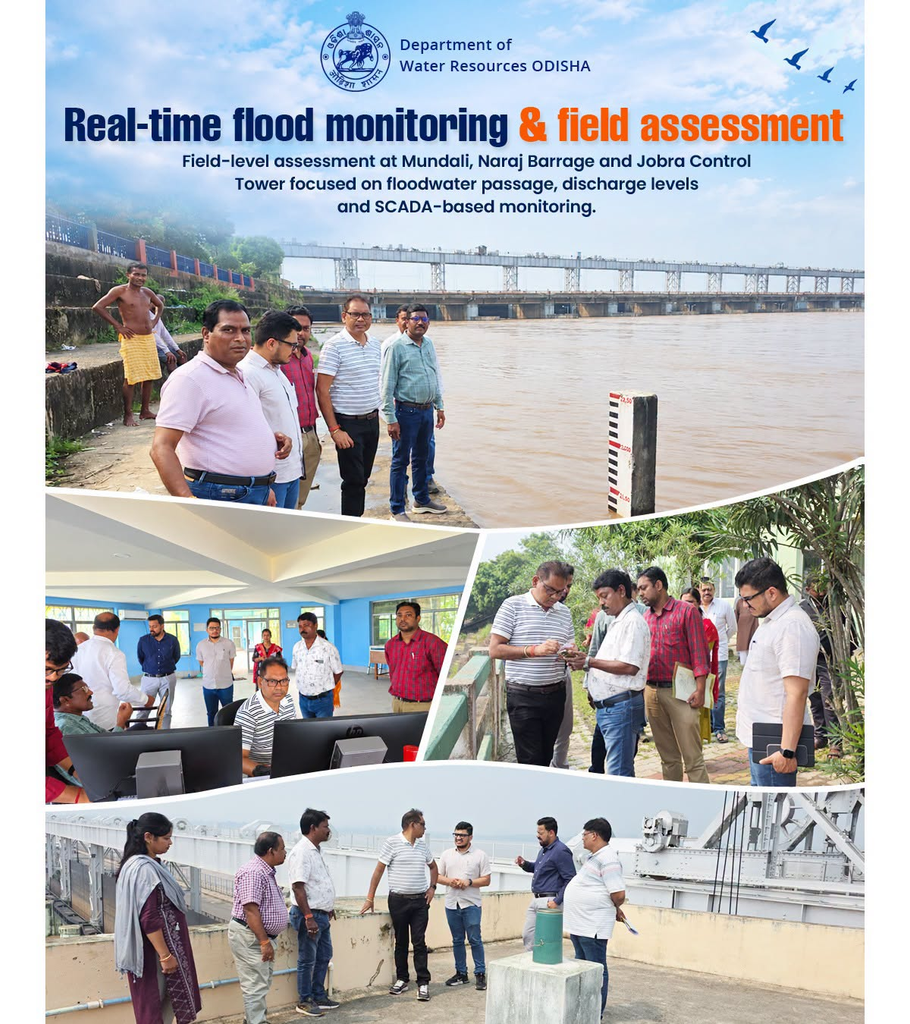
The State Emergency Operation Centre (SEOC) is coordinating with District Emergency Operation Centres (DEOCs) on a 24-hour basis.
More than 13,000 people evacuated
A total of 13,221 people have been evacuated from affected areas, with 49 relief camps operating across the districts covered by the latest assessment.
Baleshwar recorded the largest evacuation, with 7,452 people moved to safer locations. Jajpur followed with 3,876 evacuations, while smaller-scale evacuations were reported in Jagatsinghpur, Sambalpur and Bargarh.
The evacuation figures represent precautionary and emergency measures taken in areas affected by flooding and inundation.
Baleshwar remains among the most affected
The district-wise assessment shows that Baleshwar continues to account for a substantial share of the reported impact.
Six blocks, 72 gram panchayats and 479 villages have been affected, with an estimated 48,560 people in the affected population. Fifteen relief camps are operational in the district.
Jajpur has reported two affected blocks, 12 gram panchayats and 36 villages, with 5,059 people affected. Nineteen relief camps are functioning there.
Bhadrak has reported five blocks, 57 gram panchayats and 172 villages affected, covering 18,691 people.
Other affected areas listed in the assessment include Nabarangpur, Sambalpur, Bargarh, Kandhamal and Jagatsinghpur.
Rainfall drops, but September remains wetter than normal
The immediate rainfall picture has improved considerably.
Odisha recorded an average of just 1.1 mm rainfall during the 24 hours ending at 8.30 AM on September 29. Banki-Dampada block in Cuttack recorded the highest rainfall during that period at 45 mm.
Cuttack recorded the highest district average at 9.5 mm, followed by Puri at 6.3 mm and Gajapati at 4.9 mm.
Despite the decline in daily rainfall, the cumulative figure for September 1–29 stood at 316.2 mm, against the normal 233.4 mm — a 35.5% surplus.
43 response teams remain on standby
The State has retained a sizeable disaster-response deployment.
A total of 43 ODRAF and NDRF teams are deployed, comprising 36 ODRAF teams and seven NDRF teams.
The deployment includes 14 teams in Baleshwar, nine in Bhadrak, four each in Koraput and Jajpur, three in Jagatsinghpur and two in Nabarangpur. Reserve teams are positioned at OSAP 6th Battalion in Cuttack and NDRF 3rd Battalion at Mundali.
These teams remain available for rescue, evacuation and emergency operations if local conditions deteriorate.
Relief extends to livestock
The response has also included measures for livestock in affected areas.
The government has supplied 907.04 metric tonnes of cattle feed to affected districts. Baleshwar received 400 MT, Bhadrak 380.5 MT, Jajpur 67.74 MT, Mayurbhanj 40 MT and Koraput 18.80 MT.
The supply is intended to support livestock in areas where flooding and waterlogging have disrupted normal access to fodder.
Yellow Warning remains in eight districts
According to the IMD forecast cited in the situation update, light to moderate rain or thundershowers could occur at one or two places across Odisha.
A precautionary Yellow Warning was issued for Baleshwar, Bhadrak, Jajpur, Kendrapada, Jagatsinghpur, Cuttack, Kendujhar and Mayurbhanj. No fishermen warning was in force at the time of the update.
Focus now on localised risks
With widespread rainfall easing, authorities are concentrating on problems that can continue even after the main spell weakens.
District administrations have been asked to monitor waterlogging in low-lying areas, flooded roads and urban underpasses. They are also maintaining vigilance over vulnerable structures, kutcha roads, possible landslides and damage to horticultural and standing crops.
The continuing deployment of response teams means that the emergency machinery has not been stood down despite the improvement in rainfall.
Odisha moves from rescue to sustained relief
The latest situation presents a transition rather than a complete end to the weather emergency.
Rainfall has reduced, but thousands of people have already been evacuated, relief camps remain active and several districts continue to report affected villages and populations.
For the administration, the immediate task is to maintain safe shelter and essential assistance while monitoring whether water levels and local weather conditions allow evacuated residents to return safely.
With SEOC and DEOCs maintaining round-the-clock coordination, Odisha’s response operation remains focused on preventing a fresh escalation while supporting communities already affected by the recent spell of heavy rain.
— GTNS —