

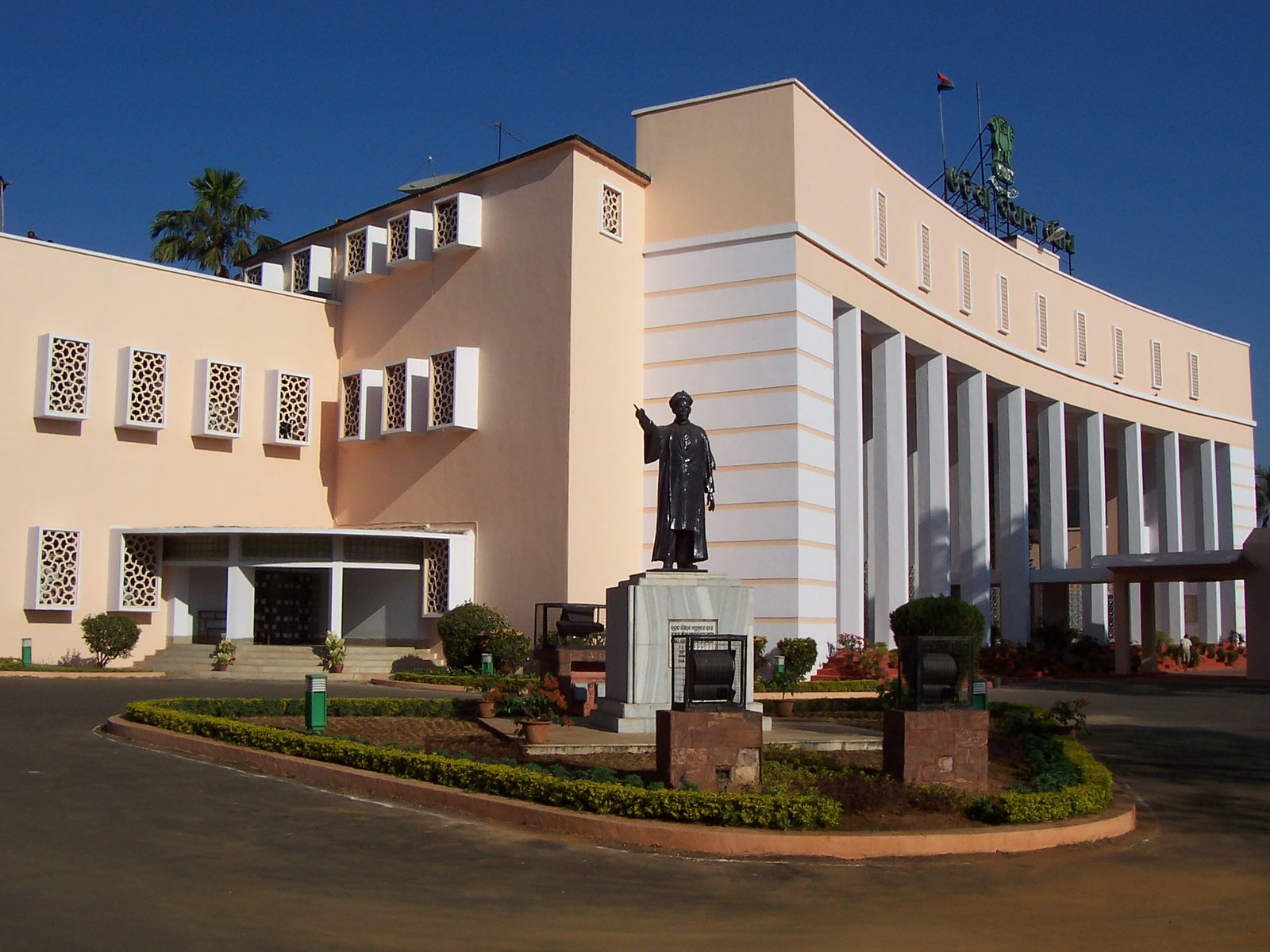
Five Working Days Marked by Repeated Disruptions; House Passes Four Bills Before Speaker Adjourns Monsoon Session Sine Die
GTNS
BHUBANESWAR | SEPTEMBER 28, 2026 , The Monsoon Session of the Odisha Legislative Assembly ended abruptly on Monday, with Speaker Surama Padhy adjourning the House sine die four days before its scheduled conclusion as the state continued to face heavy rainfall and flood-related concerns.
The session, which began on September 22 and was originally scheduled to continue until October 3, ultimately functioned for only five working days. Repeated protests over the Mines and Minerals (Development and Regulation) Amendment Act, 2026, became the dominant political confrontation inside the House.
The early conclusion came after Chief Whip Saroj Kumar Pradhan moved a motion seeking closure of the session, citing the prevailing flood situation and the need for legislators to return to their constituencies. BJP legislators Upasana Mohapatra and Laxman Bag supported the motion before the Speaker announced the sine-die adjournment.
MMDR dispute overshadows legislative business
From the opening day, the amended MMDR law became the central point of confrontation between the ruling BJP and the Opposition BJD and Congress.
Opposition members repeatedly demanded withdrawal of the amendment, arguing that it could adversely affect Odisha’s financial interests from mineral-bearing land. During Monday’s proceedings, BJD and Congress MLAs entered the Well carrying placards and wearing black scarves while raising slogans against the legislation.
The Opposition described the amended law as harmful to Odisha and tribal interests and demanded its repeal. The protests continued even as ministers attempted to respond to questions.
The dispute also moved beyond the Assembly. BJD organised a major demonstration at Lower PMG in Bhubaneswar, with party president and Leader of Opposition Naveen Patnaik addressing supporters and demanding a political response to the amended mining legislation.
Patnaik argued that Odisha’s mineral resources are closely connected with the state’s long-term economic interests and called for a wider political movement over the issue. The BJP, meanwhile, rejected the Opposition’s interpretation and accused BJD of misleading people over the financial implications of the amendment.
Government position differs sharply from Opposition claim
A major point of disagreement concerns the potential financial impact of the amended law.
Opposition parties have claimed that Odisha could face losses exceeding ₹1 lakh crore in revenue if the amended framework is implemented in the state.
The government side has disputed that assessment. Steel and Mines Minister B B Jena has said that the state government has not yet completed an assessment establishing whether Odisha would ultimately gain or lose financially under the new mining law, while maintaining that the state’s interests would be protected.
The competing claims over the financial consequences therefore remain at the centre of the political dispute, with the two sides presenting substantially different interpretations of what the amendment could mean for Odisha.
Opening day also saw textbook controversy
The MMDR controversy was not the only issue that disrupted the session.
On the opening day, Congress members raised the mining amendment while BJD legislators protested over alleged errors in school textbooks.
The session began with obituary references for former legislators and other prominent personalities, followed by a two-minute silence. The atmosphere changed once Question Hour began, with Opposition members raising their respective issues and the proceedings subsequently being adjourned amid the uproar.
The textbook controversy remained another point of confrontation between the government and Opposition during the session.
Monday begins with another confrontation
The final working day followed the same pattern.
When the House assembled at around 10.30 am, Opposition legislators entered the Well and raised slogans against the MMDR Amendment Act. Some members were seen near the Speaker’s podium and on the reporters’ table as the protest intensified.
Speaker Surama Padhy repeatedly appealed to the protesting members to return to their seats. With the disruption continuing, the House functioned for only about seven minutes before being adjourned until 11.30 am.
When the Assembly reconvened, protests continued. The Speaker nevertheless allowed Zero Hour proceedings to continue amid the din.
BJD legislators later walked out and joined the party’s MMDR protest outside the Assembly. Congress MLAs remained inside and continued their protest in the Well.
The Speaker eventually adjourned the House until 4 pm after only limited business could be conducted.
Flood situation changes the course of the session
While the political confrontation continued, the state’s worsening rain and flood situation became the immediate reason for ending the session early.
Members of the ruling side raised the difficulties faced by people in flood-affected areas, including damage to houses and agricultural land. They called for attention to relief, rehabilitation and assistance in affected districts.
Revenue and Disaster Management Minister Suresh Pujari also spoke about the Mahanadi situation. According to the Assembly report, around 6.40 lakh cusecs of water was flowing into Odisha from the Chhattisgarh side, while about 4.49 lakh cusecs was being discharged. At Mundali, approximately 7.60 lakh cusecs was entering the barrage at around 9 am.
Pujari said the situation at Mundali was not then considered a major threat and that authorities were taking measures to prevent the flow from crossing 10 lakh cusecs. Administrative and disaster-response teams, including district officials, NDRF and Fire Services personnel, were deployed at necessary locations.
Against this backdrop, the government sought early closure of the Assembly so legislators could return to their constituencies and participate in relief and rehabilitation efforts.
Four Bills passed during the session
Despite the repeated disruptions, four Bills were passed during the session.
Reports have reliably identified three of them:
- Odisha State Tax on Professions, Trades, Callings and Employments Bill, 2026
- Indian Stamp (Odisha Amendment) Bill, 2026
- Odisha Jan Vishwas Bill, 2026
The session records and current reports confirm that four Bills were passed in total, but the available reports do not consistently identify the fourth Bill by name; it is therefore not being named here without further verification.
The Bills were passed after Opposition BJD and Congress members walked out during the post-lunch proceedings on the final day.
Question Hour becomes another casualty
The repeated disruptions had a direct impact on the Assembly’s scheduled business.
One report stated that because of continuous protests, Question Hour could not be conducted on any of the five working days of the session. Another account of the final day recorded only a few minutes of functioning before the first adjournment.
The result was a session in which the political confrontation over MMDR dominated much of the proceedings, while several scheduled legislative and departmental discussions had limited time to be taken up.
A session defined by two parallel battles
The 2026 Monsoon Session ultimately developed around two competing priorities.
For the Opposition, the MMDR Amendment Act became the central issue, with BJD and Congress demanding that the state government oppose the legislation and questioning its possible impact on Odisha’s mineral revenue.
For the government, the flood situation became an increasingly urgent concern, particularly as heavy rainfall affected different parts of the state and legislators were expected to return to their constituencies.
The early adjournment brought the institutional confrontation inside the Assembly to an end for now, but it did not resolve the underlying political dispute over the amended mining law.
With the House now adjourned sine die, the MMDR controversy is likely to continue outside the Assembly through political campaigns, public meetings and competing claims over the financial consequences of the legislation.
For Odisha, the central unresolved question remains how the amended mining framework will affect the state’s revenue position and its authority over mineral-bearing resources once its practical implications are fully assessed.