

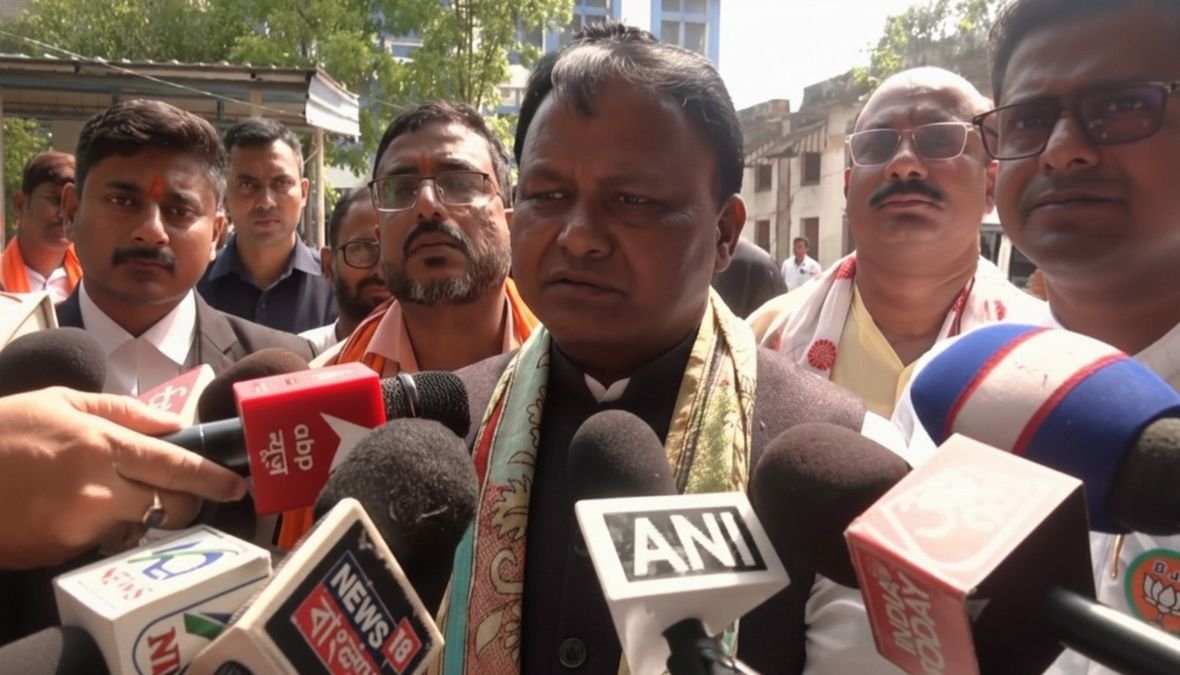
Odisha CM takes indirect swipe at Congress over SIR, EVM debate and demand for ballot-paper elections
GTNS | OCTOBER 6, 2026
BHUBANESWAR: Odisha Chief Minister Mohan Charan Majhi has stepped up his political criticism of the Congress over the ongoing debate surrounding electoral-roll revision, electronic voting machines and the Election Commission.
In a social-media post, Majhi questioned what he described as an apparent contradiction in the Opposition’s position on electoral reforms. Without naming individual Congress leaders in every instance, the Chief Minister linked the party’s objections to SIR with its wider concerns over EVMs and the Election Commission, while also referring to the demand for a return to ballot-paper voting.
His central argument was that strengthening the electoral system should involve improving its accuracy and transparency rather than reversing technological changes.
The post comes at a time when the SIR exercise has become a major political flashpoint. Congress and several Opposition parties have challenged aspects of the revision process, while the Election Commission has defended electoral-roll revision as part of its constitutional responsibility.
According to the Election Commission’s own documentation, electoral-roll revision is intended to ensure that eligible citizens are included while discrepancies such as duplicate, shifted and deceased electors are identified and addressed. The Commission has also described the integrity of electoral rolls as fundamental to free and fair elections.
Majhi’s intervention focused particularly on the principle of maintaining an accurate electoral register. He argued that population movement, urbanisation, deaths and changes of residence can create inconsistencies in voter databases, making periodic verification necessary.
The Chief Minister also drew attention to the political controversy over EVMs. Congress has raised concerns about electronic voting and, according to recent reports, sections of the Opposition have demanded a return to ballot-paper voting.
The issue has now expanded beyond the technical question of voting machines. The political debate includes the credibility of the Election Commission, the methodology used for revising electoral rolls and the safeguards available to citizens whose names may be affected during the process.
Majhi’s latest remarks therefore place the focus on a broader question: whether electoral reforms should be judged by their stated objective and safeguards, or whether the political disagreement should extend to the technology and institutions administering elections.
The Congress and other Opposition parties, however, have maintained that their objections are connected to electoral transparency and voter rights. Their criticism of SIR centres on concerns over possible exclusion of eligible voters and the need for adequate mechanisms to challenge or correct entries.
The Election Commission has meanwhile continued to provide voter-registration and electoral-roll services, including facilities for checking names and submitting documents relating to SIR.
Majhi’s post adds an Odisha dimension to what has become a nationwide political dispute over the electoral process. His criticism comes as Opposition parties continue their campaign against SIR and the Election Commission, including protests in New Delhi.
The larger political contest is now being fought on two fronts—how voter lists should be maintained and how much public confidence should be placed in the institutions and technology used during elections.
For voters, the immediate issue remains practical: ensuring that every eligible citizen is properly registered and has an opportunity to raise objections or seek correction if an electoral-roll entry is found to be incorrect.
GTNS | BHUBANESWAR