

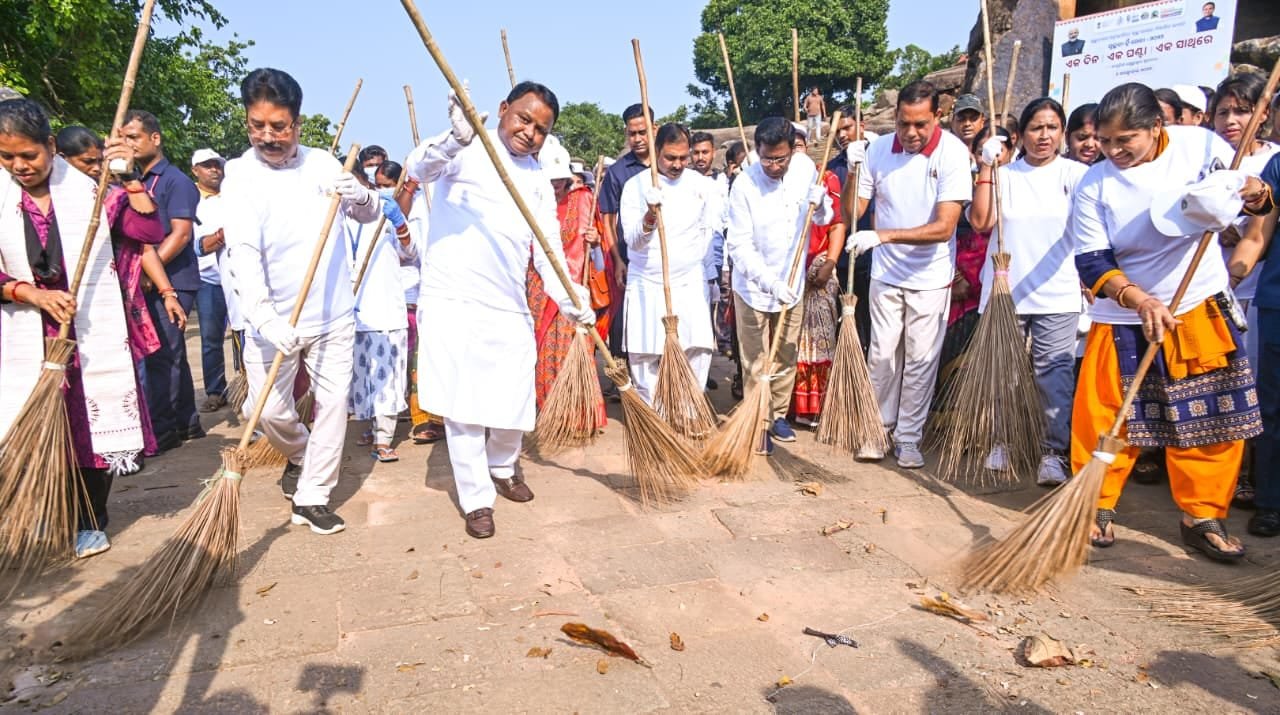
CM Mohan Charan Majhi joins ‘Ek Din, Ek Ghanta, Ek Saath’ drive at Khandagiri; urges citizens to segregate waste and take responsibility for neighbourhood cleanliness
BHUBANESWAR | OCTOBER 1: The campaign to improve Bhubaneswar’s cleanliness standards is increasingly shifting from civic services alone to citizen participation, with Chief Minister Mohan Charan Majhi calling for everyday public involvement in keeping roads, colonies and shared spaces clean.
Majhi participated in the ‘Ek Din, Ek Ghanta, Ek Saath’ cleanliness programme organised by the Bhubaneswar Municipal Corporation at Khandagiri on Thursday as part of the Swachhata Hi Seva campaign. The Chief Minister also joined the cleanliness activity through voluntary manual work.
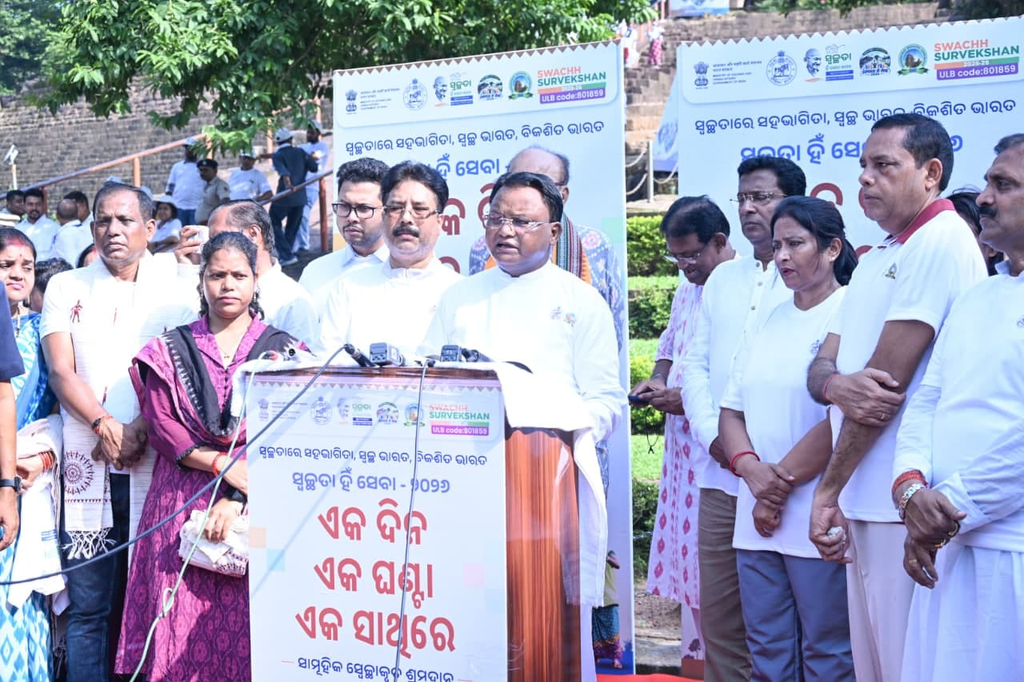
Addressing the gathering, Majhi said Bhubaneswar currently occupies the ninth position in the national cleanliness ranking and urged residents to work collectively if the capital is to move higher. The ninth position is also reflected in Odisha government documentation citing the latest Swachh Survekshan results.
Cleanliness responsibility extends beyond the household
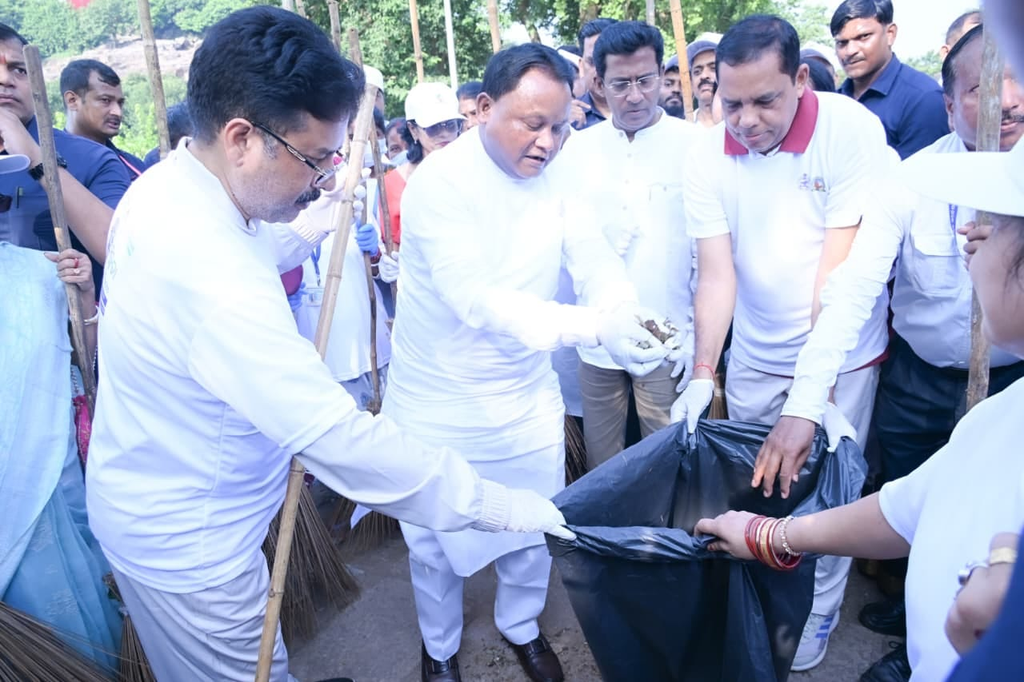
The Chief Minister’s message focused on changing the way residents view civic cleanliness.
While households generally concentrate on keeping their own premises clean, Majhi said the same responsibility should extend to the road outside the house, residential colonies and other common areas.
He urged citizens to cooperate with sanitation workers, separate wet and dry waste at source, hand over waste to authorised collection vehicles and discourage littering in public spaces.
The emphasis on waste segregation is particularly important as the city works to improve the efficiency of its waste-management system. The broader objective is to make cleanliness a routine civic practice rather than an activity limited to special campaigns.
Sanitation workers at the centre of the effort
Majhi also acknowledged the contribution of sanitation workers, crediting their regular work for improvements in the city’s cleanliness.
He said the state government was committed to measures concerning the social security and housing needs of sanitation workers, while stressing the importance of recognising their contribution to urban public health and sanitation.
The Chief Minister also invoked Mahatma Gandhi’s emphasis on cleanliness and said the Swachhata Hi Seva campaign had helped turn sanitation into a wider public movement since 2014.
Bhubaneswar gets another sanitation opportunity
The cleanliness campaign comes days after Bhubaneswar and Puri were selected among 50 cities under the Centre’s PRAGATI-50 initiative to be developed as model sanitation cities.
The initiative, under the Swachh Bharat Mission-Urban 2.0, focuses on areas including solid-waste management, used-water management, sanitation, cleanliness and citizen participation. The selected cities are intended to demonstrate practices that can be replicated elsewhere.
For Bhubaneswar, the combination of the PRAGATI-50 selection and the ongoing citizen-focused cleanliness campaign places greater attention on how the city manages waste, public spaces and community participation.
Officials and public representatives participate
Housing and Urban Development Minister Krushna Chandra Mahapatra, Ekamra MLA Babu Singh, BMC Mayor Sulochana Das, former MLA Priyadarshi Mishra, social worker Jagannath Pradhan, BMC Commissioner Chanchal Rana, corporators, civic employees and sanitation workers were among those present at the programme.
The central message from the Khandagiri campaign was that improving a city’s cleanliness ranking cannot depend only on municipal machinery. Household-level waste segregation, responsible disposal and public cooperation are equally important parts of the sanitation chain.
For Bhubaneswar, the immediate challenge is therefore not simply cleaning more areas, but sustaining cleaner public spaces through regular civic participation.
GTNS | BHUBANESWAR | OCTOBER 1, 2026