
New Delhi pushes trade diversification, secure supply routes and greater use of national currencies as BRICS seeks more room to act independently in a changing global economy
MODI–PEZESHKIAN HANDSHAKE SIGNALS DEEPENING INDIA–IRAN ENGAGEMENT AT BRICS 2026
INDIA ; GTNS, SEPTEMBER 11, 2026; NEW DELHI: The BRICS platform in New Delhi delivered a powerful geopolitical message on Friday: emerging economies want greater freedom to choose their trading partners, payment mechanisms and economic relationships without being dictated by any single power.
A handshake between Prime Minister Narendra Modi and Iranian President Masoud Pezeshkian at the BRICS Business Forum in New Delhi emerged as a notable diplomatic moment, highlighting the importance India attaches to its relationship with Iran.
BRICS BRINGS INDIA AND IRAN CLOSER ON ECONOMIC ISSUES
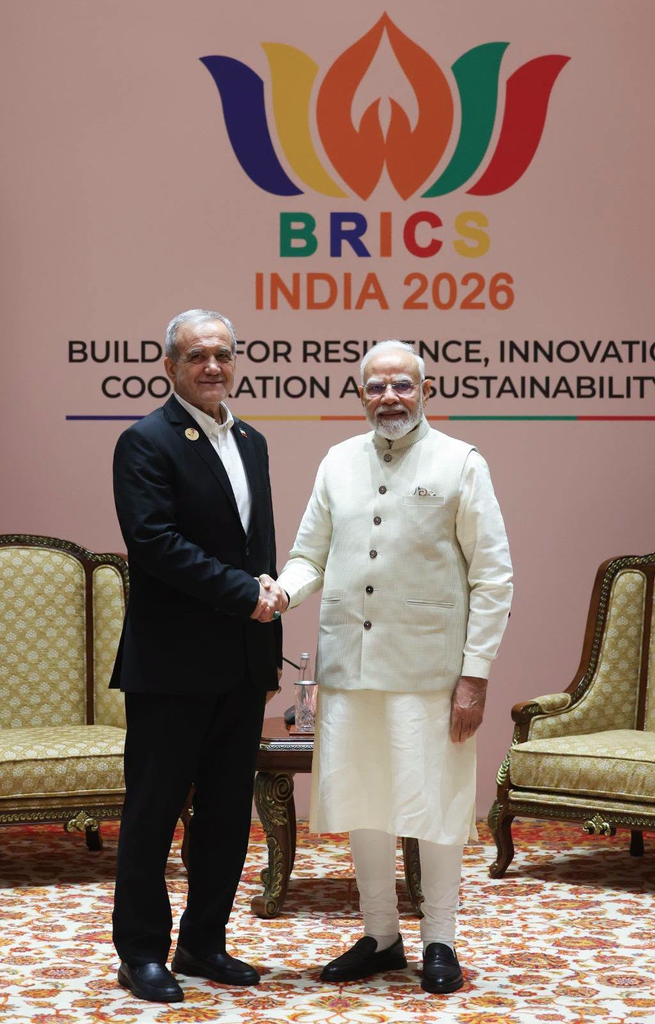
The Modi–Pezeshkian interaction took place against a wider BRICS agenda focused on increasing trade, strengthening supply chains and making international commerce more resilient.
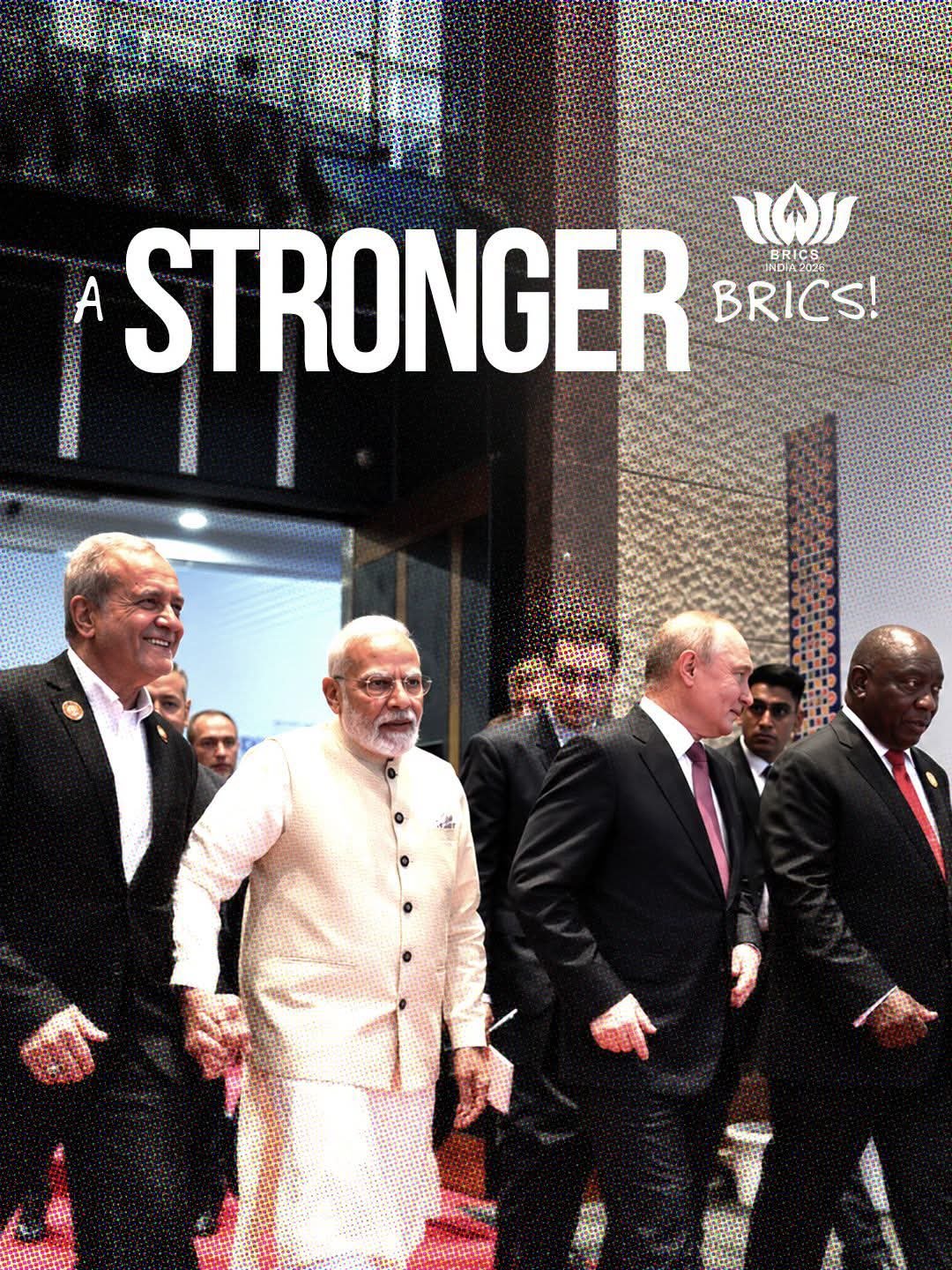
Prime Minister Narendra Modi, Russian President Vladimir Putin and Iranian President Masoud Pezeshkian used the BRICS Business Forum to emphasise stronger economic cooperation, secure trade routes and wider use of national currencies in international transactions. Their message comes at a time when US President Donald Trump has sharply criticised BRICS efforts that could reduce dependence on the US dollar.
INDIA’S MESSAGE: PARTNERSHIP WITH ALL, DEPENDENCE ON NONE
For New Delhi, the development is less about creating an anti-American bloc and more about protecting India’s strategic flexibility.
India continues to maintain major economic and strategic relationships with the United States, Europe, Russia, the Gulf and other partners. At the same time, New Delhi has consistently resisted the idea that its foreign policy should be determined by pressure from any one country.
The BRICS discussions therefore underline India’s broader approach: cooperate with Washington where interests converge, maintain long-standing partnerships with Moscow, expand ties with the Global South and preserve independent decision-making.
India’s position at the BRICS forum has also been more cautious than a direct call for abandoning the dollar. The emphasis is on expanding payment choices and reducing vulnerabilities in international trade rather than declaring a complete break with the existing financial system.
PUTIN: GLOBAL ECONOMIC POWER IS SHIFTING
Putin used the BRICS Business Forum to argue that the global economy is undergoing a major structural transformation, with emerging economies becoming increasingly important engines of growth.
He highlighted energy and food security as well as alternative logistics networks, including the Arctic route and the International North-South Transport Corridor.
For Russia, BRICS has become particularly important as Western sanctions and restrictions have pushed Moscow to deepen economic relationships with non-Western markets.
India, meanwhile, remains one of Russia’s most important economic partners. The two countries are targeting $100 billion in bilateral trade by 2030, compared with roughly $65–70 billion in recent trade figures.
PEZESHKIAN PUSHES FOR ECONOMIC INDEPENDENCE
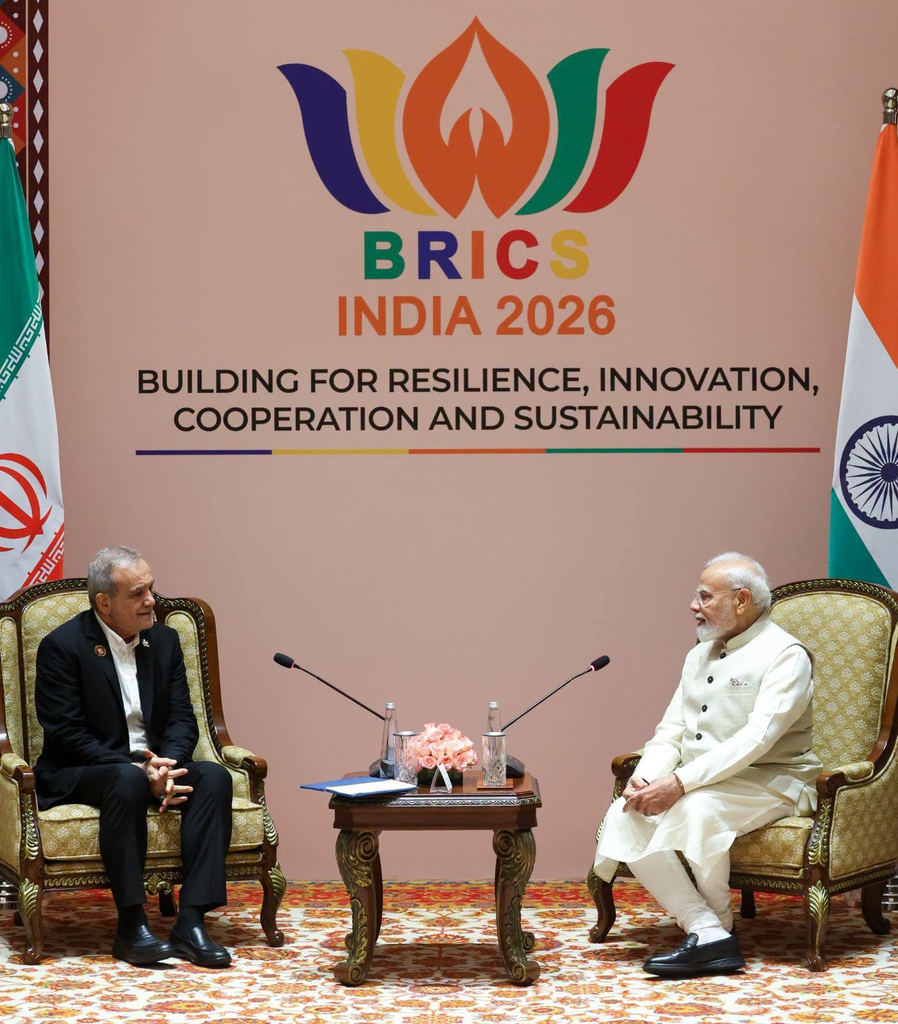
Iranian President Masoud Pezeshkian also used the BRICS platform to advocate greater diversification of Iran’s trade relationships, financial channels and payment mechanisms.
For Tehran, access to alternative markets and financial arrangements has become particularly important because of extensive US sanctions.
A DIPLOMATIC SIGNAL BEYOND THE HANDSHAKE
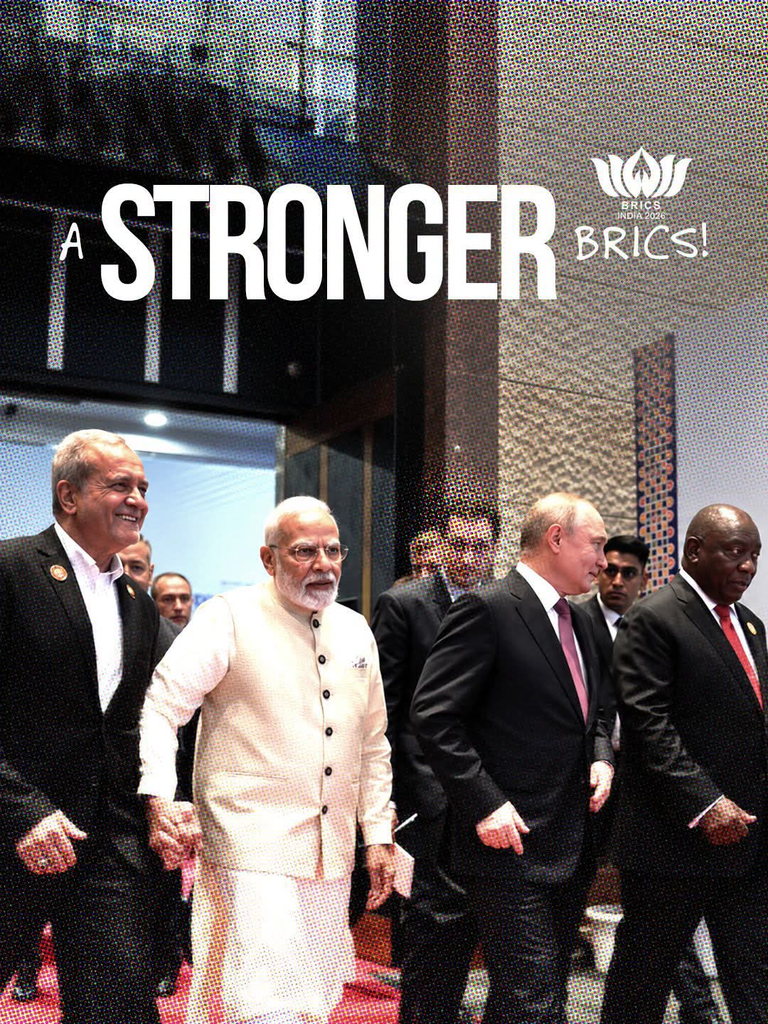
The handshake was more than a ceremonial moment. It reflected India’s continuing effort to maintain constructive engagement with Tehran while simultaneously strengthening relations with the United States, Russia, Gulf countries and other major global powers.
Iran’s participation gives the BRICS economic discussion an additional strategic dimension: countries facing sanctions or financial restrictions are looking for mechanisms that allow trade and investment to continue without relying exclusively on Western-controlled channels.
THE REAL MESSAGE TO TRUMP
The message coming from New Delhi is not simply “BRICS against America.”
It is more accurately this:
BRICS countries want the freedom to conduct business with different partners, use different payment mechanisms and build resilient supply chains without having their economic choices determined by geopolitical pressure.
That distinction is important for India.
New Delhi has no interest in turning BRICS into an anti-US military or political alliance. India is simultaneously deepening its relationship with Washington while maintaining defence, energy, space and industrial cooperation with Moscow.
The strategy is therefore one of strategic autonomy rather than strategic confrontation.
MODI-PUTIN TALKS STRENGTHEN THE MESSAGE
The BRICS Business Forum came alongside a significant Modi-Putin meeting in New Delhi.
The two leaders reviewed cooperation across politics, trade, defence, energy, space, infrastructure, technology and people-to-people relations. They also discussed regional conflicts and the impact of instability on maritime trade and the safety of Indian seafarers. Modi reiterated that dialogue and diplomacy remain the way forward in resolving conflicts.
The two leaders also visited Russia’s INNOPROM India industrial exhibition, highlighting the effort to move India-Russia relations beyond traditional defence and energy cooperation toward manufacturing, technology and investment.
Putin has invited Modi to Russia for the 24th India-Russia Annual Summit, and Modi has accepted the invitation.
TRADE ROUTES BECOME A STRATEGIC ISSUE
Another major message emerging from the BRICS discussions is that economic security increasingly depends on secure transportation networks.
Wars and instability in West Asia and the Black Sea have disrupted shipping, energy supplies and supply chains.
India therefore has a direct interest in developing multiple reliable routes for the movement of energy, raw materials and manufactured goods.
The proposed expansion of connectivity through corridors such as the International North-South Transport Corridor could give India and its partners additional options for reaching markets across Eurasia.
BRICS IS NOT YET A UNITED ALTERNATIVE TO THE DOLLAR
Despite the strong rhetoric surrounding de-dollarisation, BRICS remains too diverse to be treated as a unified replacement for the US-led financial system.
Its members have different economic models, currencies, strategic interests and relationships with Washington and Beijing.
India in particular has signalled caution over any formal anti-dollar agenda. The immediate objective is more practical: greater choice in international payments, stronger local-currency settlement and reduced exposure to financial disruptions.
INDIA’S BALANCING ACT
The most important feature of the New Delhi BRICS meeting may therefore be India’s ability to speak simultaneously to competing centres of global power.
India is engaging the United States on trade, technology and investment while maintaining its strategic partnership with Russia. It is also engaging Iran, Gulf countries, Europe and the wider Global South.
That makes India’s BRICS presidency significant.
Rather than presenting BRICS as a replacement for the West, New Delhi is attempting to shape it as another platform through which developing and emerging economies can gain a stronger voice in global decision-making.
THE BIGGER MESSAGE FROM NEW DELHI
The emerging message is clear: the global economy is becoming more diversified, and India intends to remain at the centre of that transformation.
For Trump and Washington, the development presents a strategic challenge—not necessarily because BRICS is about to replace the dollar, but because major emerging economies are increasingly unwilling to accept a world in which trade, finance and strategic partnerships operate according to a single set of rules.
India’s position is particularly consequential.
New Delhi wants strong relations with Washington—but it also wants the freedom to decide its relations with Moscow, Tehran, Beijing and the wider Global South on the basis of India’s own national interests.
That is the core message emerging from BRICS 2026.
GTNS | NEW DELHI ,NDIA ;
SEPTEMBER 11, 2026