
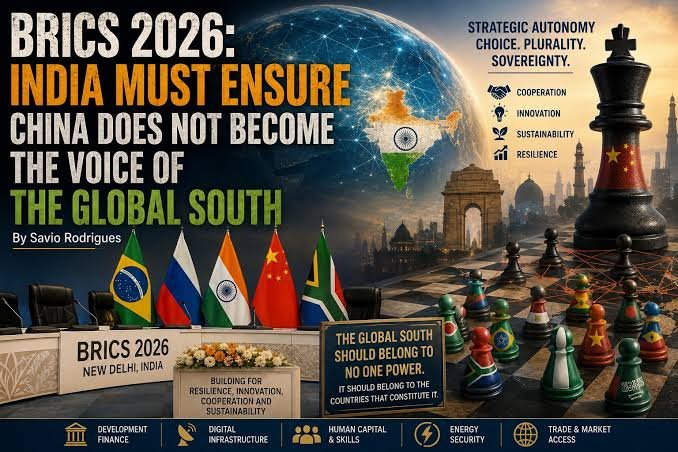
The 18th BRICS Summit, to be hosted by India in New Delhi on September 12–13, 2026,
New Delhi , GTNS | September 09, 2026: India’s leadership of BRICS in 2026 comes at a time when the grouping is seeking to strengthen its influence across the developing world and play a larger role in shaping the global economic conversation.
The expanded BRICS platform brings together economies with different priorities, economic structures and geopolitical interests. India’s chairship therefore presents both an opportunity and a complex diplomatic challenge.
At the heart of the 2026 agenda is the question of how BRICS can move beyond declarations and create cooperation that produces visible results for member countries and the wider Global South.
The 18th BRICS Summit, to be hosted by India in New Delhi on September 12–13, 2026, comes at an important moment for the grouping. BRICS has grown from the original Brazil-Russia-India-China grouping into a much larger forum of emerging economies and developing countries.
Economic connectivity is expected to remain a key area of focus. Stronger trade relationships, smoother business links and improved cooperation among emerging economies could help open new markets and strengthen South-South economic partnerships.
Energy is another area where collective action could become increasingly important. Countries across the Global South face different energy requirements, from securing reliable supplies to expanding cleaner technologies. BRICS could provide a platform for sharing expertise, investment and technological capabilities.
The technology agenda is equally significant. Digital infrastructure, innovation and emerging technologies are reshaping economies worldwide, creating an opportunity for BRICS nations to cooperate in areas where technological capacity will determine future competitiveness.
Connectivity could provide the practical foundation for these ambitions. Better physical, digital and financial links could make it easier for businesses, investors and institutions across member countries to work together.
For India, the chairship is also an opportunity to highlight development priorities that are often central to Global South economies, including inclusive growth, affordable technology and greater access to international economic opportunities.
Yet the success of BRICS 2026 will ultimately depend on implementation. Agreements that lead to investment, technology partnerships, stronger trade and concrete development initiatives could give the expanded grouping greater relevance.
India’s year at the helm could therefore become an important test of whether BRICS can transform its growing global presence into a platform capable of delivering practical cooperation.
GTNS | World Affairs
September 09, 2026