
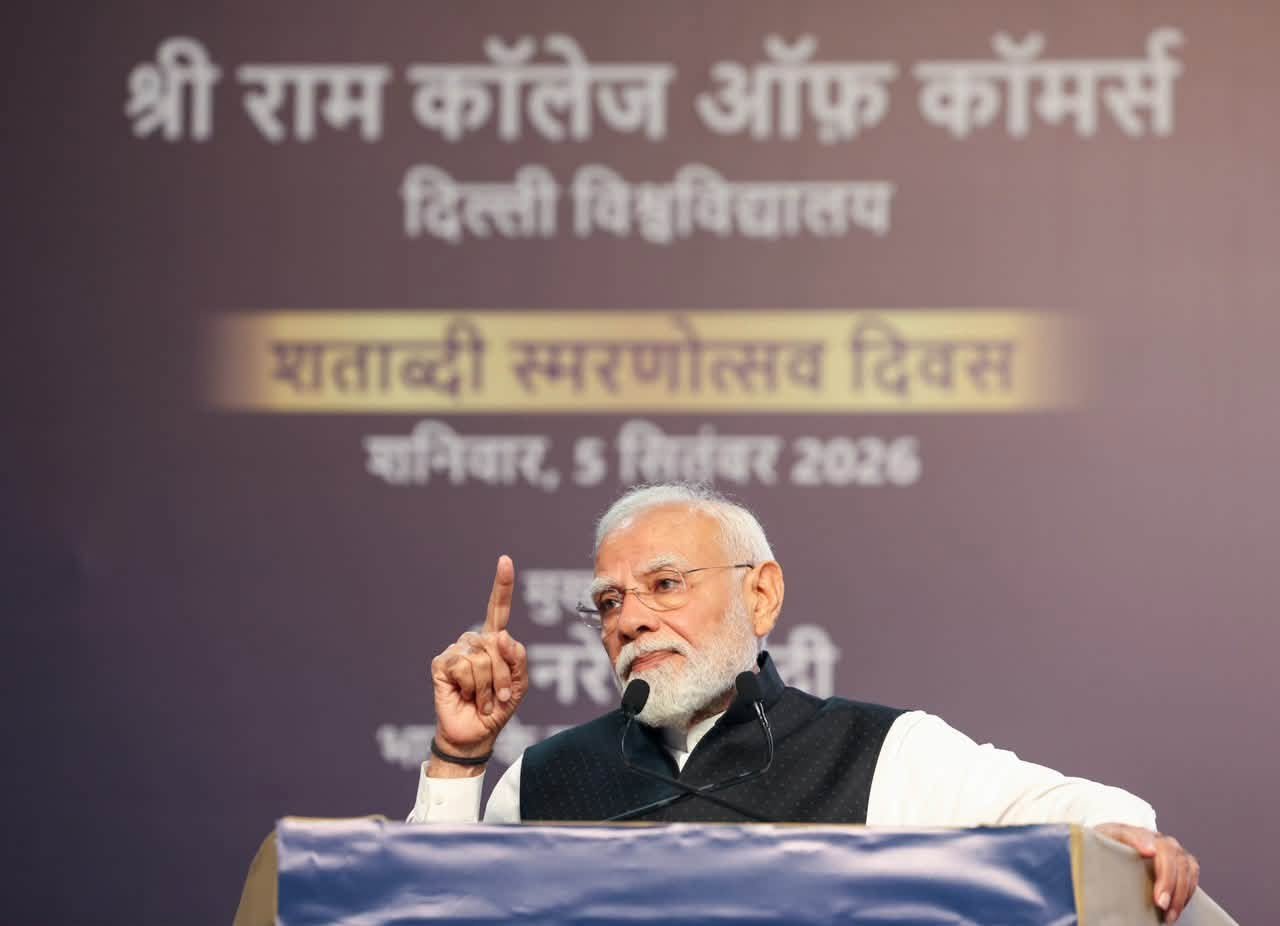
September 06/26/GTNS New Delhi Prime Minister Narendra Modi’s reference to “dimagi naxal” during the centenary celebrations of Shri Ram College of Commerce (SRCC) has brought the politically sensitive phrase back into the national spotlight.
Addressing the gathering at the Delhi-based institution, Modi spoke about the influence of ideas and the responsibility of young Indians in shaping the country’s future. His reference to “dimagi naxal” quickly emerged as one of the most discussed portions of the speech.
The remark comes at a time when political discourse in India is increasingly focused on ideological differences, nationalism, social change and the role of young people in public life. The use of the phrase has once again triggered contrasting interpretations among political observers.
While supporters of the Prime Minister view the remark as a warning against ideological tendencies they believe can undermine national development, critics have questioned the use of such labels in political debate.
The controversy has also shifted attention towards a broader question: how should political leaders address ideological disagreements without allowing public discourse to become excessively polarised?
Beyond the contentious remark, Modi’s address focused on India’s economic ambitions and the opportunities emerging for the country’s youth. He highlighted areas such as entrepreneurship, innovation, skills and economic participation, stressing the importance of young Indians in the next phase of national development.
The SRCC centenary provided a significant backdrop for those remarks. Established a century ago, the institution has played an important role in India’s commerce and economics education and has produced generations of professionals and leaders.
The Prime Minister’s presence at the centenary celebration therefore carried significance beyond the occasion itself. The event brought together the institution’s historical legacy and discussions about India’s future economic and social direction.
However, the “dimagi naxal” reference has ensured that the political dimension of the speech receives considerable attention. Similar terminology has previously generated sharp exchanges between the ruling establishment and its opponents, making the latest reference particularly noteworthy.
The episode also underlines the growing influence of political speeches on public debate. In today’s fast-moving information environment, a single phrase from a major public address can rapidly become the central point of political discussion.
For students and young professionals, the debate comes alongside larger concerns over employment, entrepreneurship, technology, education and India’s position in the global economy. These issues remain central to the aspirations of a generation expected to play a major role in the country’s future.
The SRCC centenary, therefore, became a platform where history, economics and politics converged. While the institution celebrated 100 years of academic contribution, the Prime Minister’s remarks opened another chapter in India’s continuing debate over ideology and public discourse.
The political reactions to the statement are expected to continue, but the larger message from the event remained centred on India’s youth and its economic future. The controversy surrounding the phrase, meanwhile, has once again demonstrated how sharply political language can shape the national conversation.