

GTNS | October 5, 2026
NEW DELHI: A fresh political and legal controversy over voter registration intensified on Monday after Leader of Opposition Rahul Gandhi accused Chief Election Commissioner Gyanesh Kumar of making an unauthorised change to Form 6, the application used by eligible citizens to seek inclusion in electoral rolls.
Gandhi’s allegation followed observations made by the Supreme Court during a hearing concerning the Election Commission’s electoral-roll revision exercise. The court clarified that it had not approved any modification to Form 6 and indicated that it wanted to examine the official records to determine who authorised or carried out the change.
Reacting to the development, Gandhi alleged that the change was made “illegally and unilaterally” and accused the CEC of misusing his position. He further said that those responsible would eventually be held accountable. These are political allegations by the Congress leader and have not been established as findings against the CEC.
What is at the centre of the controversy?
Form 6 is the principal application through which a person eligible to vote seeks registration in the electoral roll. The Election Commission’s voter-services portal continues to identify Form 6 as the route for new voter registration.
The dispute concerns an additional declaration connected with the Special Intensive Revision (SIR) process. Earlier reports indicated that the online registration process included questions concerning whether an applicant, or the applicant’s parents or grandparents, appeared in an earlier electoral roll. Two Election Commissioners had previously raised objections to the alteration, with internal correspondence describing the change as unauthorised and questioning whether statutory rules had to be amended before such a modification could be introduced.
Election Commission rejects Rahul Gandhi’s interpretation
The Election Commission has strongly disputed Gandhi’s version of events.
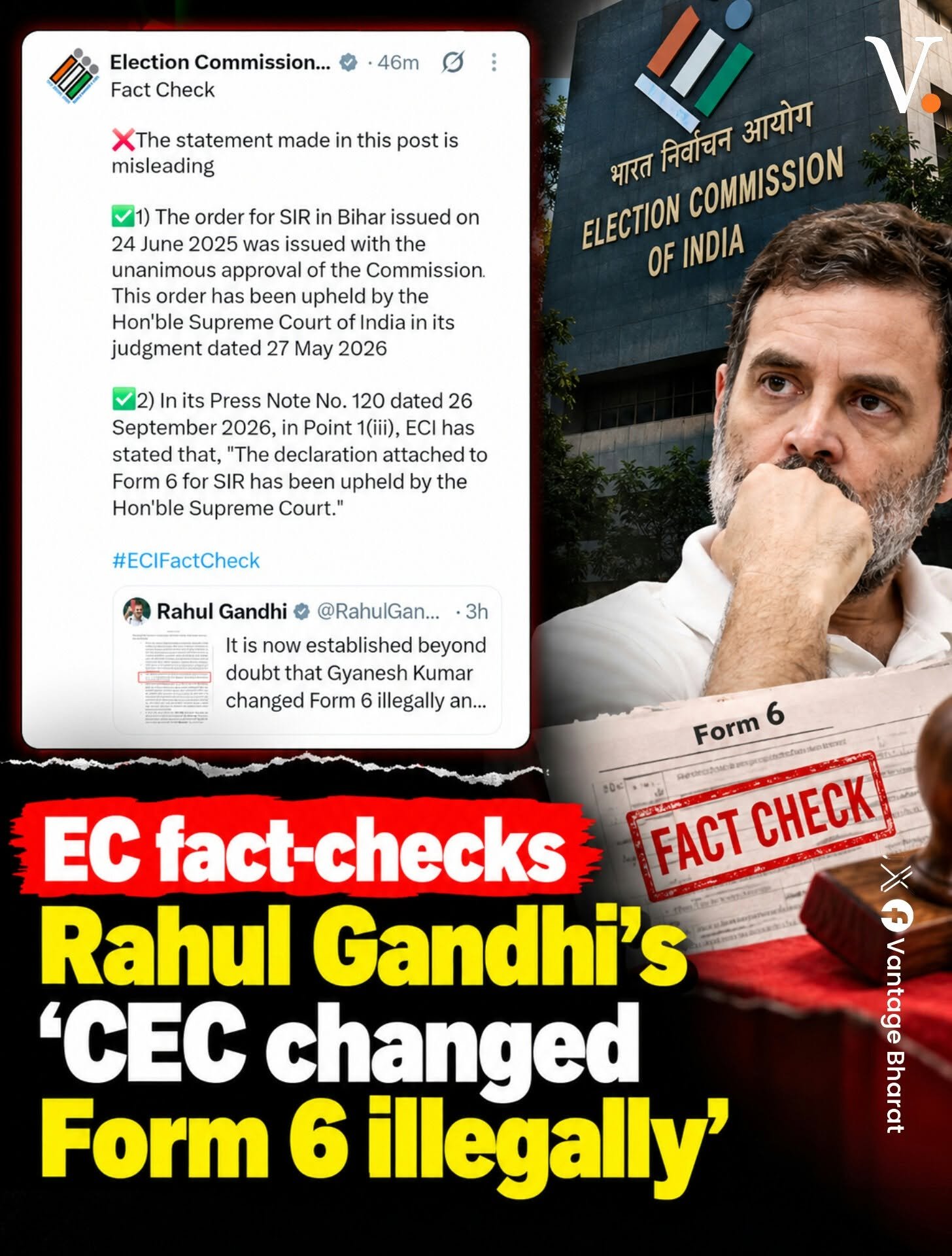
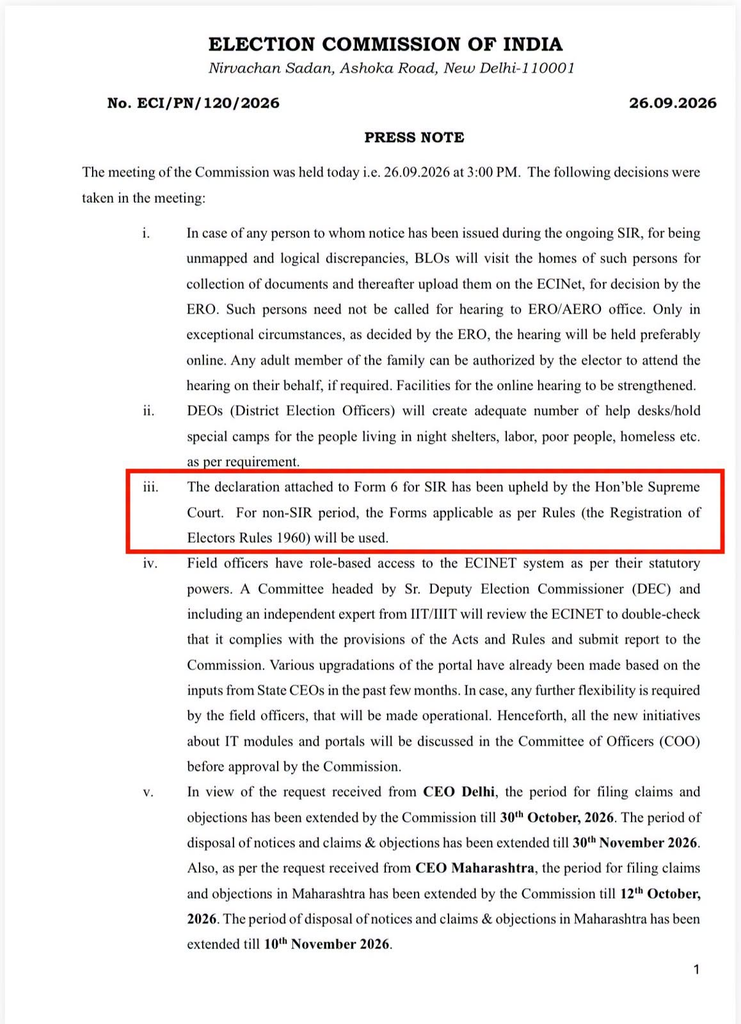
In a fact-check issued on Monday, the ECI described his statement as “misleading”. The Commission said the Bihar SIR order issued on June 24, 2025, had received unanimous approval of the Commission and that the Supreme Court’s May 27, 2026 judgment had upheld the SIR order. The ECI also referred to its September 26 clarification concerning the declaration attached to Form 6.
Election Commission officials also maintained that Form 6 itself had not been altered in the manner alleged. According to the Commission’s position, a declaration was attached to the Form 6 process under the SIR framework, while the regular statutory forms would continue to apply outside the SIR exercise.
Supreme Court clarification adds another layer
The Supreme Court’s intervention has nevertheless brought the authorization issue into sharper focus.
During Monday’s proceedings, the bench headed by Chief Justice Surya Kant made clear that it had not approved the modification and said the records would be examined to establish who made the change. The court has also indicated that if any action by the Election Commission is ultimately found to be contrary to law, the legal consequences would have to be considered.
The dispute therefore goes beyond the political exchange between the Congress and the Election Commission. At its core are questions about who has authority to modify election-related forms, what procedure must be followed, and how safeguards for new voters should operate during electoral-roll revisions.
Political battle over SIR continues
The Form 6 controversy comes amid a wider confrontation between the Opposition and the Election Commission over the Special Intensive Revision of electoral rolls.
Opposition parties have questioned the transparency and methodology of the revision process, while the Election Commission has defended SIR as a mechanism intended to ensure accurate electoral rolls and remove duplicate, deceased or otherwise ineligible entries. The Commission and the BJP have rejected allegations that the exercise is designed to benefit the ruling party.
The INDIA bloc is also preparing further political action against the Election Commission, with opposition parties demanding greater transparency and accountability.
For now, Rahul Gandhi’s allegation that Gyanesh Kumar “illegally and unilaterally” changed Form 6 remains an allegation, while the ECI has formally rejected that interpretation. The Supreme Court’s examination of the records could become significant in determining the factual and legal position surrounding the disputed modification.