

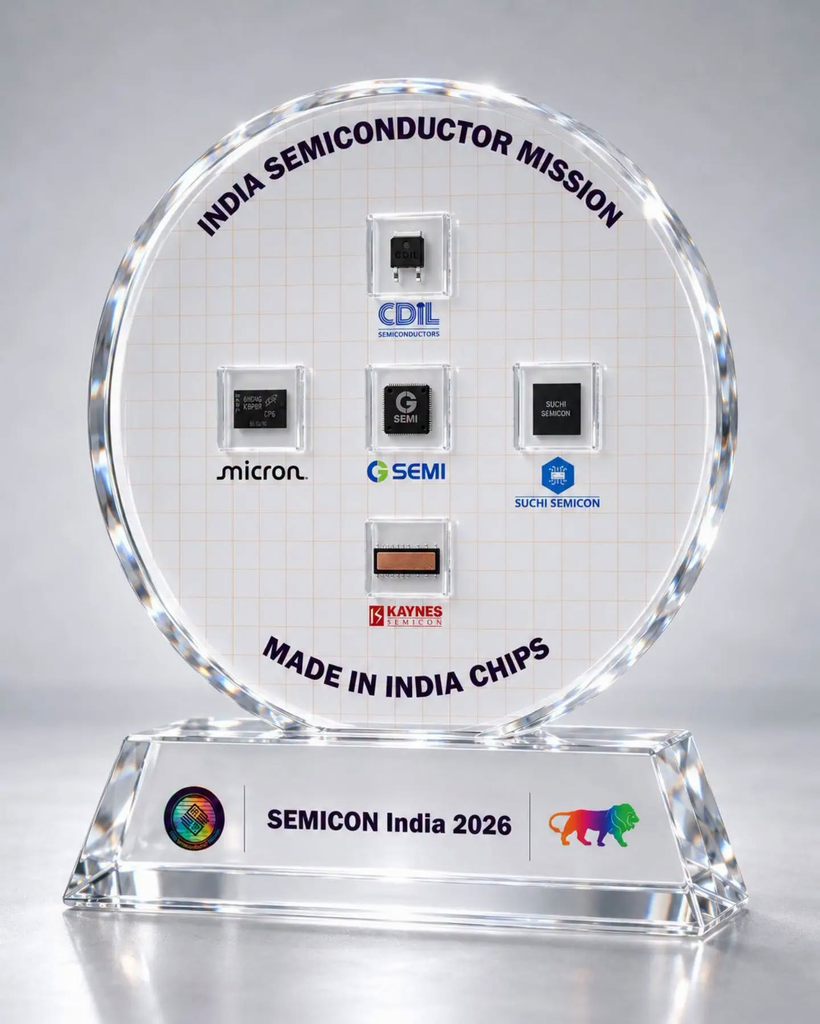
Indigenous security chip developed under MeitY’s Chip-to-Startup programe is showcased in New Delhi, highlighting Odisha’s growing role in chip design, research and semiconductor talent
GTNS
SEPTEMBER 18, 2026
NEW DELHI — Odisha’s semiconductor story is moving beyond industrial investment and infrastructure, with NIT Rourkela’s indigenous chip-design work taking centre stage at SEMICON India 2026 and placing the state’s academic research capability in the national semiconductor conversation.
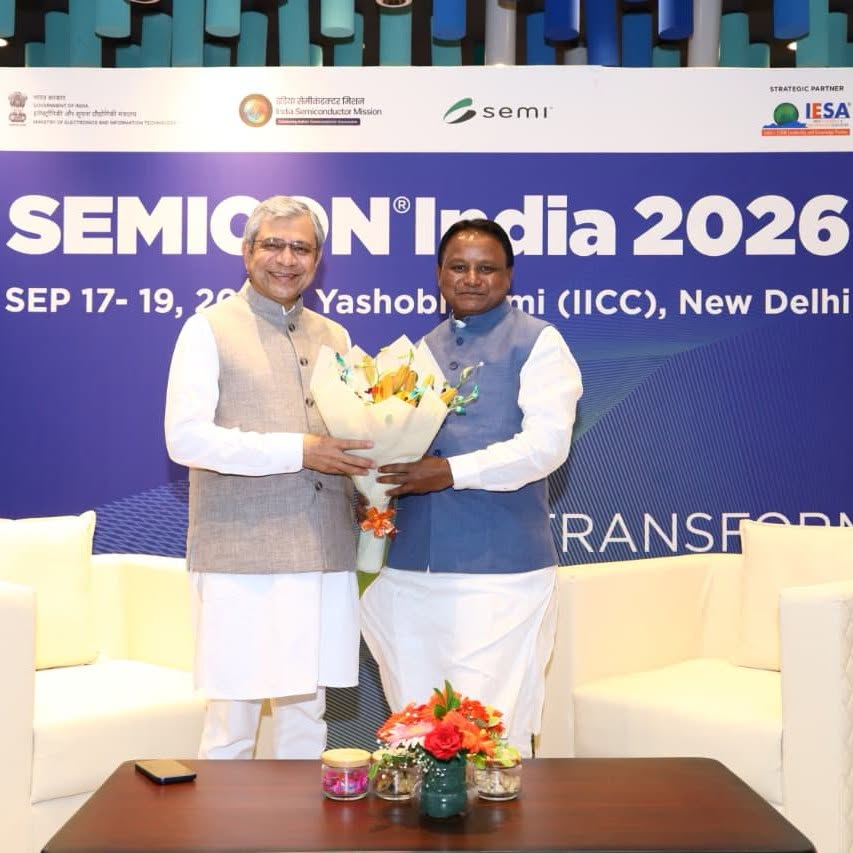
A chip designed at NIT Rourkela was showcased at the three-day semiconductor event being held at Yashobhoomi, New Delhi, from September 17 to 19, as India brings together global semiconductor companies, researchers, policymakers, technology institutions and emerging chip designers.
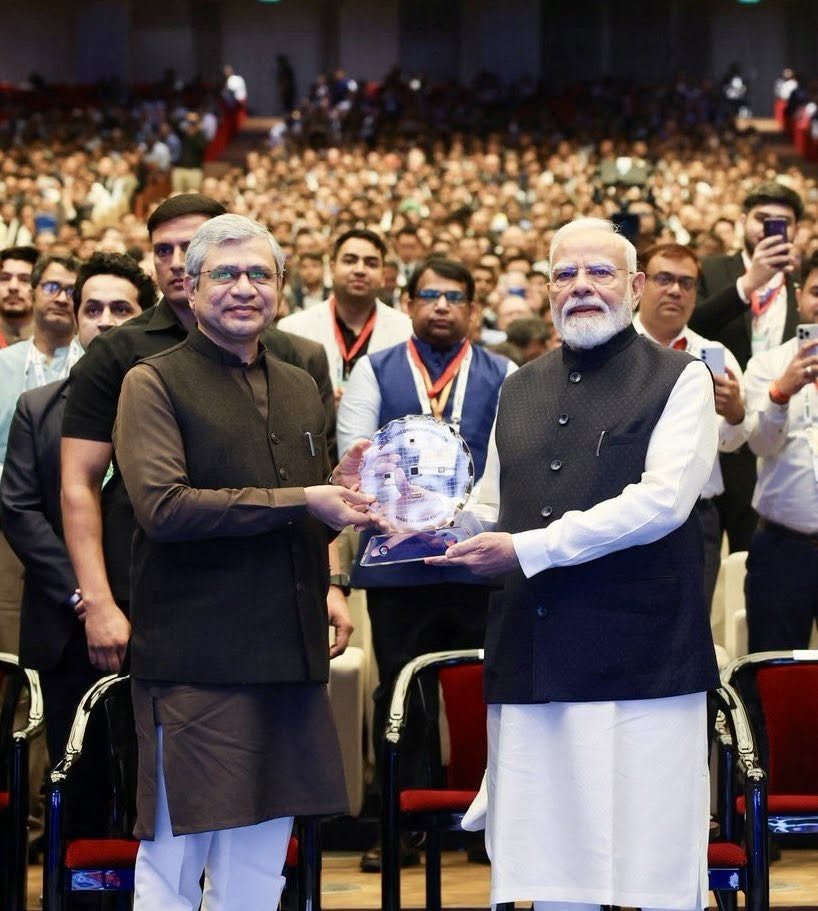
The NIT Rourkela-designed ASCON AEAD Security Chip (C2S0091) was presented to Prime Minister Narendra Modi as part of an emblem featuring semiconductor contributions from 20 institutions across India. The presentation involved student designers representing a new generation of Indian semiconductor talent.
Among them was Pradeep Kumar Mohanty, a PhD scholar in the Department of Electronics and Communication Engineering at NIT Rourkela. The chip was designed by Mohanty under the supervision of Prof. Ayas Kanta Swain and Prof. Kamalakanta Mahapatra.
SECURITY CHIP DESIGNED FOR IoT AND EMBEDDED SYSTEMS
The ASCON AEAD Security Chip is a lightweight cryptographic device designed to provide secure data encryption and authentication for resource-constrained Internet of Things and embedded systems.
Its development is significant because semiconductor capability is increasingly being measured not only by the ability to manufacture chips, but also by the ability to develop indigenous intellectual property, architecture and application-specific designs.
The chip was developed under the Ministry of Electronics and Information Technology’s Chip-to-Startup (C2S) Programme, with NIT Rourkela’s C2S project led by Prof. Kamalakanta Mahapatra and Prof. Ayas Kanta Swain.
The design was subsequently fabricated at Semiconductor Complex Limited (SCL), Mohali, providing a direct link between academic chip design and fabricated silicon. That transition—from research and design to physical chip fabrication—is an important step in developing an indigenous semiconductor ecosystem.
NIT ROURKELA’S LONGER SEMICONDUCTOR JOURNEY
The showcase at SEMICON India 2026 represents a longer institutional effort rather than a one-time development.
NIT Rourkela has been involved in semiconductor education, chip design and manpower development in Odisha since 1999, under the guidance of Prof. Kamalakanta Mahapatra, according to information released about the institute’s participation.
Over the years, the institute has worked to provide students and researchers with opportunities spanning chip design, fabrication and system-level applications.
The institute is also developing semiconductor professionals and researchers who can potentially contribute to India’s expanding chip-design ecosystem.
ODISHA’S ACADEMIC CONTRIBUTION MEETS INDUSTRIAL AMBITION
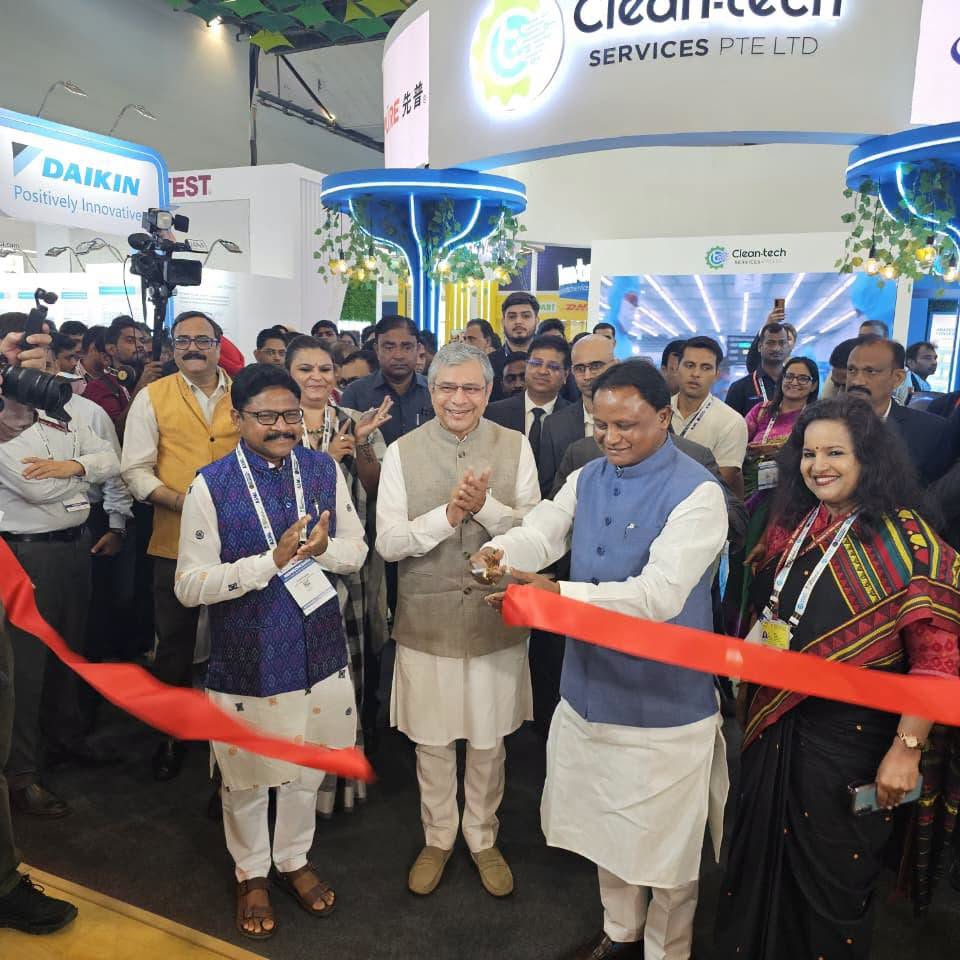
The NIT Rourkela development comes as Odisha is simultaneously building an industrial base around semiconductors and electronics.
The state is pursuing projects involving Silicon Carbide, advanced packaging, power electronics and electronics manufacturing, while also developing infrastructure intended to attract additional semiconductor investments.
This creates two distinct but connected components of Odisha’s semiconductor strategy: industrial capacity and indigenous research.
The NIT Rourkela showcase adds the research and intellectual-property dimension to a state strategy that has so far also focused heavily on investment, land and manufacturing infrastructure.
A SMALL CHIP WITH A MUCH LARGER INDUSTRIAL MESSAGE for more details : https://globaltimesnews.co.in/odisha-takes-aim-at-global-semiconductor-supply-chain-as-india-expands-high-tech-manufacturing/
The significance of the NIT Rourkela chip extends beyond the institute itself.
Semiconductors are at the foundation of modern industries ranging from telecommunications and automobiles to artificial intelligence, industrial automation, energy systems, defence electronics and connected devices.
As countries seek to strengthen their semiconductor supply chains, control over chip design and intellectual property is becoming an important part of technology strategy.
India’s Semicon 2.0 programme reflects that broader objective. The Union Cabinet has approved an outlay of ₹1,27,500 crore for the next phase of India’s semiconductor ecosystem, with emphasis on design, manufacturing, packaging, research and development, and talent development.
SEMICON India 2026 itself has been structured around the broader semiconductor value chain, covering design and IP, fabrication, assembly and testing, advanced packaging, compound semiconductors, electronics systems, AI, high-performance computing, research and talent.
INDIA LOOKS BEYOND CHIP IMPORTS
The NIT Rourkela achievement comes at a moment when India’s semiconductor programme is moving from policy announcements towards commercial production and international supply-chain participation.
Prime Minister Narendra Modi, while inaugurating SEMICON India 2026, called for global industry partnerships and highlighted India’s transition towards semiconductor production. The event is bringing together participants from across the international semiconductor ecosystem.
Union Electronics and Information Technology Minister Ashwini Vaishnaw has also said India-made and India-designed chips are now being exported, while global companies are increasing their manufacturing, research and partnership activities in the country.
At the event, more than 30 countries are participating, while 68 Japanese companies are reported to be working on manufacturing, research or partnership plans in India.
That international backdrop makes indigenous academic chip development increasingly relevant.
GLOBAL CHIP RACE CREATES SPACE FOR RESEARCH INSTITUTIONS
The global semiconductor industry is undergoing a major restructuring driven by artificial intelligence demand, supply-chain diversification and geopolitical considerations.
Major international semiconductor companies are expanding their presence in India. Applied Materials, for example, announced plans to invest $5 billion in India over the next decade, with the investment focused on areas including research, supply-chain development and workforce expansion.
At the same time, India’s strategy is not aimed at reproducing every part of the global semiconductor supply chain domestically. India’s Foreign Secretary Vikram Misri said at SEMICON 2026 that the country intends to develop sovereign strengths in critical areas while partnering internationally in other parts of the ecosystem.
For institutions such as NIT Rourkela, this creates an opportunity to contribute specifically through chip architecture, security technologies, research, engineering talent and indigenous semiconductor IP.
CM MAJHI HAILS NIT ROURKELA CONTRIBUTION
Odisha Chief Minister Mohan Charan Majhi welcomed NIT Rourkela’s participation at SEMICON India 2026 and congratulated the institute’s scientists, researchers and students.
Majhi described the indigenous chip designs as evidence of Odisha’s talent, innovation and research capabilities and said the state was proud to see its institutions contributing to India’s semiconductor journey.
The Chief Minister has also said that Odisha is engaging with investment teams from Europe, Japan and South Korea during the SEMICON India programme as the state seeks to attract investment into advanced industries.
FROM ROURKELA RESEARCH TO GLOBAL TECHNOLOGY MARKETS
The NIT Rourkela chip therefore represents more than an academic achievement.
It demonstrates a potential pathway connecting university research → indigenous chip design → fabrication → skilled talent → industrial applications.
That pathway is central to India’s attempt to build a semiconductor ecosystem that is not limited to assembling imported technologies but can generate domestic intellectual property and technology products.
For Odisha, the development also broadens the state’s semiconductor narrative.
The state’s proposed industrial parks and manufacturing projects can provide physical infrastructure, while institutions such as NIT Rourkela can provide research, engineers and indigenous technology capabilities.
Whether those two tracks eventually develop into a larger commercial ecosystem will depend on investment, technology partnerships, fabrication capacity, talent retention and the ability to connect research with industry.
But at SEMICON India 2026, one message has already become visible: Odisha is seeking a place in India’s semiconductor future not only through land and factories, but also through the people and technology developing inside its research institutions.
#SEMICONIndia2026 #NITRourkela #Semiconductor #ChipDesign #MadeInIndia #Odisha #ASCON #ChipToStartup #MeitY #SemiconductorResearch #IoT #CyberSecurity #IndiaSemiconductor #GlobalSemiconductor #GlobalTimesNews