
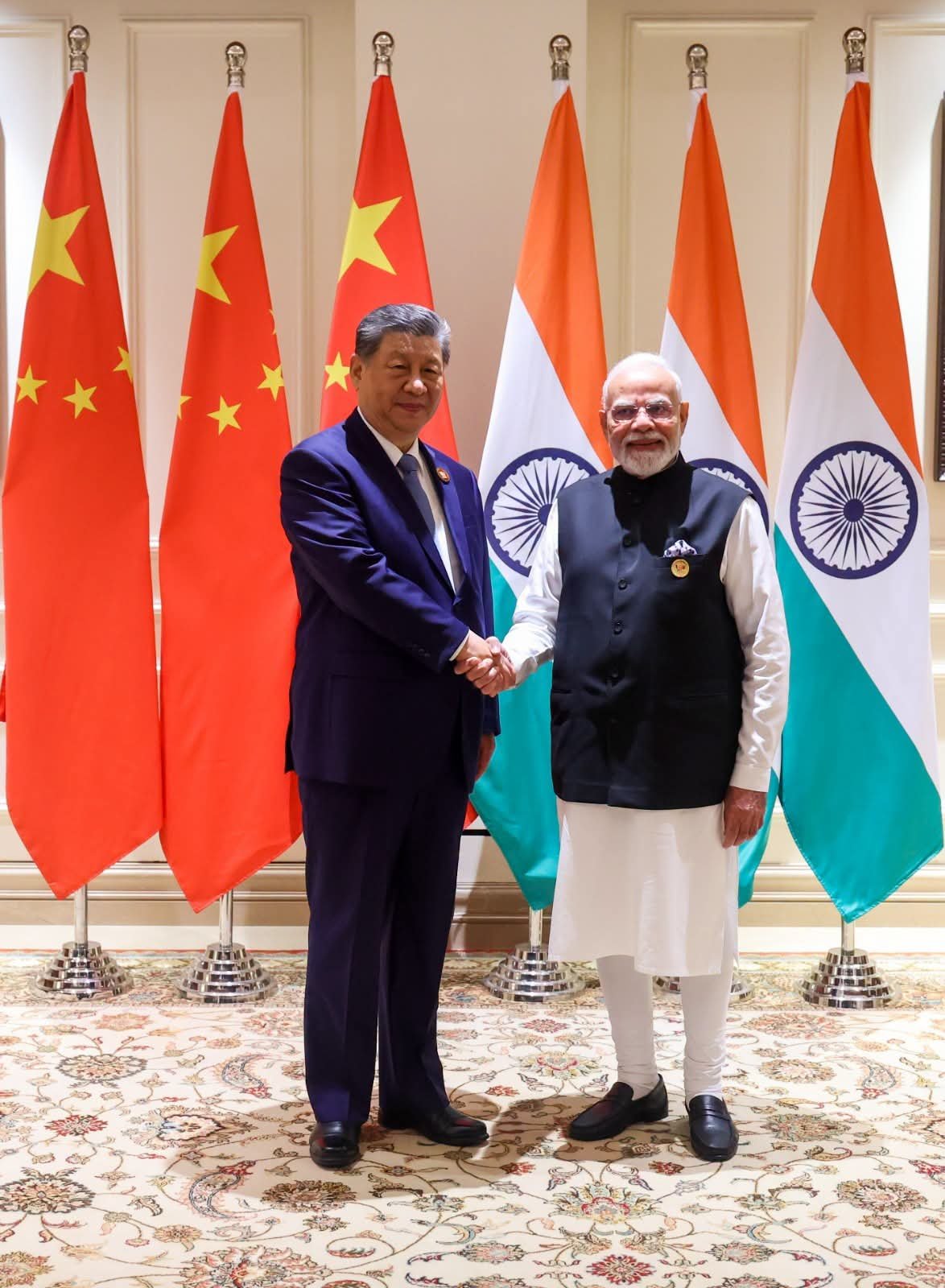
At the BRICS Summit, Modi and Xi hold talks on the broader bilateral relationship as India and China seek to maintain dialogue and prepare for the next phase of BRICS cooperation.
NEW DELHI: Prime Minister Narendra Modi and Chinese President Xi Jinping held a bilateral meeting in New Delhi on the sidelines of the BRICS Summit, placing India-China relations prominently on the diplomatic agenda of the high-level gathering.
The meeting provided an opportunity for the two leaders to take stock of developments across their relationship and discuss the broader direction of engagement between the two countries.
Prime Minister Modi said after the meeting that the discussions covered the entire spectrum of India-China relations, pointing to an extensive review of bilateral ties rather than a conversation focused on a single area.
The engagement comes at a significant moment for both countries. India and China remain major economic and geopolitical powers in Asia, while their relationship continues to require careful diplomatic management on issues where their interests differ.
Leadership Dialogue Remains Important
The Modi-Xi meeting highlights the importance of direct communication between the leaderships of India and China.
For New Delhi, maintaining dialogue with Beijing is part of a broader diplomatic approach that combines engagement with the protection of India’s strategic and national interests.
The two countries have substantial economic connections and cooperate through several international forums, while questions relating to the boundary and wider strategic environment continue to make the relationship particularly sensitive.
Against this backdrop, leader-level meetings provide an important channel for discussing concerns, assessing developments and identifying areas where cooperation can move forward.
BRICS Connects Bilateral and Multilateral Diplomacy
The meeting also acquired significance because it took place during India’s BRICS presidency.
The BRICS platform has increasingly become a forum for major emerging economies to discuss global economic governance, development, trade, technology and international cooperation.
India’s chairship has brought renewed attention to consensus-building and cooperation among diverse member countries.
With China set to assume the BRICS presidency next year, Modi also conveyed his best wishes to Xi Jinping for China’s upcoming tenure.
The transition from India’s presidency to China’s presidency adds another layer to the Modi-Xi engagement, linking the bilateral relationship with the future direction of the wider BRICS grouping.
Looking Beyond One Meeting
The Delhi meeting does not by itself remove the complexities that exist between India and China. Instead, its significance lies in the continuation of political engagement at the highest level.
Both countries face a changing regional and global environment in which stable communication can help prevent differences from overshadowing areas of mutual interest.
The next phase of India-China relations will therefore depend on how the understanding generated through leadership dialogue is translated into sustained diplomatic engagement and practical cooperation.
For India, the Modi-Xi meeting in Delhi represents another step in managing one of the country’s most consequential international relationships while simultaneously strengthening its role within the broader BRICS framework.