
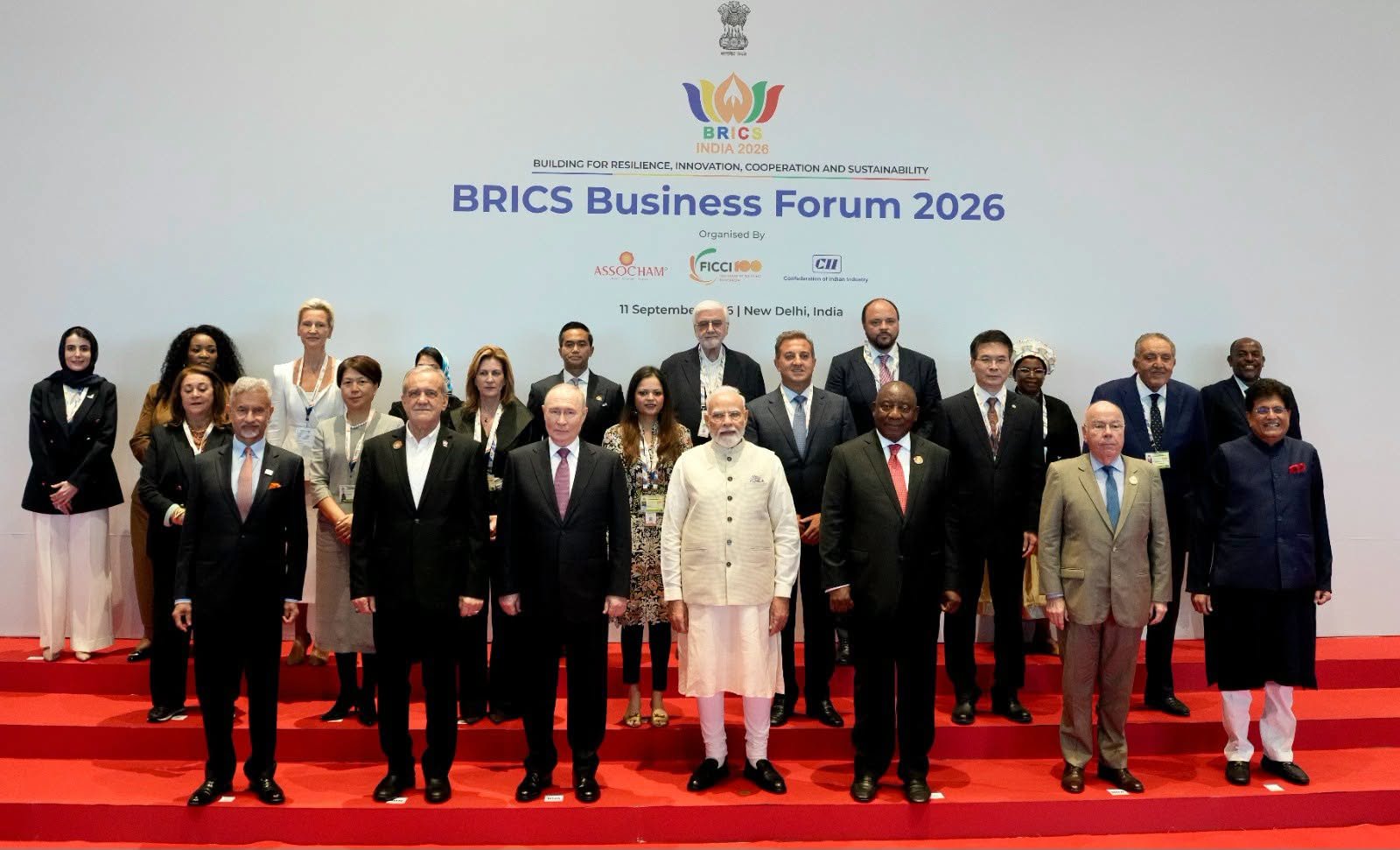
Prime Minister Narendra Modi, Russian President Vladimir Putin and other BRICS leaders use the business platform in New Delhi to push stronger trade, resilient supply chains, innovation, investment and practical economic partnerships.
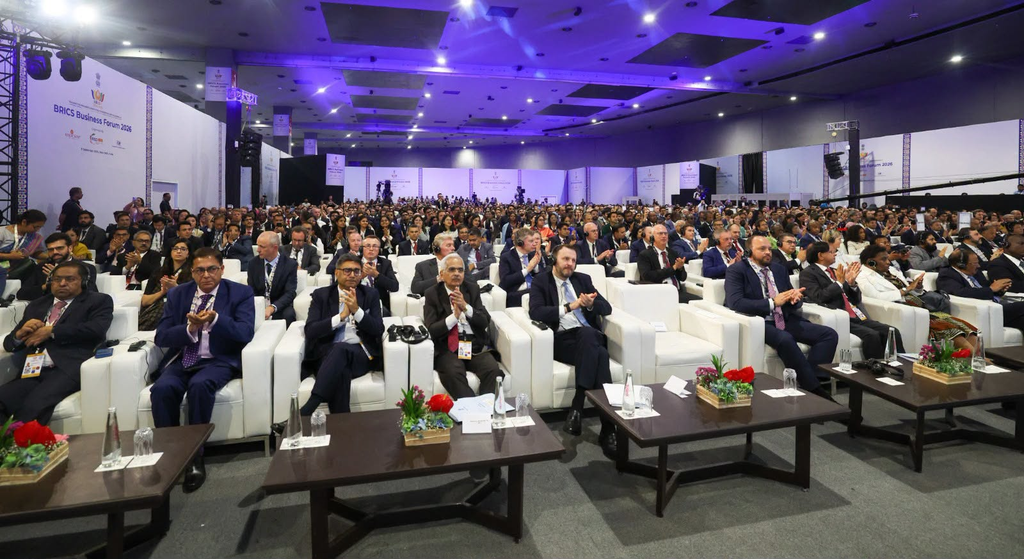
NEW DELHI: The BRICS Business Forum 2026 has emerged as a major economic platform alongside the 18th BRICS Summit, bringing political leaders, business representatives, financial institutions, innovators and entrepreneurs together in New Delhi with a clear focus on converting BRICS cooperation into tangible economic opportunities.
Held on September 11 at Bharat Mandapam, the forum placed business and investment at the centre of India’s BRICS chairship, with discussions covering trade, supply chains, agriculture and food security, services, women-led enterprises, digital transformation and innovation.
Modi: BRICS Must Turn Collective Strength Into Action
Prime Minister Narendra Modi addressed the BRICS Business Forum and called for stronger business partnerships to create new opportunities for growth, innovation and shared prosperity.
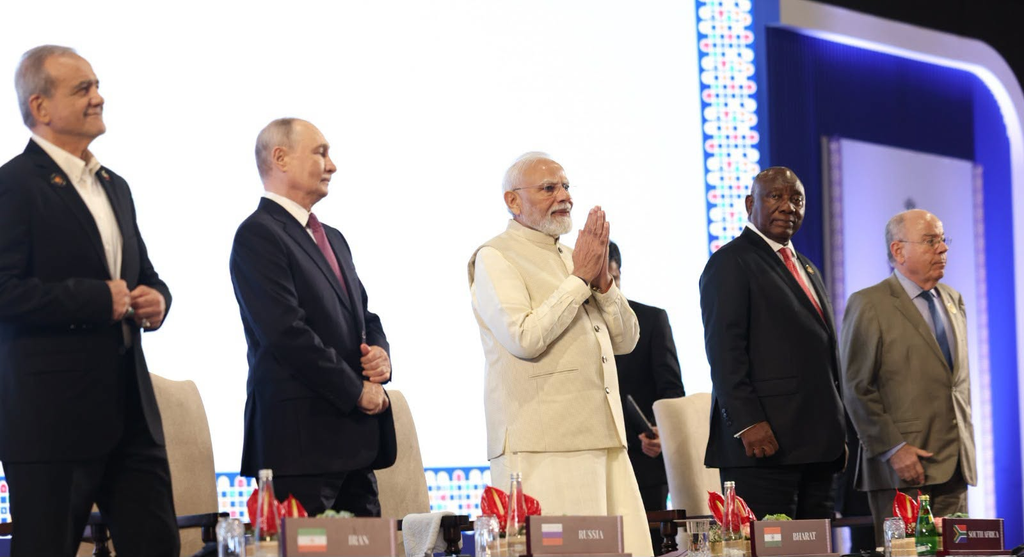
Modi highlighted the expanding economic significance of BRICS and said that BRICS countries and partner nations together represent 21 countries, accounting for around 50 per cent of the world’s population, 40 per cent of global GDP and more than 25 per cent of global trade.
India’s message was not limited to increasing trade volumes. The emphasis was on building practical mechanisms through which companies, startups, MSMEs and investors can work across borders.
Putin Pushes Practical Economic Cooperation
Russian President Vladimir Putin used the business platform to underline the need for BRICS to develop stronger practical economic cooperation, including technology, infrastructure, payments and investment.
Putin’s participation also highlighted the growing importance of India-Russia economic relations within the wider BRICS framework. Earlier on September 11, Modi and Putin reviewed cooperation in areas including the economy, energy, defence, space, skills and industrial development.
The two leaders also visited the INNOPROM India industrial exhibition in New Delhi, underlining the role of industrial cooperation and technology in expanding bilateral economic ties.
Ramaphosa Calls for Investment to Create Value
South African President Cyril Ramaphosa brought a strong Global South development perspective to the leaders’ dialogue.
Ramaphosa argued that BRICS should move beyond simply increasing trade and instead encourage investment in manufacturing, industrial technology, energy, infrastructure, logistics and value addition.
His central message was that developing countries should have a greater role in creating value rather than remaining primarily suppliers of raw materials.
Supply Chains Become a Major Economic Priority
One of the key themes of the forum was the need for more resilient and diversified supply chains.
The official programme included a dedicated session on “Strengthening Trade and Supply Chains in BRICS”, examining logistical bottlenecks, regulatory barriers, industrial complementarities and greater integration among member economies.
The discussion comes at a time when geopolitical tensions, disruptions to maritime routes and changing trade patterns are forcing businesses to reconsider sourcing, manufacturing and transportation networks.
Digital Economy and Innovation Take Centre Stage
Technology was another major pillar of the forum.
A dedicated session on “Powering the Future: Digital Economy and Innovation in BRICS” examined digital public infrastructure, fintech, artificial intelligence, e-commerce, startups and emerging technologies.
India also highlighted initiatives aimed at strengthening cooperation among startups and smaller businesses, including mechanisms designed to connect innovation ecosystems across BRICS economies.
Women Entrepreneurs and MSMEs Gain Greater Focus
The forum also expanded its economic agenda beyond governments and large corporations.
A session on women in business examined ways to increase the participation of women-led enterprises in cross-border trade, finance, digital platforms and international value chains.
For India, greater participation by MSMEs, startups and women entrepreneurs is part of a broader effort to make BRICS economic cooperation more inclusive.
From Dialogue to Deals
The biggest challenge for the BRICS Business Forum will now be implementation.
Political declarations alone cannot create new factories, investment flows or jobs. The business community will need predictable regulations, reliable logistics, easier market access, efficient cross-border payments and stronger institutional links.
That is also why the forum’s emphasis on business-to-business partnerships carries significance. South Africa’s President Ramaphosa specifically called for the BRICS Business Council to move beyond consultation and help develop actual commercial relationships and productive partnerships.
India’s Economic Message
India’s 2026 BRICS chairship is seeking to position the grouping not only as a diplomatic platform but also as an engine for economic cooperation among emerging markets.
With the 18th BRICS Summit taking place on September 12–13 at Bharat Mandapam, the business discussions provide an economic foundation for the leaders’ agenda.
The emerging message from New Delhi is clear: BRICS cooperation must increasingly move from meetings and declarations toward investment, technology partnerships, trade expansion, resilient supply chains and measurable economic outcomes.
For India, the Business Forum therefore represents more than a side event to the summit. It is an attempt to connect diplomacy with business—and to turn the growing influence of the Global South into concrete economic opportunities.
GTNS | NEW DELHI ,Global Times News | INDIA ;
SEPTEMBER 12, 2026