
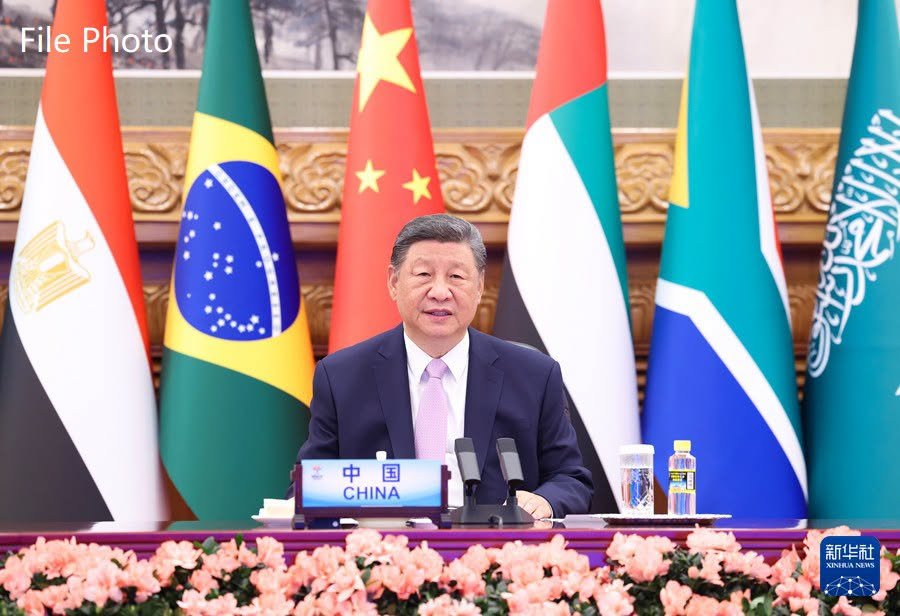
NEW DELHI — GTNS, SEPTEMBER 10, 2026 — Chinese President Xi Jinping is set to arrive in New Delhi for the 18th BRICS Summit, accompanied by a large Chinese delegation as Beijing prepares for one of the most closely watched India visits by the Chinese leader in recent years. China has officially confirmed Xi’s participation in the September 12–13 summit.
Xi’s visit is particularly significant because it will be his first trip to India in seven years. His arrival comes after a gradual improvement in India-China relations following the military tensions that began with the 2020 border crisis.
The Chinese delegation is expected to include senior officials and security personnel involved in preparations for the President’s programme. Chinese security teams have already been involved in advance arrangements in Delhi, alongside Indian agencies responsible for protecting visiting heads of state.
The biggest political focus, however, will be the expected Modi-Xi engagement on the sidelines of the BRICS Summit.
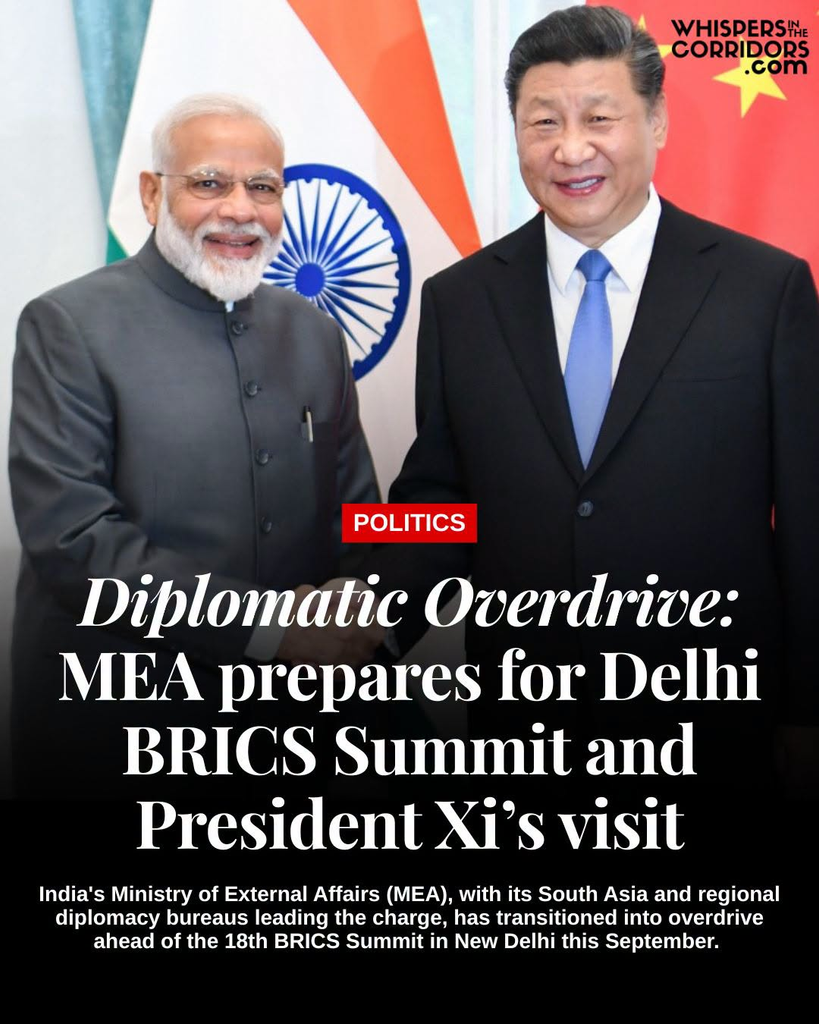
The two leaders are likely to discuss the broader India-China relationship, including border management, trade, investment, market access and economic cooperation. A proposed strategic economic dialogue could also provide a framework for addressing some of the longstanding economic issues between the two countries.
Xi’s visit also places China at the centre of the wider BRICS diplomatic picture. Russian President Vladimir Putin, Iranian President Masoud Pezeshkian and other major leaders are also expected in New Delhi, making the summit an important meeting point for several competing geopolitical interests.
For India, the challenge will be to engage China while maintaining its strategic autonomy and simultaneously managing its relationships with Russia, the United States, Europe and other major powers.
The BRICS agenda itself extends beyond geopolitics. Economic cooperation, development, technology, energy security, global governance and cross-border payment mechanisms are expected to feature prominently. India is also pushing practical financial cooperation among BRICS countries, including improved interoperability of digital payment systems.
Xi’s arrival will therefore be watched for more than the symbolism of a presidential visit. The real test will be whether the New Delhi summit can create practical progress in India-China engagement while keeping the broader BRICS grouping focused on cooperation.
As Delhi prepares for the arrival of the Chinese President and his delegation, all eyes are now on the Modi-Xi meeting and what it could mean for the next phase of India-China relations.
President #XiJinping will attend the 18th #BRICS Summit in New Delhi from September 12 to 13 at the invitation of Prime Minister of the Republic of India Narendra Modi, a Chinese foreign ministry spokesperson announced on Thursday. #XiDiplomacy
Xi’s participation puts the India-China relationship firmly among the key diplomatic developments surrounding the summit. His visit will be his first trip to India in seven years and comes as both countries have taken gradual steps to stabilise ties following years of military and political tensions.
MODI-XI MEETING COULD BE A MAJOR SUMMIT MOMENT
Particular attention is expected on a possible meeting between Modi and Xi on the sidelines of the summit. The two leaders are expected to review progress in stabilising bilateral relations, including border-management mechanisms and wider economic engagement.
A potential strategic economic dialogue could also address long-standing issues such as the bilateral trade imbalance, market access, investment, business visas and the operating environment for companies from both countries.
While relations have improved from the tensions that followed the 2020 border crisis, significant differences remain. Analysts continue to point to a trust deficit and unresolved strategic concerns as obstacles to a rapid return to full-scale economic cooperation.
BRICS TEST FOR INDIA’S DIPLOMATIC BALANCE
For India, Xi’s presence also highlights the country’s broader strategy of maintaining engagement with competing global powers without entering rigid geopolitical blocs.
The New Delhi summit comes at a time when BRICS members face differing positions on major international conflicts, particularly the war involving Iran and the wider West Asian crisis. Reaching consensus among an expanded and increasingly diverse membership will therefore be one of the major diplomatic challenges for the summit.
Xi’s visit is consequently more than a BRICS appearance. It creates an opportunity for India and China to test whether their recent diplomatic thaw can be converted into practical progress on the border, trade and economic relations.
For New Delhi, the message is clear: engagement with Beijing will continue, but strategic autonomy and India’s national interests will remain at the centre of the relationship.