
Zarubezhneft and Petrovietnam sign framework agreement as Moscow and Hanoi deepen long-term energy cooperation
MOSCOW: GTNS, SEPTEMBER 10, 2026; Russia and Vietnam have taken a fresh step in energy cooperation with Russia’s state-owned Zarubezhneft and Vietnam’s state energy company Petrovietnam signing a framework agreement for a project to establish a strategic oil reserve in Vietnam.
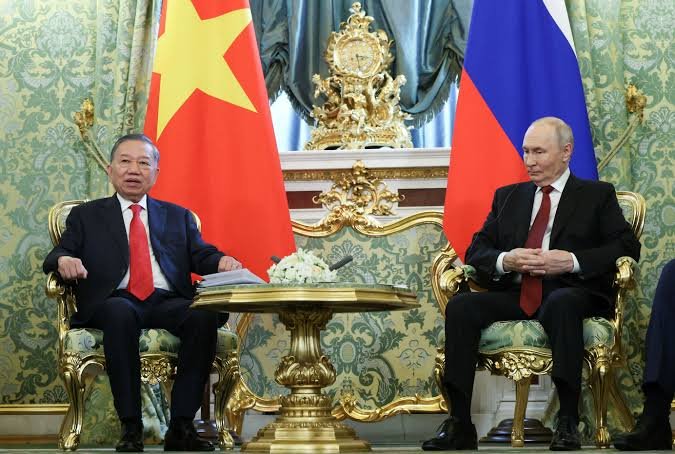
The agreement was signed during Vietnamese Communist Party General Secretary and President To Lam’s state visit to Moscow, where energy cooperation featured prominently in discussions with Russian President Vladimir Putin.
Putin backs strategic reserve proposal
Following talks with To Lam, President Vladimir Putin said Russia had proposed that its partners consider jointly developing strategic fuel reserves in Vietnam.
The framework agreement provides a foundation for further work, although the two companies have not yet announced the reserve’s planned capacity, construction timeline or financial terms.
A wider energy partnership
The latest agreement goes beyond conventional oil-and-gas production and points toward a broader Russia-Vietnam energy relationship involving crude supplies, storage infrastructure and future energy projects.
Vietnamese Prime Minister Pham Minh Chinh had earlier urged Zarubezhneft to expand investment in Vietnam and explore long-term crude-oil supply arrangements. Russian Deputy Prime Minister Alexander Novak subsequently indicated Moscow’s readiness to assist Vietnam in establishing a strategic oil reserve.
Vietnam’s government has also highlighted cooperation with Russia in areas including oil and gas, LNG, power generation and offshore wind, suggesting that the relationship is gradually expanding beyond traditional petroleum projects.
Why the reserve matters
For Vietnam, strategic petroleum storage can strengthen the country’s ability to manage potential disruptions in global energy supplies and support longer-term energy security.
For Russia, deeper cooperation with Vietnam creates another avenue for maintaining its position in Asian energy markets while expanding commercial ties with a longstanding partner.
The agreement is therefore significant not simply as an oil-storage project, but as part of a broader attempt by Moscow and Hanoi to build a more diversified and resilient energy partnership.
Russia-Vietnam ties enter a new phase
The latest development comes as To Lam’s visit focuses on strengthening cooperation across several sectors. Putin has also said Russian companies are interested in using Vietnam as a potential transit route for energy supplies to neighbouring countries.
With strategic storage now added to the bilateral energy agenda, Russia and Vietnam appear to be moving from traditional oil-and-gas cooperation toward a wider energy-security partnership.
Global Times News | INDIA ; GTNS
SEPTEMBER 10, 2026