

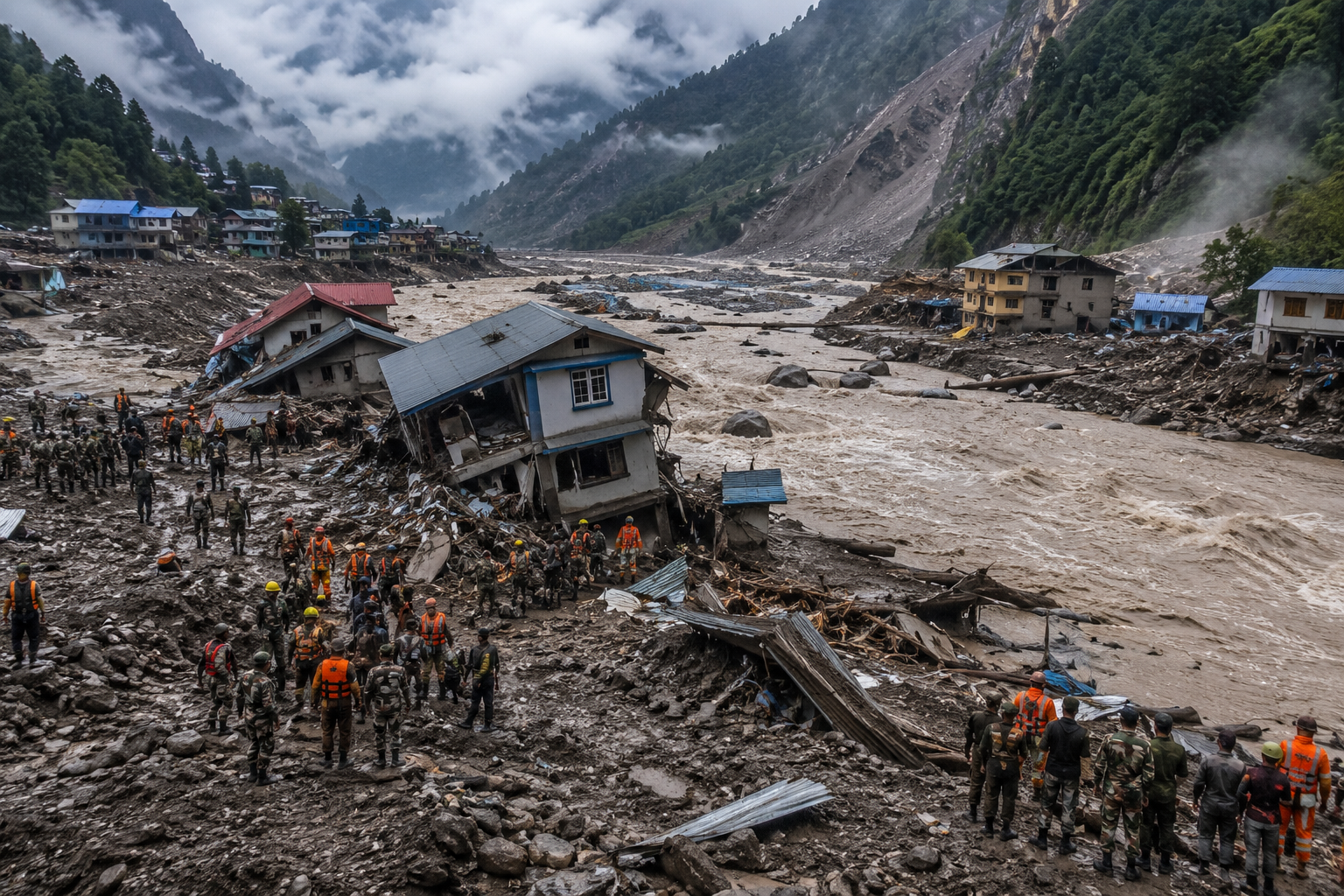
Kathmandu/Beijing, August 30: Rescue teams are continuing operations after a devastating flash flood and landslide disaster struck the Nepal-Tibet border on August 26. The disaster followed the collapse of a glacier and sent a massive torrent of rock, mud, ice and water through river valleys, destroying infrastructure and sweeping away buildings and roads.
The latest reports put the confirmed death toll at more than 600, while the number of people reported missing has risen to nearly 3,000. The disaster has affected communities on both sides of the border, with Nepal bearing a particularly heavy impact.
Rescue operations have been complicated by damaged roads, difficult Himalayan terrain and continuing fears of secondary flooding. Authorities are also monitoring a large lake formed after the glacier collapse. Chinese authorities said the lake has begun shrinking, reducing the immediate risk of a major outburst, although officials continue to monitor the area closely.
In Nepal, rescue teams are searching damaged hydropower facilities and other sites where workers may remain trapped. The government has also sought technical assistance from other countries as the scale of the disaster becomes clearer.
Why it matters:
The catastrophe is one of the region’s most serious recent natural disasters and has renewed concerns over Himalayan glacier instability, extreme weather and the vulnerability of communities and infrastructure in high-mountain regions.