
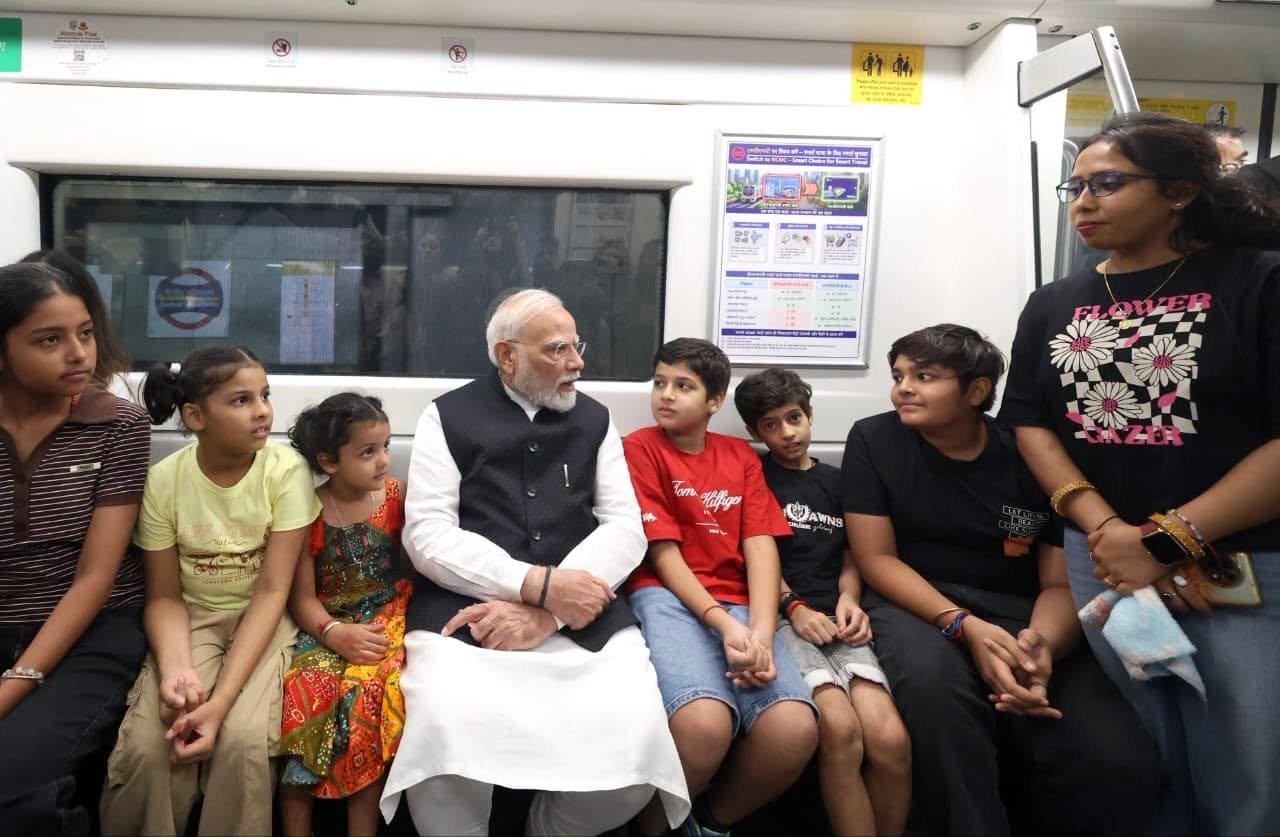
September 06/26/GTNS New Delhi Prime Minister Narendra Modi’s decision to take the Delhi Metro while travelling to Shri Ram College of Commerce for its centenary celebrations added an unexpected public dimension to his high-profile visit on Saturday.
Instead of making the entire journey by road, Modi travelled on the city’s rapid-transit network before proceeding to the prestigious college. The Metro journey quickly became a talking point, bringing an ordinary feature of Delhi’s daily life into the spotlight during a major national event.
The visit to SRCC was centred on the institution’s 100-year academic journey. The college, known for its contribution to commerce, economics and management education, marked the milestone with a programme attended by students, faculty members, alumni and other guests.
For the Prime Minister, the occasion also provided an opportunity to speak about the aspirations of India’s younger generation. Education, economic opportunity, entrepreneurship, innovation and skills have increasingly become central themes in discussions about the country’s development.
The Metro journey gave that larger message a more relatable setting. Delhi Metro serves millions of commuters and has become one of the defining elements of the capital’s urban transport system. Modi’s travel on the network brought attention to the importance of public infrastructure alongside the ceremonial significance of the SRCC event.
The visit also highlighted the contrast between two different aspects of public life: a century-old educational institution representing academic achievement and a mass-transit system representing the everyday movement of a modern city.
At SRCC, the focus shifted from the journey to the institution’s future. The centenary celebration was an occasion to reflect on the college’s contribution to India’s professional and economic landscape while looking ahead to new challenges facing young people.
With technology transforming workplaces and entrepreneurship creating new avenues for employment and innovation, educational institutions are increasingly expected to prepare students for an economy that is changing rapidly.
Modi’s presence at the centenary programme therefore carried significance beyond the anniversary itself. His interaction with the academic community placed youth at the centre of the discussion about India’s next phase of growth.
The Prime Minister’s Metro ride, meanwhile, provided a separate but equally visible element to the day’s events. It demonstrated how a routine public transport journey can attract national attention when undertaken by one of the country’s most prominent political figures.
The combination of the Metro journey and the SRCC centenary created a distinctive narrative around the visit — one linking everyday urban life with education, youth aspirations and India’s broader development story.
As SRCC begins its second century, the event served not only as a celebration of its past but also as a reminder of the role educational institutions can play in shaping the workforce, entrepreneurs and leaders of tomorrow.