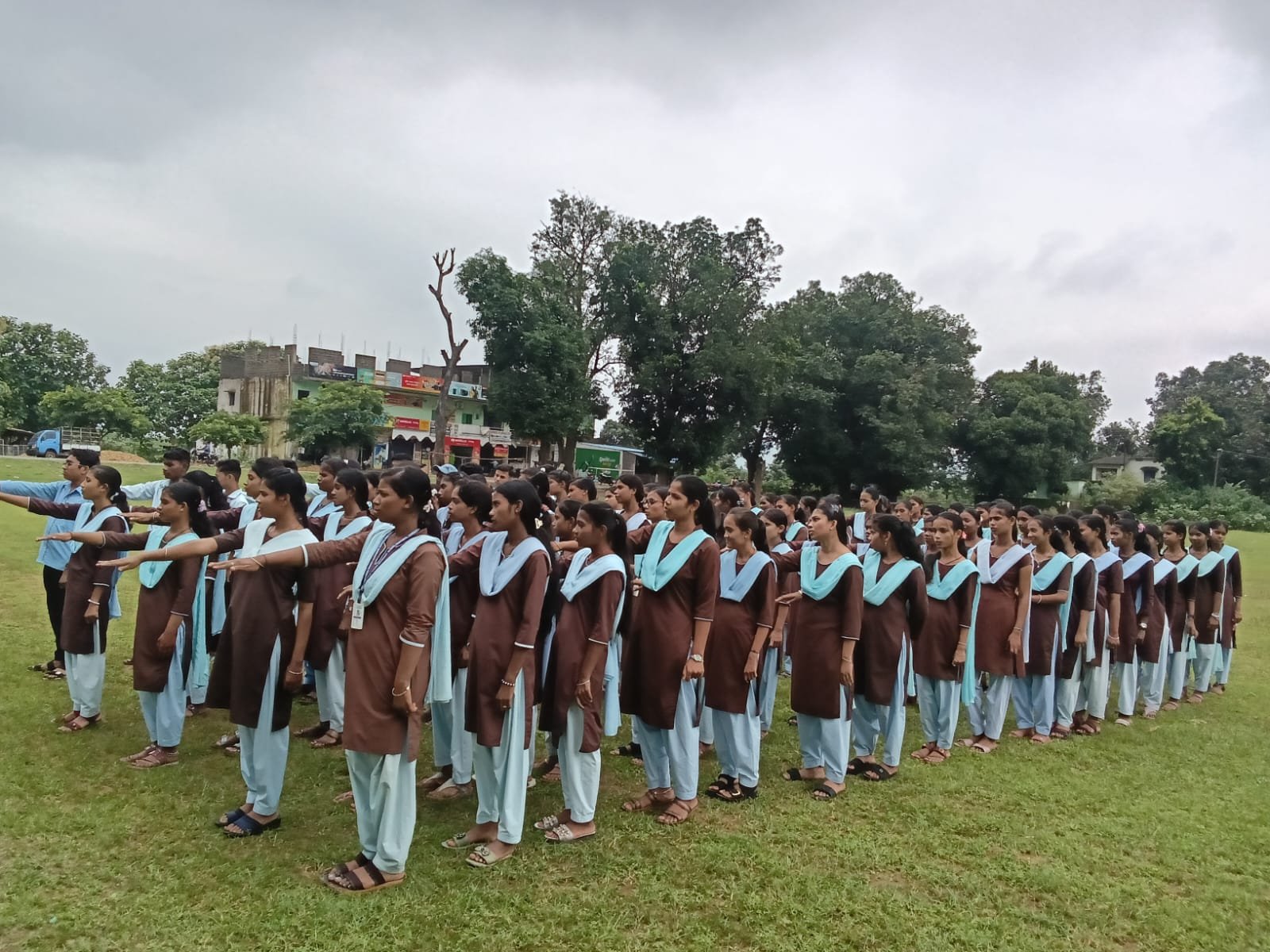

BHUBANESWAR, September 1: Odisha’s campaign to make the state drug-free by 2029 is entering a new phase, with police increasingly taking the fight against narcotics into schools, colleges and communities.
The strategy marks a shift from an enforcement-only approach towards prevention, with young people being placed at the centre of the state’s anti-drug campaign. The objective is to make students aware of the risks of substance abuse before experimentation can turn into addiction.
The state government has set an ambitious target of dismantling the major drug-trafficking networks and their financial supply chains and achieving a “Drug-Free Odisha” by 2029. The directive was reiterated by Chief Minister Mohan Charan Majhi at the recent State-Level DGP and IGP Conference.
Schools emerge as the new frontline
Across Odisha, police units are taking awareness programmes directly to educational institutions. Recent campaigns have included interaction with students, awareness sessions and appeals to young people to become active participants in the anti-drug movement.
In the Central Range, the Nasha Mukt Abhiyan has reached around 300 government schools across seven districts, according to reports on the recent campaign. Senior police and district officials have used the programmes to explain the physical, psychological and social consequences of substance abuse.
In Khordha district, police recently conducted awareness programmes involving around 1,770 students and other participants, stressing the importance of responsible choices and community participation in preventing substance abuse.
Brahmapur Police has also taken the campaign to schools and colleges, with programmes reaching about 1,000 students across seven schools and a college. Students were encouraged to resist peer pressure and become ambassadors for a drug-free society.
Beyond awareness, tougher action
The school campaign is being backed by intensified enforcement against drug suppliers and traffickers.
Earlier this year, Odisha Police announced a statewide drive aimed at eliminating the narcotics menace by 2029. Enforcement operations have targeted cannabis cultivation, ganja trafficking, brown sugar networks and other narcotic supply chains.
The emphasis is increasingly on attacking the entire ecosystem—from cultivation and transportation to distribution and the financial networks supporting the illegal trade.
At the same time, authorities are recognising that enforcement alone cannot solve the problem. Rehabilitation and reintegration are also becoming important components of the strategy. Odisha Police has reported that de-addiction centres are functioning across the state and that thousands of people recovering from addiction have been reintegrated into mainstream society.
Youth at the heart of the mission
The classroom-focused campaign gives the 2029 target a wider social dimension. Police officials are encouraging students to recognise the dangers of drugs, reject peer pressure and spread awareness among friends and family.
The message is also being delivered through locally relevant communication. In Koraput, for example, police have used a popular tribal folk song to communicate the anti-drug message, demonstrating how cultural approaches can be incorporated into prevention campaigns.
For Odisha, the challenge over the next three years will be to maintain this momentum while connecting enforcement, education, counselling, rehabilitation and community participation.
The 2029 deadline therefore represents more than a policing target. It is increasingly being framed as a broader social mission—one that seeks to prevent young people from entering the cycle of addiction while simultaneously dismantling the networks that profit from the illegal drug trade.
The battle for a Drug-Free Odisha is now moving from the streets and trafficking routes into classrooms, communities and the minds of the state’s next generation.