

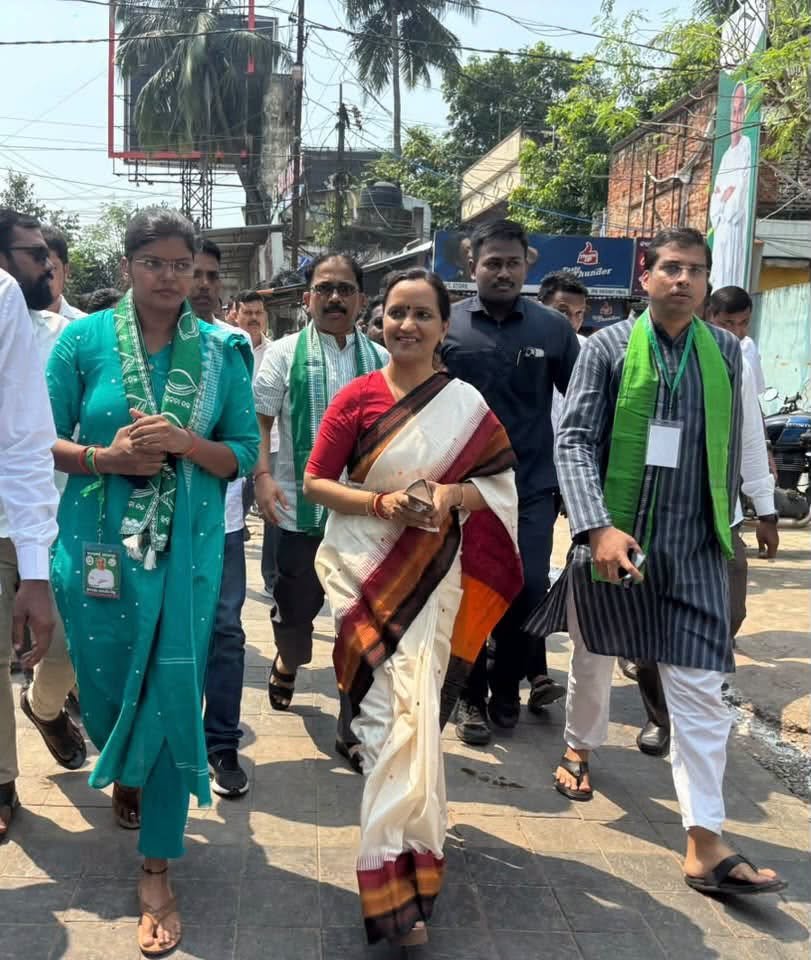
Gandhi Jayanti padayatra brings Mission Shakti, grassroots organisation and Sujata Rout Pandian back into BJD’s political conversation
GTNS | BHUBANESWAR | OCTOBER 2, 2026
The Biju Janata Dal’s decision to begin a month-long Jan Sampark Padayatra on Gandhi Jayanti is more than a programme of public meetings and party marches. It marks an attempt by the opposition party to rebuild its grassroots connect after losing power in Odisha in the 2024 Assembly election.
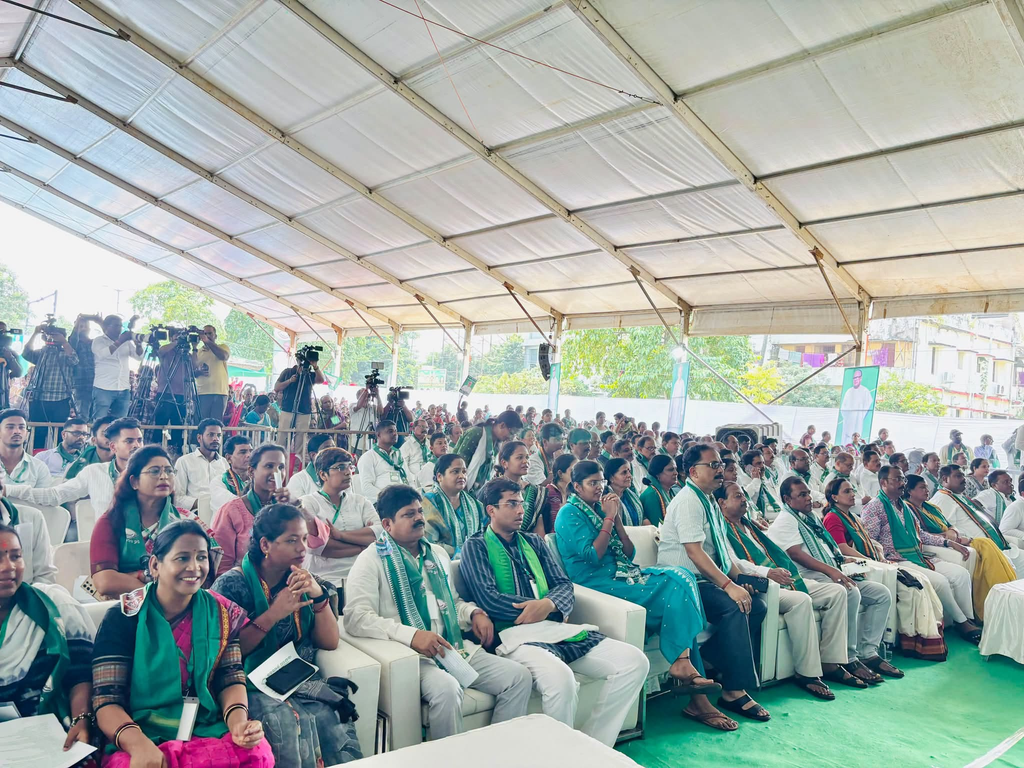
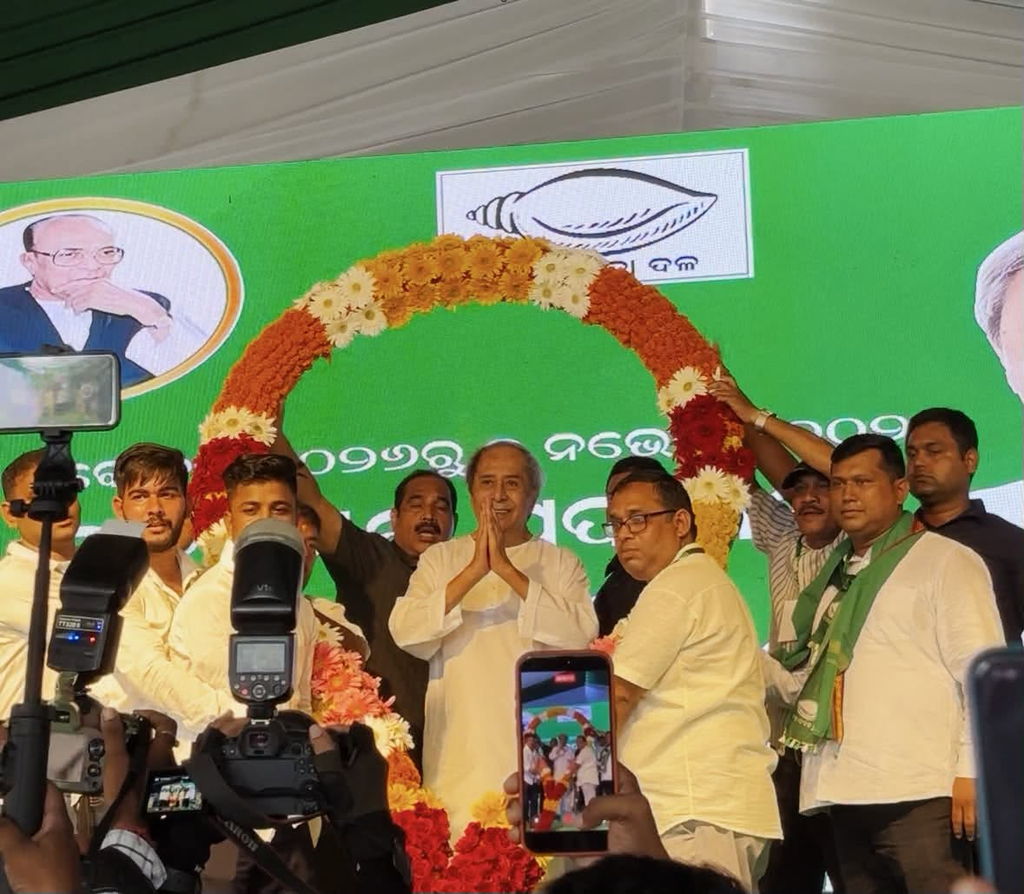
BJD president Naveen Patnaik launched the campaign from Ward No. 52 in Bhubaneswar. The party has announced that its leaders and workers will take the programme to wards, panchayats, blocks and urban local bodies across Odisha.
One feature of the exercise is attracting particular political attention—the renewed visibility of Sujata Rout Pandian.
The women’s vote question after 2024
For more than two decades, BJD’s political narrative in Odisha included a strong emphasis on women’s welfare, self-help groups and economic participation.
The 2024 election, however, changed the political landscape. BJD lost government after 24 years, while the BJP formed the state government.
Political reporting following the election identified women voters and the large SHG network as an important area of competition between BJD and BJP. The Mission Shakti had become closely associated with the Naveen Patnaik years, while the BJP entered the same political space with its Subhadra scheme and the promise of expanding the number of “Lakhpati Didis.”
That history gives the present BJD outreach a different context.
The question is no longer simply how the party can highlight its earlier schemes. It is also whether it can reconnect with the women’s networks and grassroots constituencies that had been central to its organisational politics.
Why Sujata Rout Pandian matters in this narrative
Sujata Rout Pandian’s earlier administrative association with Mission Shakti makes her participation noteworthy in this context.
Mission Shakti was launched in Odisha in 2001 as a women’s Self-Help Group initiative. According to the Odisha Government’s Mission Shakti records, the programme has grown to approximately 6 lakh SHGs involving nearly 70 lakh women across rural and urban areas.
The programme was designed around more than financial assistance. Its framework includes social mobilisation, access to institutional credit, livelihood development, skill building and market linkages.
Government records show that SHGs were also encouraged to move beyond savings and credit into economic activities such as agriculture, food processing, livestock, handicrafts, tailoring, mushroom cultivation and other enterprises.
For BJD, this history provides a substantial governance record to discuss during its current grassroots campaign.
A financial network as well as a social network
One of Mission Shakti’s most significant components has been the SHG-bank linkage programme.
The Odisha Government’s 2022-23 activity report records bank credit of ₹11,005.10 crore to 3,65,542 SHGs during that financial year. The same report describes the interest-subvention programme as a mechanism to improve access to institutional credit and support sustainable livelihoods.
This means that Mission Shakti developed into a network extending beyond government offices. Women’s groups became connected with banks, livelihood activities, federations and local institutions.
That scale is politically relevant because the network exists at the same local levels where political parties seek public contact.
What changed after the BJD government ended
The political relationship between Mission Shakti and BJD also became a subject of debate after the 2024 election.
In December 2024, The Indian Express reported that more than 60,000 women associated with Mission Shakti demonstrated outside the Odisha Assembly over delayed remuneration for support personnel. The report also described competing BJD and BJP positions over the programme’s political role.
The episode showed that Mission Shakti had become part of a larger political conversation involving women’s livelihoods, government policy and party competition.
At the same time, it would be inaccurate to assume that all Mission Shakti members support one political party. The 2024 election itself demonstrated that women voters were not a single political bloc.
BJD’s calculation: reconnect before the next electoral test
The present Jan Sampark Padayatra therefore has an organisational purpose that goes beyond remembering the party’s 24-year government.
BJD is attempting to take its political message directly into local communities. The involvement of senior leaders and figures associated with women-focused programmes gives the campaign additional visibility among constituencies that have historically been important to the party.
The party’s focus on women can also be understood against the BJP government’s own women-centric political initiatives. The Subhadra scheme became a major part of the BJP’s outreach to women after the 2024 election, creating a new point of comparison with Mission Shakti.
This has effectively created a new political contest over how women’s empowerment, financial assistance and self-help groups are presented to voters.
Sujata’s political significance
Sujata Rout Pandian’s participation consequently carries significance beyond her presence at a particular padayatra.
Her earlier administrative work associated with women-focused programmes gives BJD an experienced face through which the party can discuss its women’s empowerment narrative.
Supporters of the party may interpret her return to the political field as an effort to strengthen this connection. Political opponents may interpret the same move differently. What can be established at present is that her visibility coincides with BJD’s renewed grassroots campaign and its attempt to keep women’s issues prominent in the political debate.
Calling her a guaranteed electoral “turning point” would go beyond the available evidence.
The larger picture
The Gandhi Jayanti campaign brings three strands of BJD’s post-2024 politics together:
Naveen Patnaik’s leadership, grassroots organisational rebuilding and the legacy of women-focused programmes such as Mission Shakti.
The party’s challenge is to convert that legacy into present-day public engagement while responding to a political environment in which the BJP is also competing strongly for women’s support.
Whether the renewed outreach changes voter attitudes will depend on public response, local political conditions and future electoral evidence.
For now, the message from BJD’s Gandhi Jayanti mobilisation is clear: women’s organisations, grassroots contact and the political legacy of Mission Shakti are again being placed prominently in the party’s post-2024 strategy.