
Amit Shah brings both Chief Ministers together as years of litigation give way to technical consultations and an attempt at a negotiated settlement
GTNS | BHUBANESWAR | OCTOBER 1, 2026 , The long-running dispute over the Mahanadi river entered a significant new phase on Thursday, with the Centre bringing Odisha and Chhattisgarh together at the highest political level in New Delhi in an effort to find a workable settlement over sharing and management of the river’s waters.
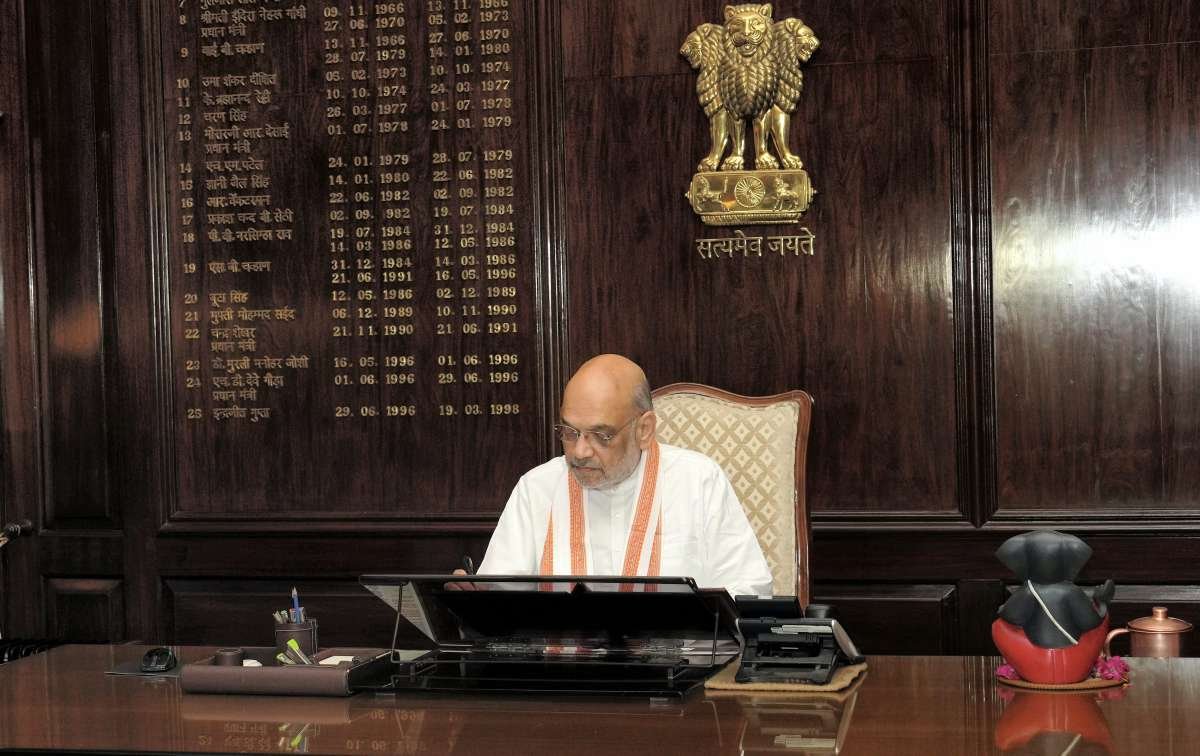
Union Home Minister Amit Shah chaired the high-level meeting attended by Odisha Chief Minister Mohan Charan Majhi and Chhattisgarh Chief Minister Vishnu Deo Sai. Union Jal Shakti Minister C. R. Patil, senior officials of the Central Water Commission (CWC) and representatives of both states were also part of the discussions.
The meeting is significant because the two states have spent years pursuing the dispute through legal and technical channels, while recent developments have created space for direct negotiations.
How the dispute developed
The disagreement centres on the use, regulation and sharing of water from the Mahanadi basin.
Odisha, as the downstream state, has repeatedly raised concerns over water availability during the non-monsoon period and the impact of upstream water infrastructure in Chhattisgarh. Chhattisgarh, meanwhile, has maintained that it requires Mahanadi water for irrigation, industrial activity and domestic consumption.
The issue acquired a formal inter-state dispute character after years of disagreement over water development in the basin. Odisha approached the Centre in November 2016 seeking a tribunal to adjudicate the matter.
Following unsuccessful efforts to settle the differences through talks, the Union government constituted the Mahanadi Water Disputes Tribunal in March 2018 under the Inter-State River Water Disputes Act, 1956.
The tribunal process has continued for years without producing a final settlement.
Why the approach changed in 2026
A notable shift occurred this year when both governments began showing greater willingness to explore a negotiated solution.
In July, Union Jal Shakti Minister C. R. Patil chaired a meeting involving the two Chief Ministers and senior officials. The Centre said the discussions were intended to promote an amicable settlement through dialogue, technical cooperation and cooperative federalism.
The same process also moved beyond political discussions.
A joint technical mechanism involving officials from both states was developed under the Central Water Commission. The CWC-led discussions examined technical aspects of the dispute, with several issues reportedly reaching a stage of consensus. An expanded technical committee chaired by the CWC chairman was subsequently constituted to continue work on unresolved matters.
Tribunal creates room for negotiations
The Mahanadi Water Disputes Tribunal also played a role in opening the latest negotiation route.
In July, the tribunal asked the Centre and the CWC to facilitate discussions between Odisha and Chhattisgarh and directed the states towards a joint technical mechanism. The objective was to see whether the dispute could be narrowed through technical consultation before the legal proceedings moved further.
By September, the tribunal had taken on record details of earlier rounds of CWC-facilitated discussions. The hearing process was also adjusted as the two states pursued settlement talks.
This means the current process is not simply a fresh political meeting; it follows months of technical and legal groundwork.
Both states move closer on one key point
One of the important developments in the recent talks has been the willingness of both sides to consider the outcome of the technical process.
Reports from the July discussions said the two states had given a written assurance to the Central Water Commission that they would accept a decision taken by the commission in the larger interest of both states.
That position could become important because the core disagreement involves technical questions about water availability, upstream use, downstream requirements and the appropriate framework for sharing the river.
A settlement would therefore require more than a political understanding. It would need to be supported by hydrological data, technical assessments and an arrangement that both states consider workable.
Odisha’s concern
For Odisha, the principal issue has been the availability of adequate Mahanadi flows, particularly outside the monsoon season.
The state has argued that upstream projects and regulation of the river can affect downstream availability. The Mahanadi is closely linked with Odisha’s irrigation and water-management needs, making the question of seasonal flows particularly important.
The dispute has also acquired importance around the Hirakud system, one of Odisha’s major water infrastructure assets.
Chhattisgarh’s position
Chhattisgarh’s position centres on its right and requirement to utilise water within its territory for agriculture, industry and domestic needs.
The state has maintained that development and water-use requirements in its part of the Mahanadi basin must also be taken into account.
Chhattisgarh Chief Minister Vishnu Deo Sai has recently spoken in favour of a negotiated solution, with reports quoting him as seeking a fair and sustainable arrangement based on scientific assessment, transparency and dialogue.
September meeting added momentum
The latest Delhi discussions followed a meeting between the two Chief Ministers in Bhubaneswar on September 20.
After that meeting, Sai expressed confidence that the long-running issue could be resolved, while both sides indicated that cooperation between the neighbouring states should continue.
That political contact helped prepare the ground for the October 1 meeting chaired by Amit Shah.
What today’s meeting means
The immediate importance of the Delhi meeting lies in bringing together three strands of the dispute:
- Political dialogue between the two state governments;
- Technical assessment under the Central Water Commission; and
- Legal proceedings before the Mahanadi Water Disputes Tribunal.
The Centre’s objective is to use these parallel processes to narrow differences and move towards an arrangement acceptable to both sides.
There is no final water-sharing agreement yet. The tribunal remains part of the legal framework, while the technical consultations are continuing.
The next challenge: turning talks into a formula
The most difficult stage may now be converting broad political understanding into a precise and durable water-sharing mechanism.
Such an arrangement would have to address questions including seasonal water availability, upstream utilisation, downstream requirements, technical monitoring and implementation.
It would also need to survive variations in rainfall and changing water demand over time.
Odisha and Chhattisgarh have therefore reached a point where political willingness exists, but the details of any settlement remain crucial.
The Mahanadi dispute has travelled from political disagreement to tribunal proceedings and now towards structured negotiations backed by technical consultations.
Whether the latest initiative produces a permanent settlement will depend on what emerges from the CWC-led process and whether both states ultimately accept the proposed framework.
For Odisha, the central concern remains dependable downstream water availability. For Chhattisgarh, the focus remains the legitimate use of the river for its own development needs.
The Delhi meeting has not ended the dispute. It has, however, moved the issue into a new phase where negotiation, technical evidence and inter-state cooperation are being placed alongside the legal process.