

Manohar Lal launches city-focused programme along with new facilities for sanitation innovation, recycling and startups
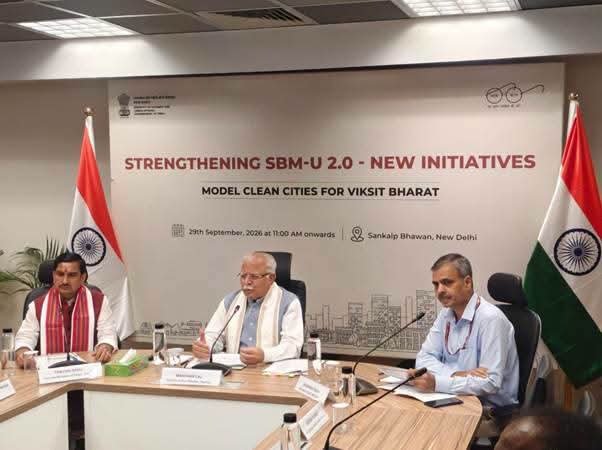
GTNS , NEW DELHI | SEPTEMBER 29, 2026 , Union Minister for Housing and Urban Affairs Manohar Lal on Tuesday launched PRAGATI-50, a new initiative aimed at developing 50 cities across 24 states as demonstration centres for higher standards of urban cleanliness.
The programme is being implemented under the framework of Swachh Bharat Mission–Urban 2.0, with emphasis on measurable performance, technology-based monitoring and focused action on sanitation and waste management. The selected cities include major urban centres as well as cities of cultural, tourism and economic importance.
Rather than limiting the exercise to routine sanitation activities, the initiative seeks to create visible and sustained improvements in areas such as solid waste management, used-water management, sanitation infrastructure and citizen participation.
Technology at the centre
A major component of the launch was the Swachh Bharat Test Bed and Innovation Centre, established in collaboration with CSIR-CMERI. The facility is intended to support research, product development, testing, validation, certification and capacity building for sanitation-related technologies.
The government is also bringing startups into the cleanliness ecosystem. The third cohort of Swachh Startups, developed in collaboration with IIT Kanpur, was inducted during the programme. The initiative is linked to the national target of onboarding and incubating 75 startups under the Mission.
Focus on reuse and recycling
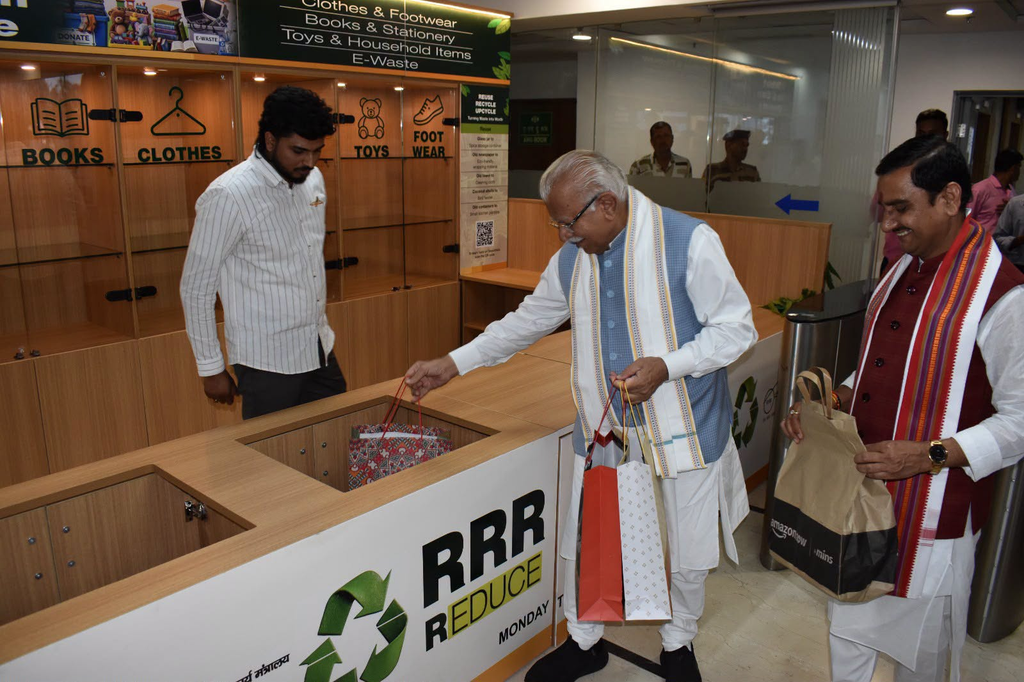
Another highlight was the inauguration of a Reduce, Reuse and Recycle (RRR) Centre at Sankalp Bhawan in New Delhi. The centre is designed to promote sustainable consumption, reuse, resource recovery and circular-economy practices within government workplaces.
The government also launched the Swachh Vyavhar Parivartan Digital Fund, adding a behavioural-change component to the wider cleanliness campaign.
From cleanliness drives to measurable outcomes
The PRAGATI-50 framework places greater emphasis on continuous monitoring and outcome-based assessment. According to the Ministry, progress in the selected cities will be tracked through technology-enabled systems and periodic reviews. Manohar Lal has said he will personally chair review meetings every two months to monitor progress.
Minister of State for Housing and Urban Affairs Tokhan Sahu called for micro-level action plans by states and urban local bodies, with implementation focused on achieving cleaner and more sustainable urban environments.
With PRAGATI-50, the Centre is attempting to shift the cleanliness conversation from periodic campaigns towards continuous city-level performance, innovation and citizen participation. The 50 selected cities are expected to serve as demonstration models whose practices can potentially be adapted by other urban centres.