

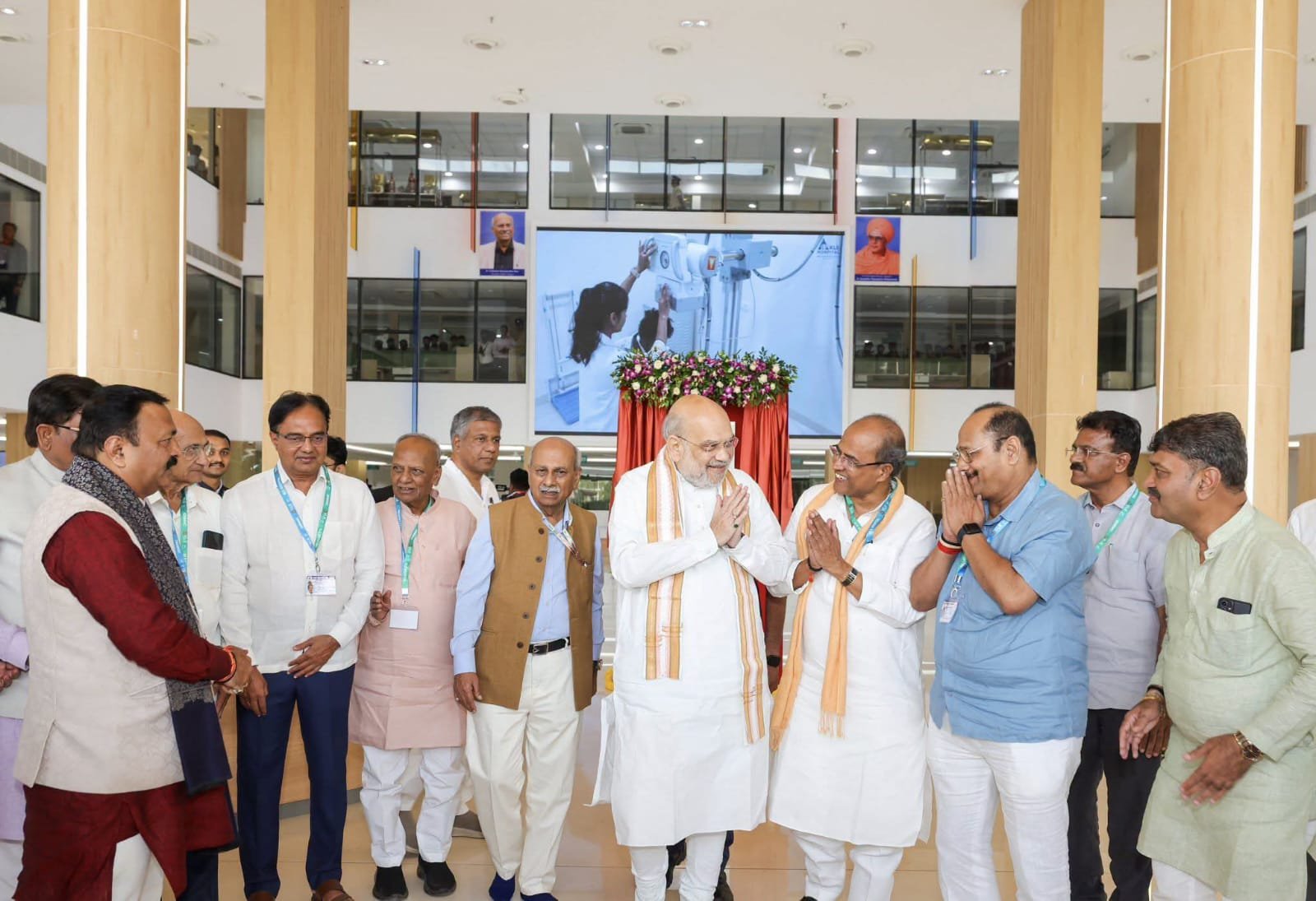
Amit Shah visits JGMM Medical College and KLE Hospital complex as a new 250-seat medical college and 1,200-bed healthcare facility takes shape in North Karnataka
HUBBALLI, KARNATAKA — A major healthcare and medical-education facility in Hubballi is adding fresh capacity to North Karnataka, combining undergraduate medical education, advanced treatment, emergency care and medical research within a single campus.
Union Home Minister and Minister of Cooperation Amit Shah visited the Jagadguru Gangadhar Mahaswamigalu Moorusavirmath Medical College and KLE Hospital and Medical Research Centre in Hubballi on September 19, according to the Press Information Bureau.
The facility has been developed across approximately 50 acres at an estimated investment of around ₹700 crore. The medical college will offer 250 MBBS seats, while the hospital has 1,200 beds, including 300 beds reserved for economically weaker patients, according to the government release.
The significance of the project extends beyond the number of beds.
The integrated campus brings medical education and healthcare delivery together, creating a setting where future doctors can train alongside a large hospital network offering both general and highly specialised treatment.
The hospital is planned to provide services ranging from general medicine and surgery to orthopaedics, pulmonology, obstetrics and gynaecology, ophthalmology, ENT, psychiatry, dentistry and physiotherapy.
The specialist-care component adds another layer, with facilities planned for cardiology, neurology, neurosurgery, gastroenterology, nephrology, organ transplantation, urology, oncology and endocrinology. Modern diagnostic infrastructure is also part of the facility, including laboratories, digital X-ray, high-resolution CT scanning and ultrasonography.
Emergency healthcare is another significant component. The facility is designed to provide round-the-clock emergency and trauma care, alongside a modern dialysis unit and other diagnostic and treatment services.
For North Karnataka, the broader significance lies in the combination of medical education capacity and tertiary healthcare infrastructure.
An expansion in MBBS seats can contribute to the future medical workforce, while a large multi-speciality hospital can widen access to advanced treatment without requiring every patient to travel to another major healthcare centre.
The institution is associated with KLE, which the Union Home Minister highlighted as an organisation with more than 110 years of work in education and healthcare.
The project also comes at a time when India is expanding medical education capacity. The Ministry of Health and Family Welfare said earlier in 2026 that 43 new medical colleges had been established for the 2025–26 academic year and that 11,682 MBBS seats had been approved nationally, including seats in medical institutions covered by the relevant approval process.
But the success of a large medical campus will ultimately be measured not only by its infrastructure.
The more important test will be how effectively the facility converts its physical capacity into accessible treatment, quality medical education, specialist services, emergency response and patient support.
For patients, a 1,200-bed hospital matters only when beds are accessible, specialists are available, diagnostics function efficiently and treatment reaches people who need it.
For students, 250 MBBS seats represent more than admission numbers. They create an institutional environment in which medical education, clinical exposure and research can develop together.
The Hubballi campus therefore represents a broader shift in healthcare infrastructure—towards institutions that combine education, treatment, diagnostics and research rather than operating as isolated facilities.
The government release describes the new complex as another milestone in expanding advanced healthcare access in Karnataka.
The long-term public value, however, will be determined on the ground: by the doctors trained, patients treated, emergency cases handled, research undertaken and the extent to which advanced healthcare becomes more accessible to communities across the region.
For North Karnataka, the new campus is not simply another hospital building. It is an expansion of the region’s medical education and healthcare ecosystem—and its real impact will be measured by the services delivered after the infrastructure begins serving people at full capacity.
Global Times News | INDIA ; GTNS NEWS DESK
SEPTEMBER 20, 2026