
BJD president and Leader of Opposition returns after a personal Delhi stay; first public remarks after arrival bring the UPI merchant-charge debate into Odisha’s political conversation
GTNS ,SEPTEMBER 18, 2026 ,BHUBANESWAR — Biju Janata Dal (BJD) president and Leader of Opposition in the Odisha Assembly Naveen Patnaik has returned to Bhubaneswar after his extended stay in New Delhi, bringing his latest visit to the national capital to a close and shifting the political spotlight back to Odisha.
Patnaik had left Odisha for New Delhi on September 1 for personal reasons. His visit was publicly described as a personal stay, with no confirmed political programme announced in connection with the trip.
His return on Friday puts the BJD leadership back in direct political activity in Odisha, where issues concerning governance, public policy, economic interests and the functioning of the Opposition continue to form part of the state’s political debate.
PATNAIK BACK IN BHUBANESWAR
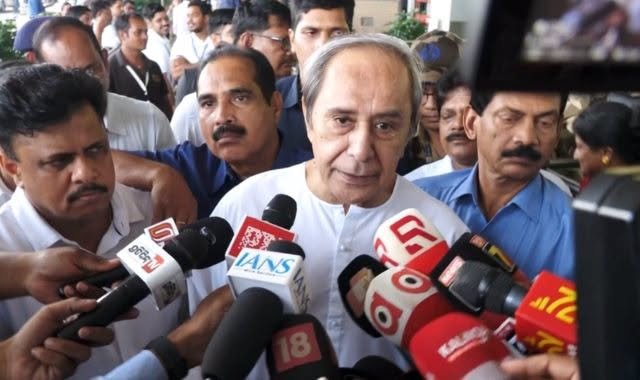
Patnaik returned to Bhubaneswar and arrived at Biju Patnaik International Airport on Friday. His arrival attracted the attention of BJD workers, supporters and political observers.
The significance of the return lies primarily in his position within Odisha politics. As BJD president and Leader of Opposition, Patnaik remains the principal public face of the party and its political response to issues involving the state government.
His Delhi stay, however, was not publicly presented as a political tour. No confirmed schedule of political meetings or official engagements was announced during the visit.
With Patnaik now back in Odisha, attention is shifting towards his forthcoming programmes, party activities and public interventions in the state.
UPI ISSUE BECOMES FIRST POLICY SIGNAL AFTER RETURN
One of the first issues to emerge from Patnaik’s interaction with the media after his return was the debate surrounding charges associated with certain UPI merchant transactions.
Speaking to reporters at the Bhubaneswar airport, Patnaik stressed the need to protect the interests of shopkeepers and small traders.
His remarks came amid a wider national discussion over the Merchant Discount Rate (MDR) framework and its possible implications for digital-payment transactions involving merchants.
The issue has particular relevance for small businesses that increasingly rely on UPI and other digital-payment systems for day-to-day transactions.
Patnaik’s airport remarks therefore gave his return an immediate public-policy dimension, even though his Delhi visit itself had been described as personal.
UPI FRAMEWORK AND THE CENTRE’S CLARIFICATION
The UPI debate also needs to be viewed against the Union government’s explanation of the applicable framework.
According to the Press Information Bureau, person-to-person UPI transactions remain free irrespective of the transaction amount. Merchant transactions up to ₹2,000 also remain free, while specified zero-MDR transactions for small merchants continue without MDR.
The government has stated that the vast majority of person-to-merchant UPI transactions would remain unaffected under the framework.
The Finance Ministry has also clarified that MDR is not a tax collected by the government or the National Payments Corporation of India (NPCI). It is a charge distributed among different participants in the digital-payment ecosystem.
The distinction has become an important part of the national discussion because questions over merchant costs, payment infrastructure and the future expansion of digital transactions have increasingly entered public debate.
FROM A PERSONAL DELHI STAY TO ODISHA’S POLITICAL ARENA
Patnaik’s departure on September 1 and subsequent return attracted attention primarily because of his continuing role in Odisha politics.
While the visit was described as personal, his absence coincided with continuing political activity in the state. His return now brings the focus back to Odisha-based political issues and the BJD’s role as the Opposition.
The party’s future public programmes, organisational activities and responses to government decisions are likely to receive renewed attention with its president back in Bhubaneswar.
For the BJD, Patnaik’s return also restores direct leadership presence in the state at a time when political debate continues across a range of governance and public-interest issues.
THE NEXT POLITICAL CHAPTER IN ODISHA
The immediate importance of Patnaik’s return is therefore not simply that a Delhi visit has ended. It marks the return of the BJD’s top leader to Odisha’s active political environment.
His first reported public remarks after arriving have already placed a national policy issue involving digital payments and merchants into the conversation.
The larger focus will now be on his forthcoming engagements in Odisha, the issues raised by the BJD and the way the Opposition responds to developments in the state.
For the moment, Naveen Patnaik is back in Bhubaneswar after his personal Delhi stay, and the political conversation surrounding him has once again moved from the national capital to Odisha.
News Editor: Sanatan Dalabehera
Global Times News | INDIA ; GTNS