

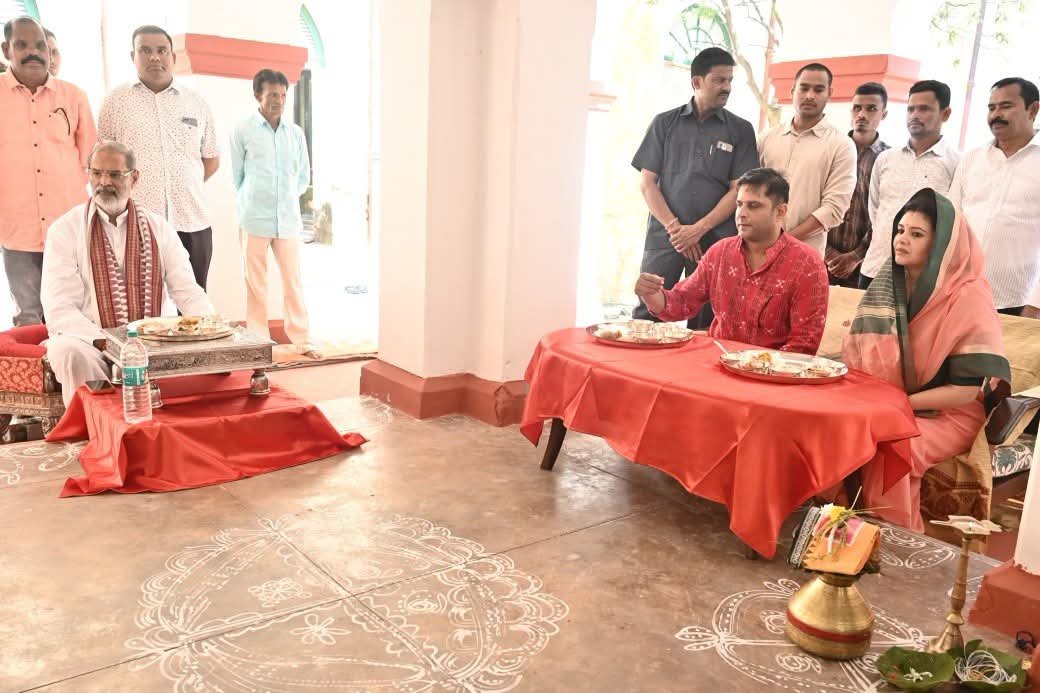
Deputy Chief Minister K.V. Singh Deo and Kalikesh Singh Deo celebrate Nuakhai with their families at the Balangir Raj Palace; traditional Nabanna observance followed by greetings with people
GTNS, SEPTEMBER 15, 2026 , Nuakhai, the major agrarian and cultural festival of western Odisha, brought families together in an atmosphere of tradition, gratitude and community bonding. The festival marks the welcoming of the new harvest and is traditionally associated with offering the first grain to the deity, partaking of Nabanna with family members, seeking blessings from elders and exchanging greetings with relatives and the wider community.
At the Balangir Raj Palace, the spirit of Nuakhai was reflected in a special family gathering as Deputy Chief Minister K.V. Singh Deo and Kalikesh Singh Deo, along with their family members, observed the festival and participated in the traditional celebrations.
Nabanna Tradition at the Raj Palace
Nuakhai at the Raj Palace carried the essence of a family celebration, with members coming together to observe the traditional customs and partake in Nabanna, the new harvest food associated with the festival.
The first grain of the new harvest represents more than food. It symbolises the hard work of farmers, the generosity of the land and gratitude towards the divine.
Sharing Nabanna with family members gives the festival an additional emotional dimension, bringing together generations around a common cultural tradition.
At the Raj Palace, the family gathering reflected this combination of tradition, togetherness and celebration.
Family Togetherness Adds Warmth to the Festival
One of the defining features of Nuakhai is the coming together of family members.
In the midst of busy lives, the festival creates an opportunity for people to sit together, share the new harvest and renew family bonds. The presence of the Singh Deo family at the Raj Palace reflected this deeply rooted tradition of celebrating Nuakhai together.
The occasion was therefore not merely about observing a ritual but also about preserving a family tradition that connects generations.
From the Raj Palace to the People: ‘Nuakhai Juhar’
Following the traditional observance and Nabanna celebration, the Singh Deo family also exchanged Nuakhai greetings with people.
The traditional expression “Nuakhai Juhar” has a special place in the social and cultural life of western Odisha. It conveys respect, affection, goodwill and a sense of community.
The exchange of greetings at the Raj Palace reflected the broader character of Nuakhai as a festival that extends beyond the family and embraces society as a whole.
Nuakhai Bhetghat Was Also Planned
A separate Nuakhai Bhetghat programme with members of the public was also scheduled for the day.
The programme was intended to provide an opportunity to meet people, exchange greetings and share the festive spirit of Nuakhai with the wider community.
However, an unexpected family tragedy changed the day’s plans.
Bereavement in the Family Leads to Udaipur Journey
According to K.V. Singh Deo’s message, he received the news of the passing of Shrimati Vijayraj Kumari, described in his message as the Rajmata Sahib of Mewar and his daughter’s mother-in-law.
Following the news, he had to leave immediately for Udaipur.
The unexpected development meant that he was unable to attend the scheduled Nuakhai Bhetghat programme with the public. He expressed his heartfelt regret for not being able to participate in the programme because of the circumstances.
A Day That Turned From Celebration to Grief
The day therefore brought together two contrasting emotions.
At the Balangir Raj Palace, the Singh Deo family began Nuakhai with family togetherness, traditional Nabanna and greetings with people. But the sudden news of a bereavement required an immediate journey to Udaipur.
The contrast between the festive atmosphere of Nuakhai and the solemnity of a family loss made the occasion deeply emotional.
It also highlighted the importance of family relationships during both moments of celebration and times of grief.
Tradition, Family and Human Relationships
Nuakhai is fundamentally a festival that connects people with the land and the harvest. But its deeper meaning lies equally in family and human relationships.
The sequence of events at the Balangir Raj Palace—from celebrating Nabanna with family and exchanging “Nuakhai Juhar” with people to making an urgent journey to Udaipur following a family bereavement—reflects the human dimension of the festival.
It is a reminder that while traditions bring people together in moments of happiness, family bonds remain equally important during moments of sorrow.
For western Odisha, Nuakhai continues to represent not only the arrival of a new harvest but also the renewal of relationships, respect for tradition and the strength of community.
NUAKHAI JUHAR.